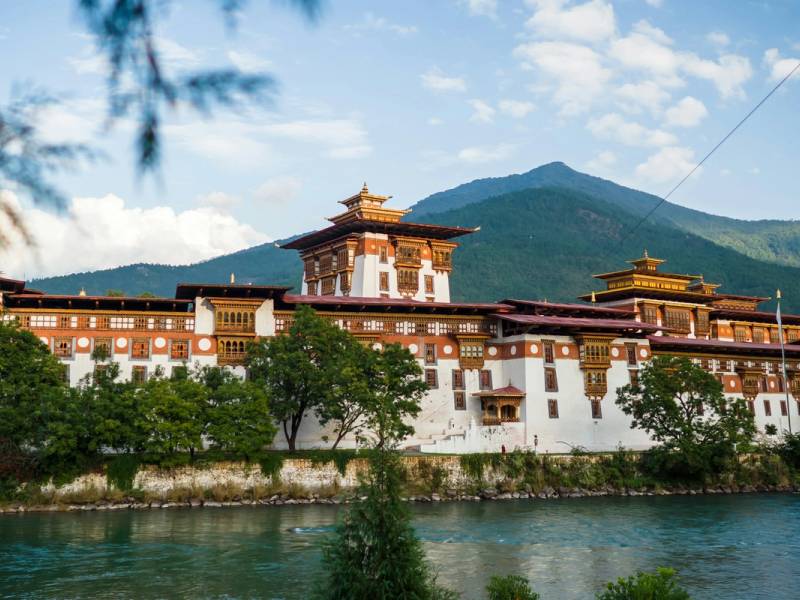
Bhutan Luxury Escape
Western Bhutan at a slower pace, in five-star lodges, with a private guide, a butter-lamp blessing and hot stone bath evenings.
- Duration7 days / 6 nights
- Private tourYour own guide and driver
From$3,900per person
Send an enquiryTour overview
Highlights
- Private butter-lamp blessing
- Picnic lunch on Dochula Pass
- Spa and hot stone bath evenings
- Highest point
- 3,120 m (Tiger's Nest)
- Best season
- Mar–May, Oct–Nov
- Accommodation
- 5-star lodges
- Meals
- All meals
- Transport
- Private guide and vehicle
Tentative itinerary
- Day 1Arrive in Paro, the National Museum and Paro Dzong
- Day 2Tiger's Nest hike and Kyichu Lhakhang, spa evening at the lodge
- Day 3Drive from Paro to Thimphu, Buddha Dordenma and Tashichho Dzong
- Day 4Private Thimphu city tour: Memorial Chorten, Changangkha and textiles
- Day 5Drive from Thimphu to Punakha over Dochu La, Chimi Lhakhang
- Day 6Punakha Dzong, the suspension bridge and Khamsum Yulley Namgyal Chorten
- Day 7Drive from Punakha to Paro International Airport for departure
What's included
Included in the price
- Sustainable Development Fee
- Bhutan visa
- 5-star lodges
- All meals
- Private guide and vehicle
- Spa treatment
Not included
- Airfare
- Travel insurance
- Personal expenses
- Tips
Good to know
- From USD 3,900 per person, 5-star lodges
- Exact price depends on lodge choice
Day by day
A suggested plan. Any day can change: more nights somewhere, a festival, a hike, other hotels.
Day 1
Arrive in Paro, the National Museum and Paro Dzong
Your guide meets you at Paro International Airport, and the first day stays gentle while you get used to the height of the valley, about 2,200 m.
Drive up to the National Museum in Ta Dzong, the round watchtower of 1649, where thangkas, masks and bronzes make the dzong below easier to read. Then walk down to Paro Dzong, properly Rinpung Dzong, consecrated in 1646 and still home to the district monk body and offices. Cross the administrative courtyard, look up at the carved windows and the five-storey central tower, and leave on foot over Nyamai Zam, the covered wooden bridge over the Paro Chhu. The route is downhill all the way and ends in town, in the best of the late-afternoon light.
Overnight: Luxury lodge in Paro
Places on this day
 National Museum of BhutanBhutan's first museum has been housed since 1968 in Ta Dzong, the round watchtower built in 1649 above Paro Dzong. Restored after the 2011 earthquake and reopened in 2020, it holds thangkas, masks, bronzes, old weapons, postage stamps and natural history displays.
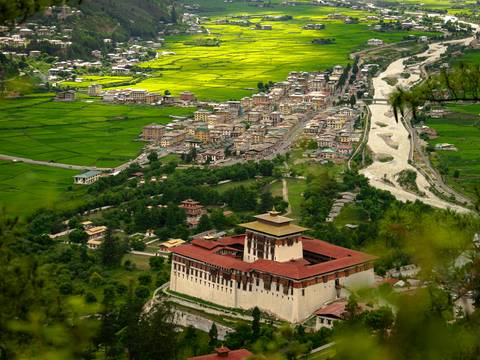 Paro Dzong (Rinpung Dzong)Rinpung Dzong, consecrated in 1646, is Paro's fortress-monastery: home to the district monk body and government offices, and the setting for the Paro Tshechu each spring. You reach it on foot across a covered wooden bridge over the Paro Chhu.
Day 2
Tiger's Nest hike and Kyichu Lhakhang, spa evening at the lodge
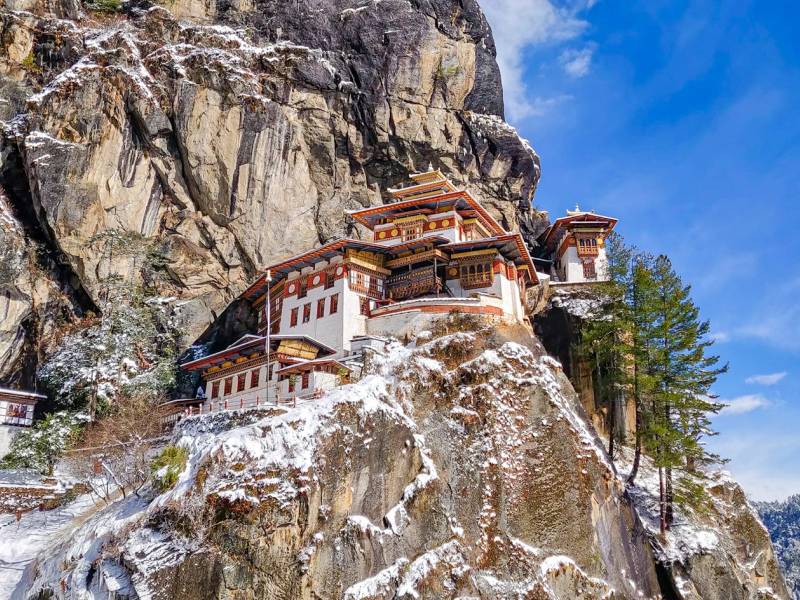
Today belongs to Tiger's Nest, the monastery fixed to a cliff about 900 metres above the valley. From a car park about 20–30 minutes from town, the trail climbs through pine forest to a cafeteria with the first clear view, then to a ledge level with the temples. Stone steps drop to a waterfall and climb again to the gate. Most people take 2.5–3.5 hours up and spend about an hour inside, where bags and cameras stay at the entrance. Go at a pace where you can still talk.
On the way back, stop at Kyichu Lhakhang, one of Bhutan's oldest temples, beside the road to town. Your guide arranges your private butter-lamp blessing on one of your two days in Paro, and this evening is for the lodge spa.
Overnight: Luxury lodge in Paro
Places on this day
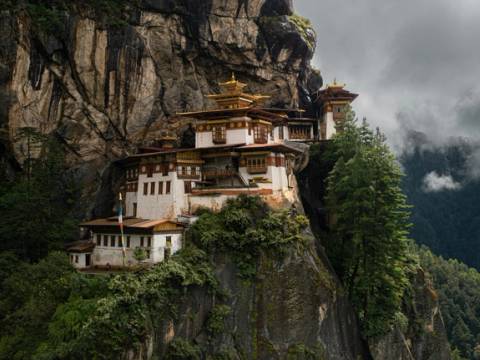 Tiger's Nest MonasteryParo Taktsang, the Tiger's Nest, clings to a cliff about 900 metres above the Paro valley. Guru Rinpoche is said to have meditated in its cave in the 8th century; the temples you visit today were first built in 1692 and rebuilt after a fire in 1998.
 Kyichu LhakhangOne of Bhutan's oldest temples, traditionally dated to 659 and credited to the Tibetan king Songtsen Gampo as one of 108 temples built to pin down a demoness. Its Jowo Shakyamuni statue is revered as highly as the Jowo in Lhasa. It is a few minutes' drive north of Paro town.
Day 3
Drive from Paro to Thimphu, Buddha Dordenma and Tashichho Dzong
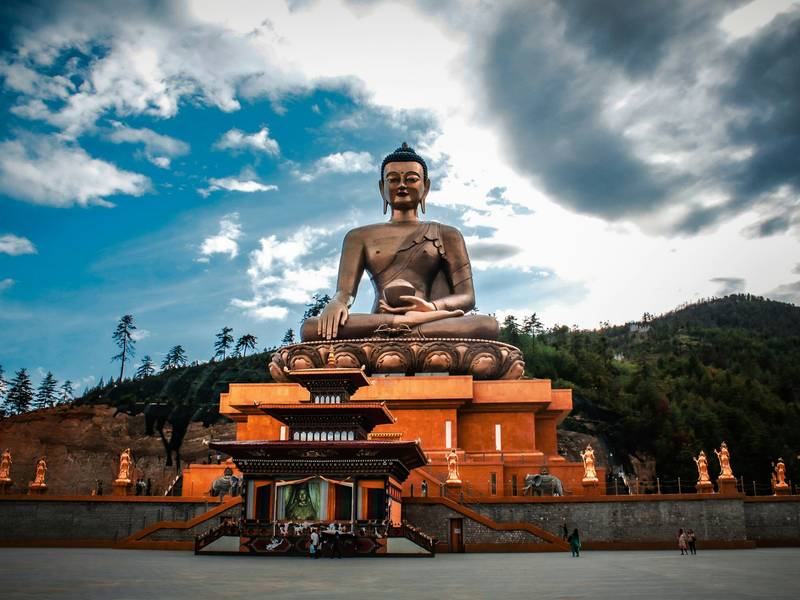
The drive from Paro to Thimphu takes about 1.5 hours, and the first thing you see of the capital is Buddha Dordenma on the hill above the southern approach. Stop there on the way in: a gilded bronze Buddha more than 50 metres tall, with 125,000 smaller gilded Buddhas inside the statue and its throne, a shrine hall lined with them, and a wide view of the valley from the terrace.
Later, visit Tashichho Dzong at the northern end of town, which holds the throne room, the King's offices and, in summer, the central monk body. Visitors are let in only at set times, so your guide plans around them, and the late sun on its white walls and golden roofs is worth waiting for. Dress for the dzong: shoulders and knees covered, hats off inside.
Overnight: Luxury lodge in Thimphu
Places on this day
 Buddha DordenmaA gilded bronze Buddha more than 50 metres tall on the hill of Kuensel Phodrang, looking over the southern approach to Thimphu. Completed in 2015 for the Fourth King's 60th birth anniversary, it holds 125,000 smaller Buddhas and has wide views of the valley.
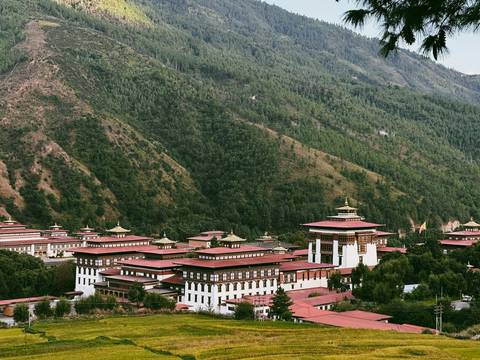 Tashichho DzongThe great whitewashed dzong at the northern end of Thimphu holds the throne room, the King's offices and several ministries, and in summer the Central Monastic Body. First built as a dzong by Zhabdrung Ngawang Namgyal in 1641, it was rebuilt by the Third King in the 1960s.
Day 4
Private Thimphu city tour: Memorial Chorten, Changangkha and textiles
Today is your private city tour of Thimphu, at an easy pace. Start at the National Memorial Chorten, built in 1974 for the Third King, where older residents walk clockwise and turn the big prayer wheels all day.
Go on to Changangkha Lhakhang on its ridge above town, one of the oldest temples in Thimphu, where parents bring newborn babies for blessings and names. Then the Textile Museum of the Royal Textile Academy, with a gallery of the weaves of each region and a weaving centre where you can watch the work, and the craft workshops your guide has set up for the afternoon. Dress for the temples: shoulders and knees covered, hats off inside.
Overnight: Luxury lodge in Thimphu
Places on this day
 National Memorial ChortenA white chorten with a golden spire in the middle of town, built in 1974 in memory of the Third King, Jigme Dorji Wangchuck. All day, older residents walk clockwise around it and turn its big prayer wheels. It is the easiest place in Thimphu to watch everyday faith.
 Changangkha LhakhangOne of the oldest temples in Thimphu, on a ridge above the town, linked to Phajo Drugom Zhigpo and his family, who brought the Drukpa Kagyu school to western Bhutan in the 13th century. Its main image is Chenrezig, the deity of compassion, and parents bring newborn babies here for blessings and names.
 Textile Museum, Royal Textile AcademyThe Royal Textile Academy of Bhutan in Chubachu runs the country's main textile museum, under the patronage of the Queen Mother, Gyalyum Sangay Choden Wangchuck. One gallery shows the weaves of each region and another holds changing exhibitions, and there is a weaving centre where you can watch the work.
Day 5
Drive from Thimphu to Punakha over Dochu La, Chimi Lhakhang
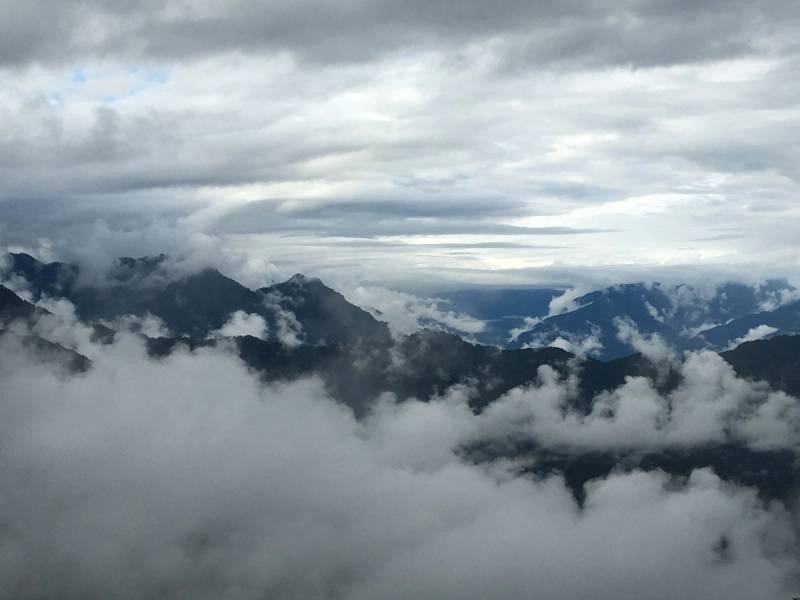
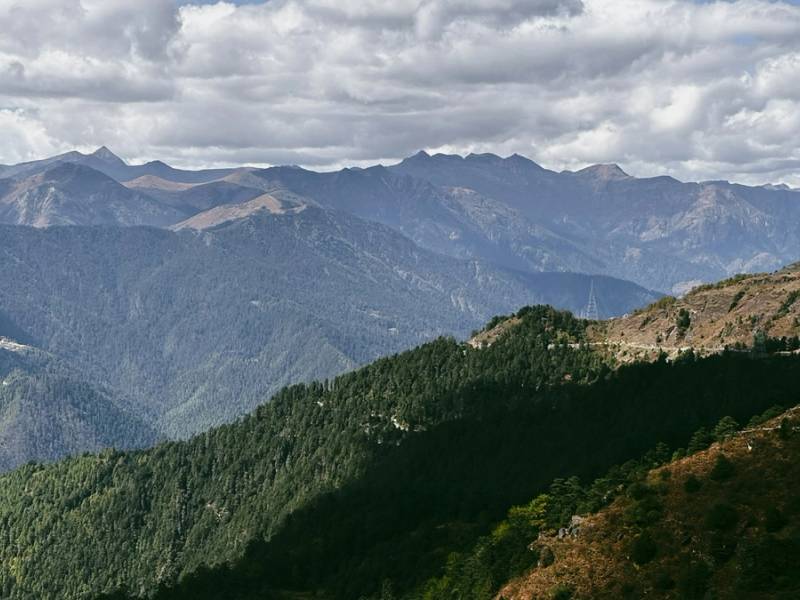
Punakha is about 2.5–3 hours from Thimphu by road. After 45 minutes to an hour you reach Dochu La, at about 3,100 m, where 108 white chortens stand in three tiers around a hillock in memory of the Bhutanese soldiers who died in 2003. On a clear day the eastern Himalaya is on show, Gangkar Puensum among the peaks, so bring a warm layer. Lunch is a picnic at the pass.
The road then drops almost 1,900 m to the warm valley. At Sopsokha, walk about 20 minutes through the rice fields to Chimi Lhakhang, the temple of 1499 on a site blessed by Drukpa Kunley, the Divine Madman, where couples come for a fertility blessing.
Overnight: Luxury lodge in Punakha
Places on this day
 Dochu LaThe pass at about 3,100 m on the road from Thimphu to Punakha, where 108 chortens honour the Bhutanese soldiers who died in 2003. On a clear winter morning the high Himalaya is on show, and most people stop here on the drive.
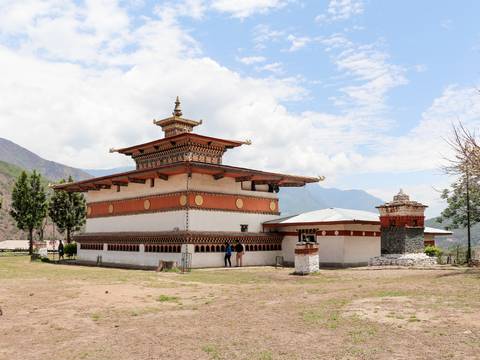 Chimi LhakhangA small temple on a hillock among the rice fields near Lobesa, built in 1499 on a site blessed by Drukpa Kunley, the Divine Madman. Couples hoping for a child come here for a blessing, and the walk in from Sopsokha takes about 20 minutes.
Day 6
Punakha Dzong, the suspension bridge and Khamsum Yulley Namgyal Chorten
A full day in the Punakha valley. Cross the Mo Chhu by the covered cantilever bridge to Punakha Dzong, built in 1637–38 where the Pho Chhu and Mo Chhu meet. Climb the steep wooden entrance steps and walk through the courtyards to the Kuenrey, the great assembly hall, with its murals of the life of the Buddha and gilded statues. Allow 1.5–2 hours, in the morning or late afternoon, as the courtyards get hot.
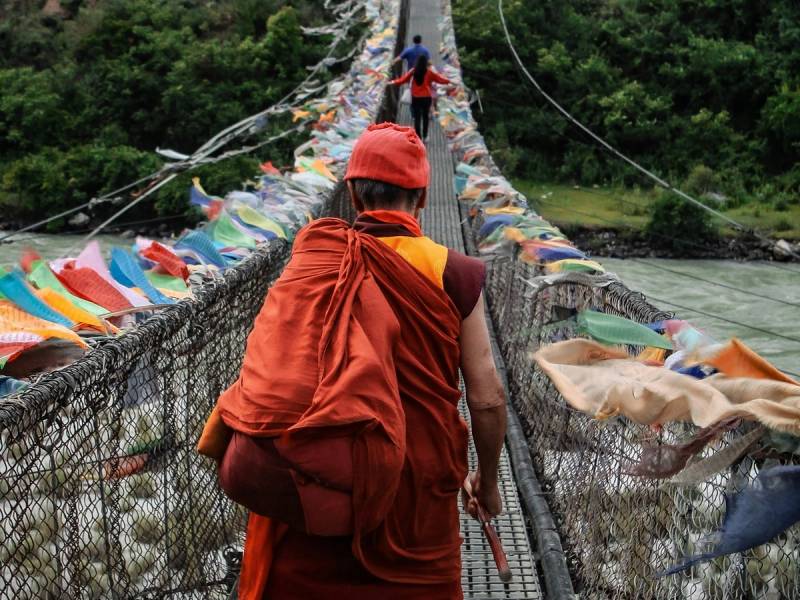
Walk up the Pho Chhu to the suspension bridge, which sways as you cross. Later, a path climbs about 30 minutes from the footbridge at Yepaisa, through rice fields and pine, to Khamsum Yulley Namgyal Chorten, with wide views of the valley. The evening ends with a hot stone bath at the lodge.
Overnight: Luxury lodge in Punakha
Places on this day
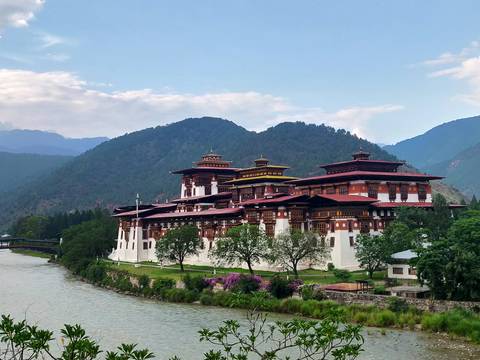 Punakha DzongBuilt in 1637–38 where the Pho Chhu and Mo Chhu rivers meet, Punakha Dzong was the seat of Bhutan's government until 1955, and the first king was crowned here in 1907. It is still the winter home of the central monk body.
 Punakha suspension bridgeA long footbridge of steel cables and wooden planks across the Pho Chhu, a short walk from Punakha Dzong and one of the longest suspension bridges in Bhutan. It sways as you cross, it is hung with prayer flags, and it leads to the villages on the far bank.
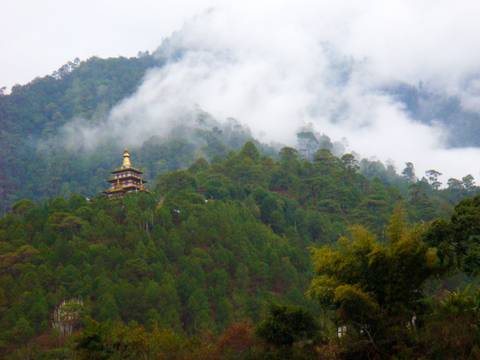 Khamsum Yulley Namgyal ChortenA tiered chorten on a ridge above the Mo Chhu, built under Queen Mother Ashi Tshering Yangdon Wangchuck to ward off harmful forces and bring peace. It is about 30 minutes uphill from the footbridge at Yepaisa, through rice fields and pine, with wide views of the valley from the top.
Day 7
Drive from Punakha to Paro International Airport for departure
Leave Punakha early for the drive back over Dochu La to Thimphu, about 2.5–3 hours, and on to Paro International Airport, about 1.5 hours further. If the mountains were hidden on the way out, the pass gives you a second chance, as the weather there changes fast. Your guide and driver stay with you to the airport, Bhutan's only airport for international flights, where the trip ends.
Places on this day
- Dochu LaThe pass at about 3,100 m on the road from Thimphu to Punakha, where 108 chortens honour the Bhutanese soldiers who died in 2003. On a clear winter morning the high Himalaya is on show, and most people stop here on the drive.
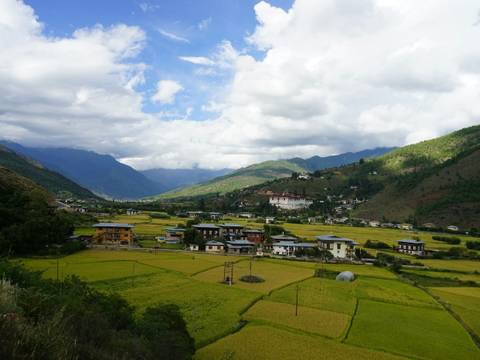 ParoHome to Bhutan's only international airport and the trail up to Taktsang, the Tiger's Nest monastery.
Common questions
What makes you different from other operators?
We are a new, Bhutanese-owned company in Babesa, Thimphu, started by a licensed trekking, cultural and birding guide with more than ten years of guiding. The founder plans every itinerary, and a small team you will know by name looks after you from your first message to your last day. Our guides, drivers and vehicles are our own, and when a trip needs more we hire only experienced people. We go by Gross National Happiness, as Bhutan does: the guest first, and fair pay for the people who look after you.
What kinds of trips do you run?
Cultural tours, festival trips, treks, luxury journeys and family holidays — all private, and all adjustable. Solo, couple or group, we plan around you.
How do I book?
Pick a tour, or ask for one of your own, and send us an enquiry or a WhatsApp message. Within 24 hours we send a free day-by-day plan and price; asking costs nothing. When you're happy with the plan, a deposit confirms it, and we apply for your visa, pay the SDF, book your flights and hotels, and send you a full travel pack.
Can you arrange hotels and transport?
Yes. Every tour includes tourism-certified hotels, a private vehicle with driver and a licensed guide. We also book your Drukair or Bhutan Airlines flights into Paro and arrange your visa and SDF.
Is Bhutan safe for travellers?
Bhutan is one of the safest countries in Asia, with very low crime. The main things to plan for are altitude on mountain passes and winding roads — your guide will pace the trip accordingly.
What should I pack?
Layers, a rain jacket, comfortable walking shoes, and modest clothing (long sleeves and long trousers or skirt) for visiting dzongs and temples.
Make this trip your own
Your dates, more nights somewhere, a festival, a hike, other hotels: tell us and we reply within 24 hours with a free day-by-day plan and price.

Karma ChodenOperations manager, Bhutan Tour Itinerary
Or call +975 17 81 70 52info@bhutantouritinerary.com
Mon–Sat, 9am–6pm Bhutan time (GMT+6)