Tashichho Dzong
- Time needed
- About 1 hour
- Best time
- Late afternoon for the light; autumn for the Thimphu Tshechu
Highlights
- Holds the throne room and King's offices
- Summer home of the Central Monastic Body
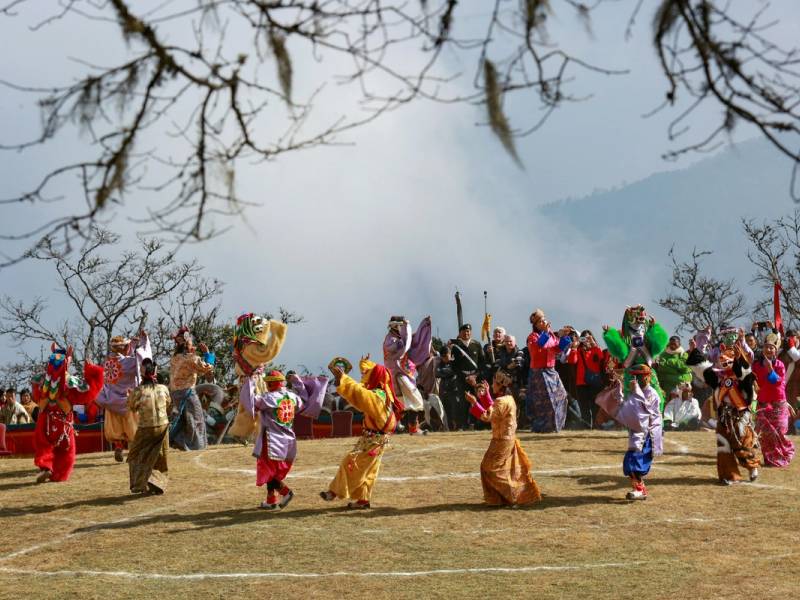
- Hosts the Thimphu Tshechu's masked dances
Where the King works and the monks spend the summer
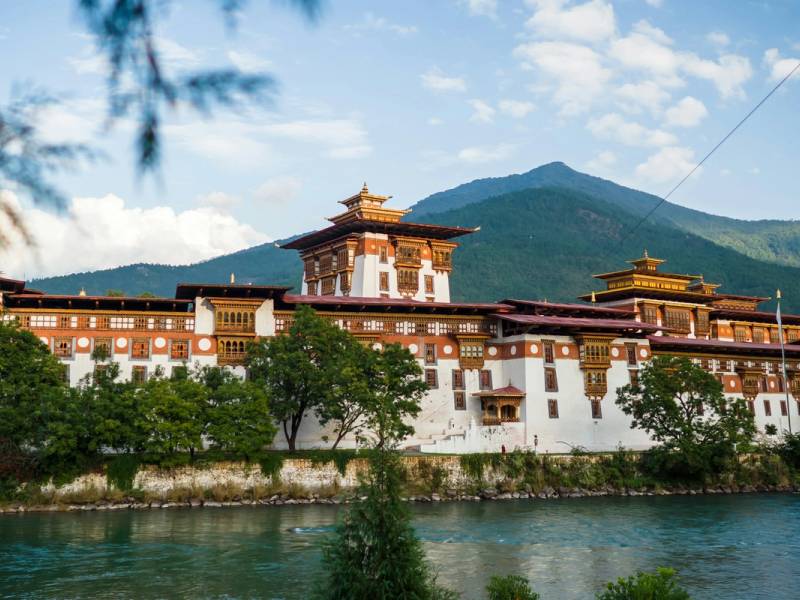
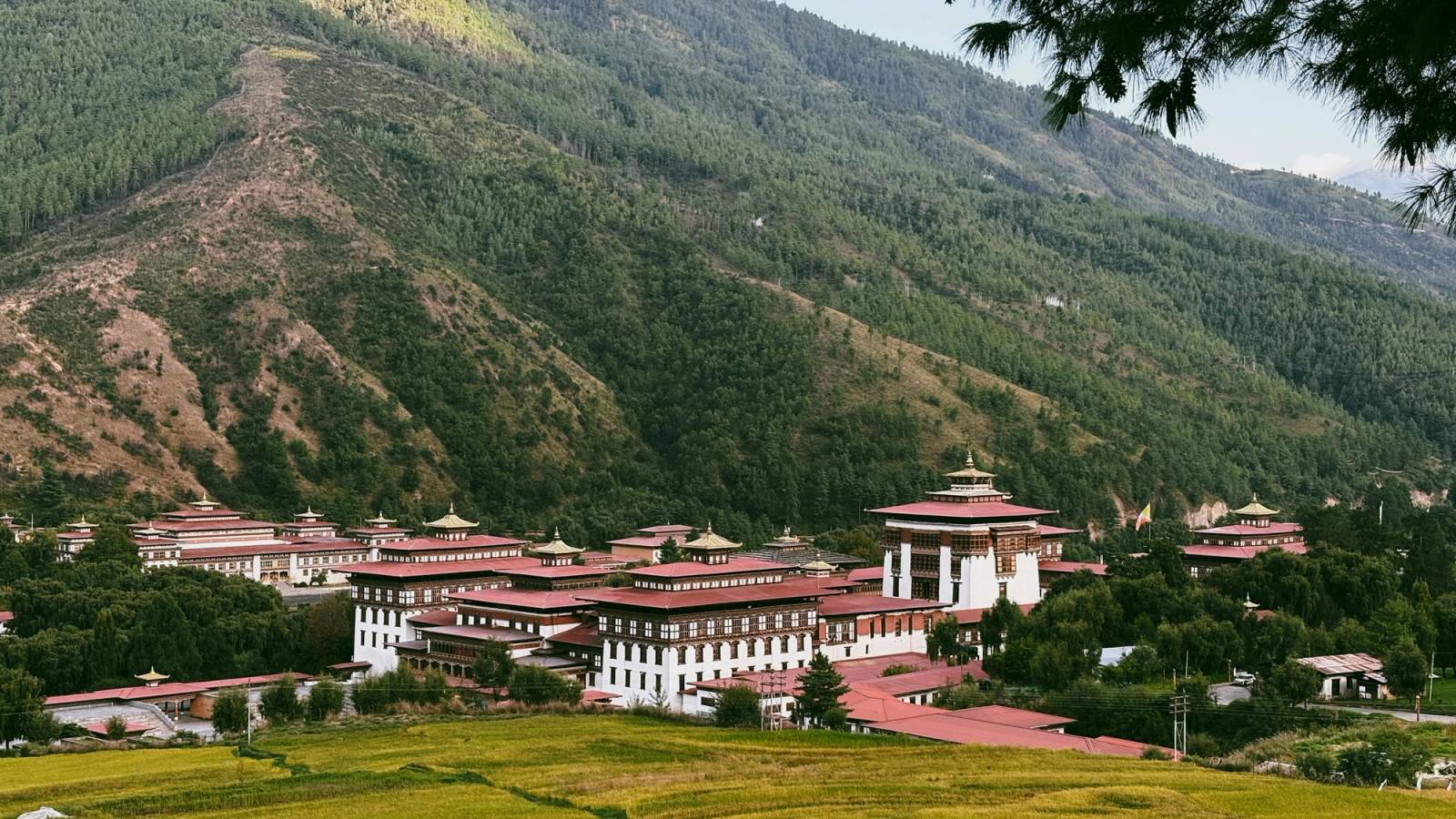
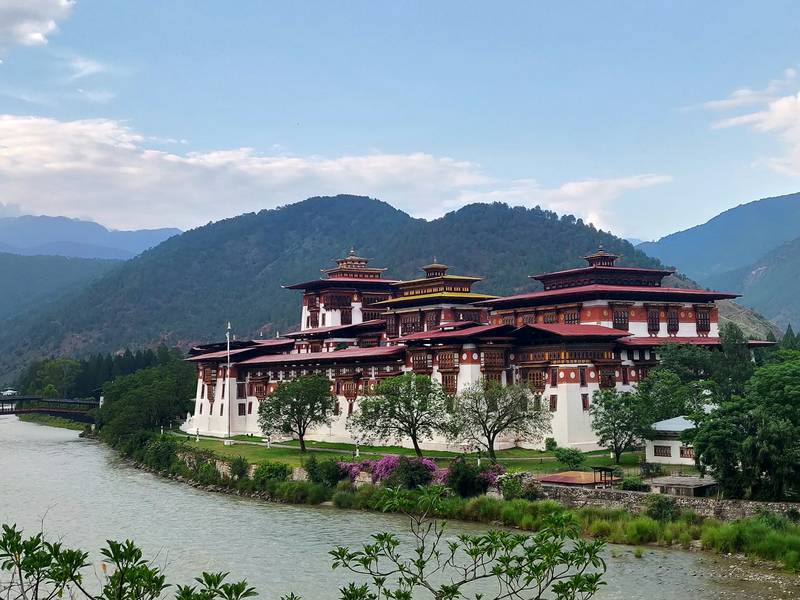
Tashichho Dzong stands on the west bank of the Wang Chhu at the northern end of Thimphu, and it is the building most Bhutanese picture when they think of the capital. It holds the throne room and the offices of His Majesty the King, the cabinet secretariat and several ministries. It is also the summer home of the Central Monastic Body and the Je Khenpo, Bhutan’s chief abbot, who move here each summer from Punakha Dzong.
That mix of government and religion under one roof is the old Bhutanese idea of a dzong. In most dzongs today the offices are local ones. Here they are national, so the people crossing the courtyard with you might be monks, clerks or a minister.
From a small monastery to the seat of government
The story of the site starts in 1216, when Lama Gyalwa Lhanangpa built a small monastery here called Dho-Ngon Dzong, the “blue stone” dzong. In 1641 Zhabdrung Ngawang Namgyal, the lama who unified Bhutan, took it over and rebuilt it as a dzong. It has been Tashichho Dzong ever since, a name often translated as “fortress of the glorious religion”.
The building has had a hard life. A fire in 1772 destroyed much of it, more fires followed, and an earthquake in 1897 did serious damage. Each time it was repaired.
The dzong you see today is largely the work of the Third King, Jigme Dorji Wangchuck. Once Thimphu had become the capital, he had the dzong rebuilt and greatly enlarged from 1962 to house the government, on a different plan from the old one. It was consecrated in 1968. Only a few parts of the older dzong survive inside the new one, among them the central tower and the main protector temple.
What to look for
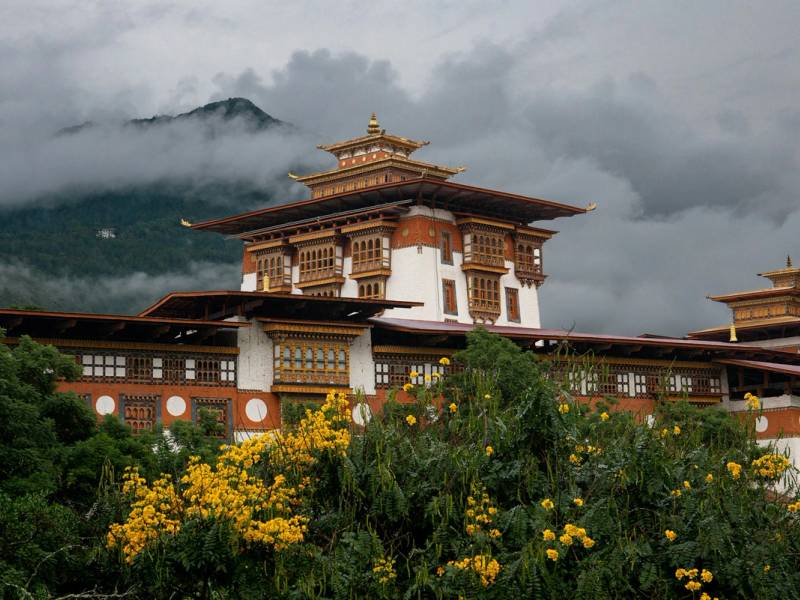
- The outline. Long whitewashed walls rise two storeys, with three-storey towers at the corners under tiered golden roofs. Seen from the road as you approach, it looks less like a fort than a small walled town.
- The central tower. The utse, the tall tower at the heart of the dzong, is one of the parts that survived from the older building.
- Woodwork and paint. Look up at the carved and painted window frames, brackets and beams. None of it is decoration for visitors. It is the same work you will see in any dzong or farmhouse, just on a grander scale.
- The scarves. Officials in the dzong wear a kabney, a long scarf over the gho, and its colour shows rank. Most men wear white; ministers wear orange; only the King and the Je Khenpo wear yellow. Your guide will put on a kabney too before you go in.
- Monks going about their day. In the summer months you will see young monks crossing the courtyard between prayers and classes. Keep a respectful distance and don’t photograph them without asking.
The Thimphu Tshechu
Once a year the dzong hosts the Thimphu Tshechu, the capital’s biggest festival, with several days of masked dances in honour of Guru Rinpoche. It follows the lunar calendar and usually falls in late September or early October; the Thimphu dzongkhag administration (opens in a new tab) has a short description. Check the year’s dates in our festival calendar, and read our first-timer’s guide to tshechu festivals before you go. Hotels in Thimphu fill up early in festival week, so if the tshechu is the reason for your trip, plan it well ahead or look at our festival tours.
Visiting: timings, dress and photographs
This is a working government building, not a museum. Visitors are let in only at set times, which change with the season and with official events, and parts of the dzong are always closed. We plan the visit around those times, and your guide will know on the day which parts are open.
- Guide. Visitors need a licensed guide to enter dzongs and monuments in Bhutan, as the Department of Tourism’s FAQs (opens in a new tab) explain. Your guide handles the formalities at the gate.
- Dress. Cover your shoulders and knees: long sleeves, long trousers or a long skirt, and no hats inside. Smart-casual is right. Our cultural etiquette guide has the details.
- Photographs. You can photograph the courtyards and the outside of the buildings. Photography is not allowed inside the temples.
- Inside the temples. Take off your shoes and walk clockwise. Step over the high wooden thresholds rather than on them.
- How long and how hard. Allow about an hour. The courtyards are flat and paved; the only effort is a few steep wooden stairs and those thresholds.
Getting there
The dzong is at the northern end of town, a short drive from the centre along the river, on the way towards Dechencholing. Your driver will drop you near the entrance.
It fits easily into a half-day in the north of the city. The Textile Museum at the Royal Textile Academy is close by, and the hill of Motithang, with the takin preserve and Changangkha Lhakhang, is a short drive up the slope. Buddha Dordenma sits at the opposite, southern end of the valley.
Tips from our guides
- Visit late in the day if you can. The low sun on the whitewashed walls and golden roofs gives the best light for photographs of the outside.
- Bring something with long sleeves, even in summer. It is the part of the dress code people most often forget.
- Keep your voice down in the monks’ courtyard. People here are working or praying.
- Pair it with Punakha. Seeing Tashichho in Thimphu and then Punakha Dzong a day later shows you the two halves of the monk body’s year. The drive over Dochu La links them.
- First day in town? Our first day in Thimphu article shows how the dzong fits with the rest of the city.
Last reviewed 24 September 2026
More to see in Thimphu
Buddha Dordenma
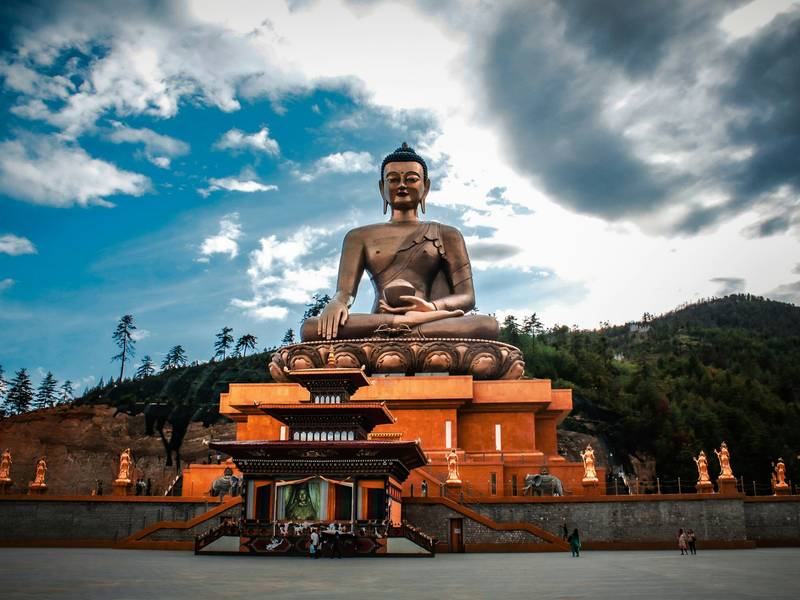
A gilded bronze Buddha more than 50 metres tall on the hill of Kuensel Phodrang, looking over the southern approach to Thimphu. Completed in 2015 for the Fourth King's 60th birth anniversary, it holds 125,000 smaller Buddhas and has wide views of the valley.
National Memorial Chorten
A white chorten with a golden spire in the middle of town, built in 1974 in memory of the Third King, Jigme Dorji Wangchuck. All day, older residents walk clockwise around it and turn its big prayer wheels. It is the easiest place in Thimphu to watch everyday faith.
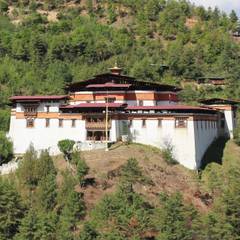
Simtokha Dzong
Built in 1629 by Zhabdrung Ngawang Namgyal, Simtokha was the first dzong he built and is one of the oldest in Bhutan still standing whole. It sits on a ridge about 5 km south of the city centre and is known for the carved slate panels of saints and masters on its outer walls.
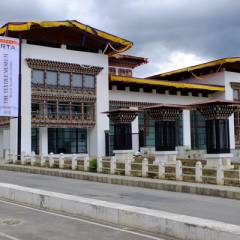
Textile Museum, Royal Textile Academy
The Royal Textile Academy of Bhutan in Chubachu runs the country's main textile museum, under the patronage of the Queen Mother, Gyalyum Sangay Choden Wangchuck. One gallery shows the weaves of each region and another holds changing exhibitions, and there is a weaving centre where you can watch the work.
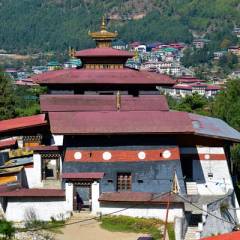
Changangkha Lhakhang
One of the oldest temples in Thimphu, on a ridge above the town, linked to Phajo Drugom Zhigpo and his family, who brought the Drukpa Kagyu school to western Bhutan in the 13th century. Its main image is Chenrezig, the deity of compassion, and parents bring newborn babies here for blessings and names.
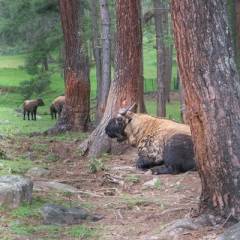
Motithang Takin Preserve
A fenced area of forest in Motithang where you can see the takin, Bhutan's national animal, up close. It began as a small zoo; when the Fourth King had the animals released, the takins wandered the streets of Thimphu, so they were given this preserve instead.
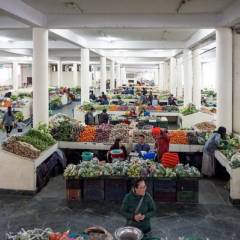
Kaja Throm (Centenary Farmers' Market)
Thimphu's main food market by the Wang Chhu, opened in 2008 as the Centenary Farmers' Market and long known as the weekend market. After a renovation it was renamed Kaja Throm in 2024. Farmers and traders sell vegetables, fruit, grains and dairy produce from across the country.
Planning a trip that includes Tashichho Dzong?
Tell us when you would like to travel. We reply within 24 hours with a free day-by-day plan and a price.

Karma ChodenOperations manager, Bhutan Tour Itinerary
Or call +975 17 81 70 52info@bhutantouritinerary.com
Mon–Sat, 9am–6pm Bhutan time (GMT+6)