A first-timer's guide to tshechu festivals
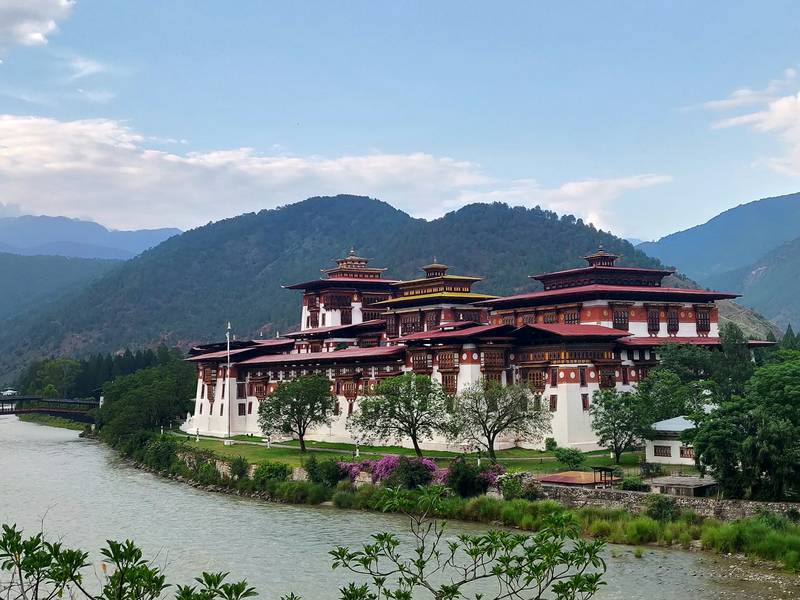
From the lively Paro Tshechu to the sacred Punakha Drubchen — the history behind Bhutan's festival calendar.
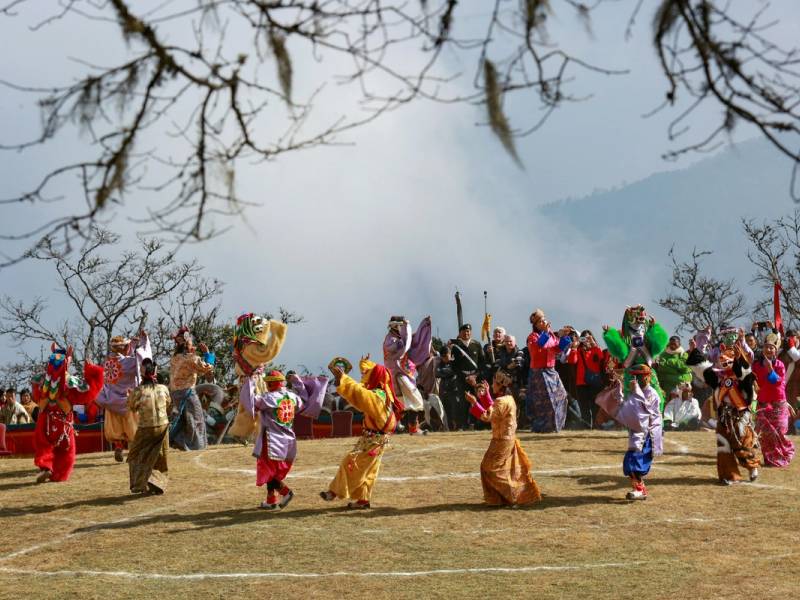
Every year, dzong courtyards across Bhutan fill with colour as communities gather for their tshechu — a festival honouring Guru Rinpoche, who brought Buddhism to the Himalaya.
The masked dances
The heart of every tshechu is cham: sacred masked dances performed by monks and laymen. Each dance tells a story — the triumph of good over evil, or the journey of the soul after death.
Tourism Bhutan’s short film from the 2022 Thimphu Tshechu shows the dances in the courtyard of Tashichho Dzong and the crowds who come to watch them.
This video is from YouTube, which may set cookies when it loads.
The thongdrel
On the final morning of many festivals, a giant appliqué thangka is unrolled across the dzong wall before sunrise. Simply seeing it is believed to cleanse one’s sins.
At the Paro Tshechu the thongdrel (the name means liberation by the sight of it) goes up at 3am on the fifth day. It is carried in procession from the dzong to the festival ground at Deyangkha, covers a three-storey building, and is taken back before sunrise. Its embroidery shows Guru Rinpoche’s eight manifestations and his two consorts.
When to go
- Punakha Drubchen & Tshechu — February/March
- Paro Tshechu — March/April
- Thimphu Tshechu — September/October
- Jambay Lhakhang Drup (Bumthang) — October/November