Best time to visit Bhutan
October for the mountains, February for the quiet, and a nightly fee that does not care which you pick.
On this page
- The short answer: October, April or February
- Bhutan month by month: weather, crowds and what’s on
- The four seasons, honestly
- When to trek: narrower windows than the seasons suggest
- Festival dates for 2026 and 2027, and why they move
- Is Bhutan cheaper in low season?
- Flights, roads and how far ahead to book
- Ask us
October is the short answer, and for most travellers it is the right one. The rest is trade-offs: the month with the best mountain days is also the month every good room in Paro is taken, and two months people write off are the ones we like best.
The short answer: October, April or February
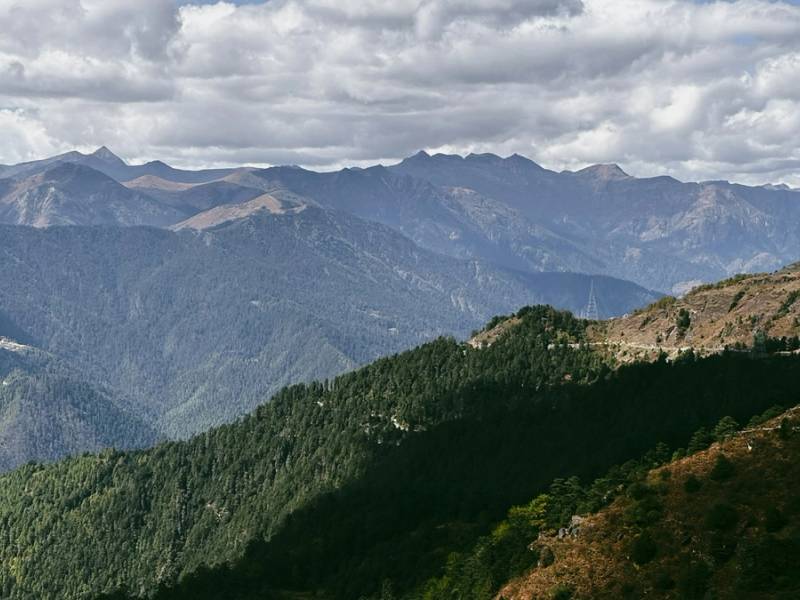
- October for dry trails, post-monsoon air and snow peaks from Dochu La (3,100 m) on the Thimphu–Punakha drive. Also the long-haul peak: 13,187 of October 2025’s 25,725 arrivals were international.
- Late March into April for rhododendrons on the passes, Paro at 7°C to 20°C, and Paro Tshechu at Rinpung Dzong.
- February for empty valleys: 9,539 arrivals in February 2026 against 47,343 in May, and the pick of the hotels and guides.
Bhutan month by month: weather, crowds and what’s on
Arrival figures are Bhutan’s own: January to June 2026, plus October 2025 for the autumn peak. The second half of 2026 was not published at the time of writing.
| Month | Paro & Thimphu | Arrivals | What’s on |
|---|---|---|---|
| January | Thimphu −2 to 15°C, 5 mm; Paro −1 to 13°C | 10,627 | Cranes in Phobjikha; monk body at Punakha Dzong |
| February | Cold, dry, clear | 9,539, quietest | Punakha Drubchen 14–18 Feb, Tshechu 16–18 Feb 2027 |
| March | Warming, snow off the passes | 26,092 | Paro Tshechu 18–22 March 2027 |
| April | Thimphu 8 to 22°C, 30 mm; Paro 7 to 20°C | 30,345 | Rhododendron Festival, Lamperi, three days |
| May | Warm, monsoon not in yet | 47,343, busiest | — |
| June | Punakha 20 to 30°C; monsoon normally in by 5 June | 25,195 | — |
| July | Thimphu 16 to 27°C, 155 mm; Paro 15 to 24°C, 120 mm | — | Phuentsholing takes 963 mm this month alone |
| August | Over 70% of the year’s rain falls June–September | — | Roads least reliable |
| September | Rain tails off, first clear skies | — | Thimphu Tshechu 21–23 Sept 2026, Tashichho Dzong |
| October | Thimphu 9 to 24°C, 45 mm; Paro 9 to 20°C | 25,725 (Oct 2025) | Royal Highland Festival (Laya) 23–24 Oct; Jambay Lhakhang Drup 26–29 Oct 2026 |
| November | Thimphu 3 to 20°C, almost no rain | — | Crane Festival, 11 November, Gangtey |
| December | Cold, dry, clear | — | Chele La (3,988 m) and Thrumshing La (3,780 m) take snow |
The four seasons, honestly
Spring (March to May)
The Royal Botanical Park at Lamperi, beside Dochu La at about 3,100 m, holds 46 rhododendron species and has run a three-day Rhododendron Festival every April since 2013. It is the stop to time your dates around.
The catch is company: about 72% of first-half 2026 arrivals were Indian visitors, which is why valley sights feel full in May while long-haul numbers peak in October.
Summer and the monsoon (June to August)
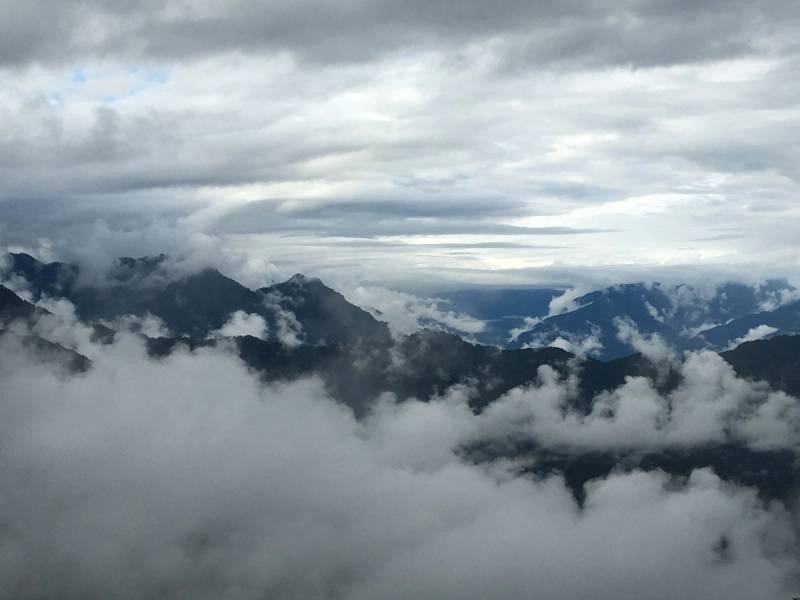
The National Center for Hydrology and Meteorology (opens in a new tab) puts the normal monsoon onset at 5 June, and more than 70% of the year’s rain falls between June and September. What that ruins is high trekking, mountain views and the southern highway. A cultural trip through the western valleys still works.
Roads are the real cost: landslides accounted for 241 blockages and debris flows another 57, about 98% of them in the monsoon, and the average closure ran 6.67 days against a third of a day in the dry season.
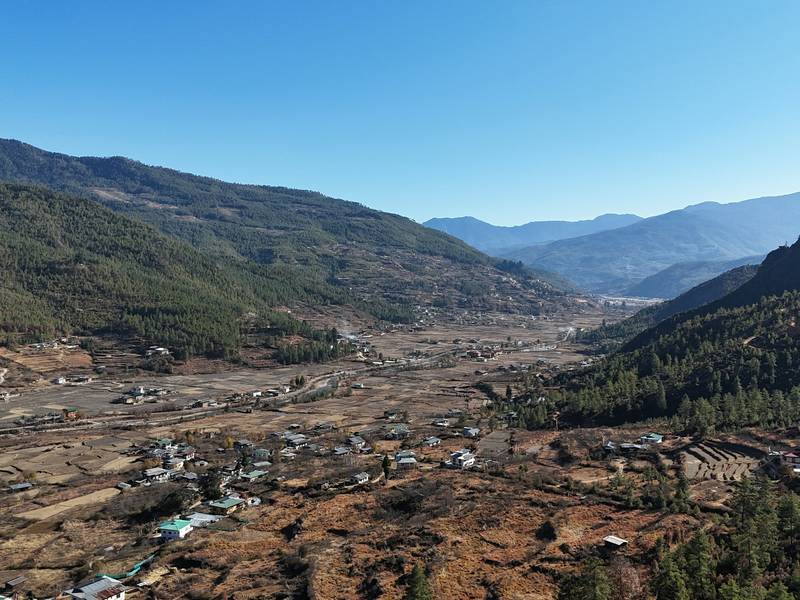
Paro is drier than people expect, about 565 mm a year against 3,953 mm at Phuentsholing on the southern border. Punakha, at 1,235 m, runs 21°C to 31°C (70–88°F) in July.
Autumn (September to November)
Late September is the window most people miss: Thimphu Tshechu falls 21–23 September in 2026, ahead of high season proper, with the first clear post-monsoon skies behind the dances.
The cost is availability. Drukair (opens in a new tab) and Bhutan Airlines (opens in a new tab) sell at government-regulated fixed fares, so booking early buys a seat, not a discount. In autumn that seat is the scarce part, and we ask clients to commit months out rather than weeks.
Winter (December to February)
Nights are cold, Thimphu down to about −2°C (28°F) in January, but the days are bright. Punakha sits 8–12°C warmer, 6°C to 19°C, which makes it the sensible winter base and the liveliest: the Je Khenpo and the central monk body move down to Punakha Dzong from roughly November to April.
Black-necked cranes are in Phobjikha from late October to mid-February, 300 to 500 of the 600 to 700 that reach Bhutan, with late November to January the most reliable viewing. More in Phobjikha and the black-necked cranes.
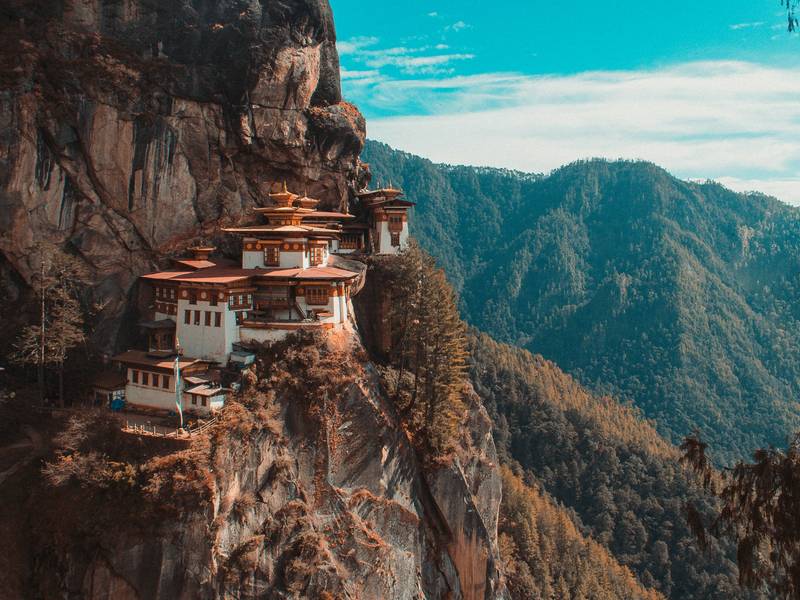
What winter takes is high trekking. Tiger’s Nest stays open: 3,120 m above a 2,100 m trailhead, four to five hours round trip, with an icy first hour in January. See the Tiger’s Nest hike and what to pack.
When to trek: narrower windows than the seasons suggest
- Snowman Trek (5,230 m at its highest): mid-September to late October and no wider, with snow-choked passes before and early-winter snow after.
- Jomolhari: late March to May, then late September to October, with October the prime month.
- Druk Path, about 4,210 m at Phume La from trailheads near 2,400 m: the same two windows.
Route detail in trekking in Bhutan, sleeping high in altitude and health, and our trekking tours are dated to these windows.
Festival dates for 2026 and 2027, and why they move
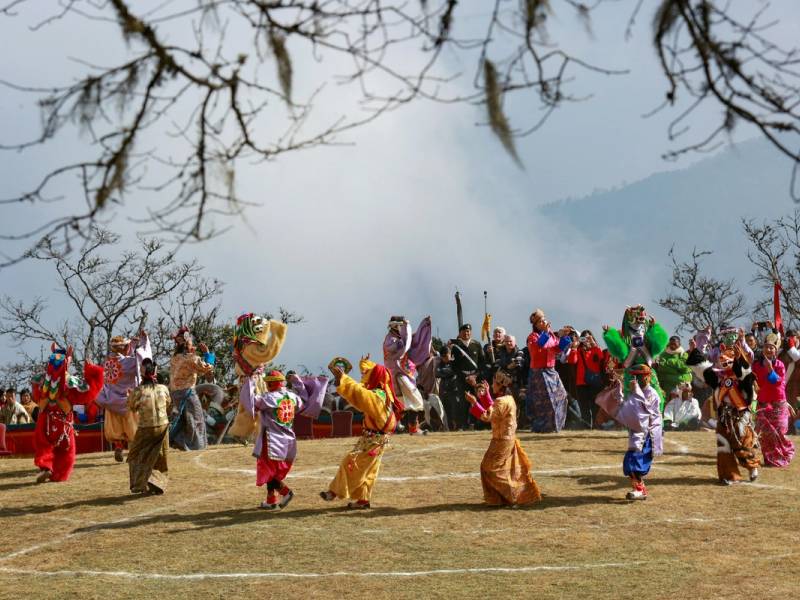
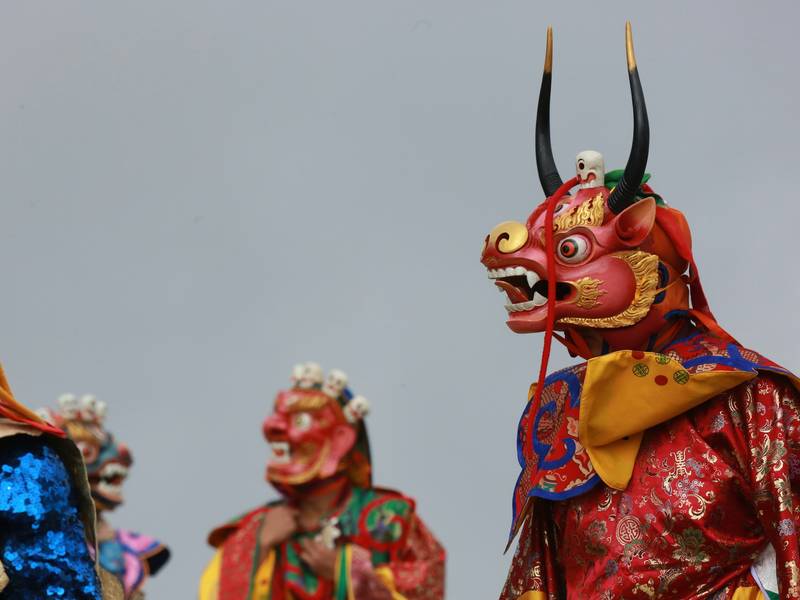
Tshechu dates follow the Bhutanese lunar calendar and shift by weeks year to year. Paro Tshechu ran 29 March to 2 April in 2026; in 2027 it falls 18–22 March. Never book flights against last year’s dates.
- Thimphu Tshechu, 21–23 September 2026, Tashichho Dzong. The biggest, and well placed against the weather.
- Jambay Lhakhang Drup, 26–29 October 2026, Bumthang: the midnight fire ritual and the Tercham.
- Royal Highland Festival, 23–24 October 2026 at Laya, about 4,000 m, a multi-day trek in from Gasa.
- Punakha Drubchen and Tshechu, 14–18 and 16–18 February 2027: the reason to come in the year’s quietest month.
- Black-Necked Crane Festival, 11 November at Gangtey Goenpa. The one date in the calendar that does not move.
Full list on our festival calendar, and our festival tours are dated to it.
Is Bhutan cheaper in low season?
Not on the fees. The Sustainable Development Fee is USD 100 per person, per night. Not per day, and not seasonal. It halved from USD 200 on 1 September 2023 and is confirmed only through 31 August 2027, with nothing announced beyond that. Children under 6 are exempt and ages 6 to 11 pay half. The visa is a separate USD 40 per person, non-refundable, approved online in about five working days. We handle it.
Two things travellers still get wrong. There is no minimum daily spend: the old USD 200 low-season and USD 250 high-season package rate was abolished on 20 June 2022. And a tour operator has not been compulsory since September 2022, though a licensed Bhutanese guide is required inside dzongs and monasteries and beyond the Paro–Thimphu–Punakha corridor.
The fee has no low season. What moves with the calendar is hotel rates, room availability and airline seats, not the USD 100.
Full rates in visa and the Sustainable Development Fee; the arithmetic in what a trip costs.
Flights, roads and how far ahead to book
Paro International Airport is day-VFR only: no night landings, and the approach flown visually between mountains. Cloud, valley fog and afternoon wind are what delay and divert flights, which puts the risk in monsoon afternoons and winter fog mornings. We book morning departures where the schedule allows.
Drukair flies in from Bangkok, Delhi, Kolkata, Kathmandu, Singapore, Dhaka, Guwahati, Dubai and Bagdogra. Paro–Guwahati–Bangkok resumed on 2 April 2026 and a third weekly Paro–Guwahati–Singapore started on 7 April 2026. More in getting to Bhutan.
Five working days for the visa is never the constraint. Rooms are. Three hotels opened in 2026, which helps everywhere except October. For autumn and festival dates, come to us a few months out; for February or July, a few weeks usually does it.
Ask us
Give us your dates and we will tell you what they get you, including when they are the wrong dates. Clear mountains and a trek means October; festivals without the crowd, Punakha in February; rhododendrons, early April.
Send the rough idea through our contact page and we will come back with a month, an itinerary and a price, or start from our cultural tours and the full tour list.