Bhutan safety and health
Crime is low. What actually catches people out in Bhutan is the altitude, the mountain roads, the tap water and the dogs that bark all night.
On this page
- Is Bhutan safe for tourists?
- How high is Bhutan, and will you feel it?
- Can you drink the tap water?
- The roads are the real risk
- Stray dogs, rabies and mosquitoes
- What vaccinations do you need for Bhutan?
- Hospitals, ambulances and the numbers to save
- Children, older guests and women travelling alone
- Tell us before you worry about it
Bhutan is about as safe as travel gets: the US State Department still has it at Level 1, its lowest advisory. What catches guests out here is altitude, the mountain roads and the tap water.
Is Bhutan safe for tourists?
The FCDO puts it plainly: “Crime levels are low across Bhutan, but you should take the same precautions as you would at home.” Recorded crime is falling as well, 2,779 cases in 2022 against 2,462 in 2025, while road accidents nearly doubled over the same years. Which is why this guide is mostly about vehicles, not thieves.
Ordinary care, then. Don’t leave a camera on a cafe table in Thimphu.
How high is Bhutan, and will you feel it?
The numbers on a standard cultural route:
- Paro airport: 2,235 m (7,333 ft)
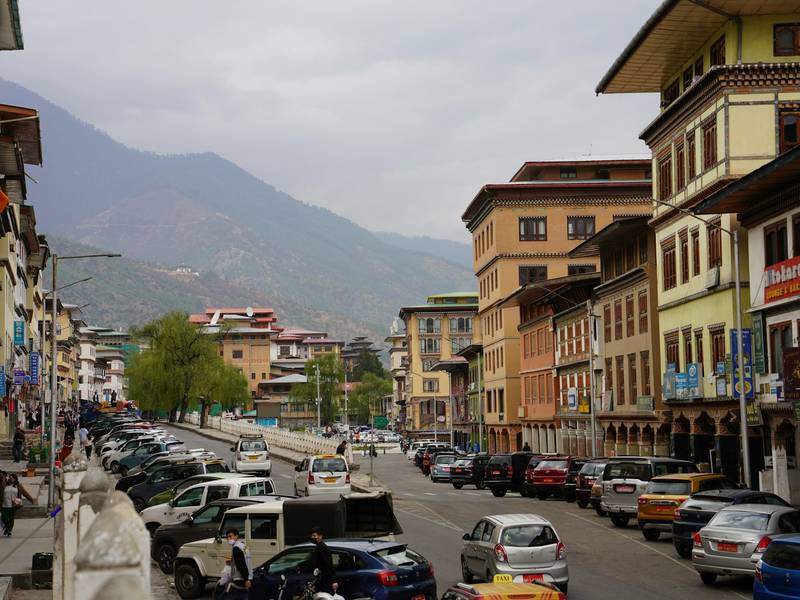
- Thimphu: about 2,320 m in the town centre, the city spread over 2,248–2,648 m. Asia’s highest capital, not the world’s
- Punakha: 1,242 m, warm enough for 30–31°C (86–88°F) summer afternoons
- Jakar, Bumthang: 2,587 m
- Chele La above Paro: 3,988 m (13,083 ft), Bhutan’s highest motorable pass
CDC puts the risk threshold at a sleeping altitude of 2,450 m (8,000 ft), sometimes lower. On the Paro–Thimphu–Punakha–Bumthang circuit only Bumthang sleeps above that line. Passes are higher but brief: Dochula is 3,100 m for as long as it takes to photograph the 108 Druk Wangyal Chortens.
What altitude sickness feels like
Symptoms show up 2 to 12 hours after you gain height: headache above all, often with loss of appetite, dizziness, fatigue or nausea. In our experience a mild headache on the first night in Thimphu is common and passes.
Tell your guide anyway. CDC’s three rules: admit to the early symptoms, never sleep higher while you have them, go down if they worsen despite treatment at the same elevation.
Two things are emergencies. HACE looks like drunkenness in a sober person: confusion, drowsiness, unsteady walking. HAPE brings chest congestion, a cough and breathlessness far beyond the effort. Both mean losing height at once: from Thimphu, the three-hour drive over Dochula to Punakha at 1,242 m.
Acetazolamide (Diamox) is your doctor’s call, and most guests on a cultural itinerary never take it. The CDC prophylactic dose is 125 mg twice a day, started the day before you go up.
Tiger’s Nest, and trekking
Paro Taktsang is the hardest exertion on most cultural trips: about 900 m of climb to roughly 3,120 m, four to five hours round trip, with a cafeteria at 2,950 m where plenty of people stop. More a fitness question than an altitude one.
Treks are another matter. The Snowman crosses 11 passes, several above 5,000 m, topping out near 5,320 m. Above 3,000 m we plan no more than 500 m of sleeping-altitude gain a night plus an acclimatisation day per 1,000 m climbed. It is why our trekking itineraries look slow on paper.
Can you drink the tap water?
No. Bhutan’s water is clean where it starts and not reliably clean where it arrives: surveillance from 2017 to 2024 found only 52.8% of urban samples met the standard of zero E. coli per 100 ml, and 67 of 186 Thimphu samples in 2024 were positive. Bottled, filtered and treated water showed none, so drink those, brush your teeth with them and skip the ice. We keep a supply in the vehicle.
The food is easier than its reputation, though the chili is real: it counts as a vegetable here, not a seasoning, and ema datshi is whole green or red chilies in a cheese sauce with red rice. Tell your guide on day one if you want things mild, and tell us before you arrive if you are lactose intolerant: datshi, a fresh cottage-style cheese, runs through the cuisine. More in our food and drink guide.
The roads are the real risk
The FCDO names crashes, not crime, as one of the biggest causes of injury and death here. Police recorded 1,448 road accidents in 2025: 76 of them fatal, 103 people killed, and passengers made up 448 of the casualties.
So we drive between valleys in daylight, seatbelts on, and don’t make up lost time. Thimphu to Punakha is 72 km and about three hours over Dochula, the ratio to expect from any Bhutanese map.
Snow closes Thrumshing La (3,780 m), the crossing into eastern Bhutan, most winters. Monsoon landslides can cut a road for days, so in summer we keep a buffer day before your flight home. See when to visit.
Stray dogs, rabies and mosquitoes
On 4 September 2026 WHO validated Bhutan for eliminating dog-mediated human rabies as a public health problem, the first country in its South-East Asia Region; nobody has died of it here since June 2023. A national programme sterilised 100% of free-roaming dogs and vaccinated 90% by October 2023; the notched ear you see on street dogs means exactly that.
That is not the same as rabies-free. Animal rabies still circulates, mainly in southern and eastern districts near the border, so wash any bite or scratch at once and see a doctor the same day; CDC notes rabies vaccine may only be stocked at larger urban facilities. The real problem with Thimphu’s dogs is that they bark all night. Bring earplugs.
Mosquitoes are a lowland matter. Dengue is present and Japanese encephalitis risk peaks June to October. Malaria is confined to five southern districts, with no indigenous cases since November 2021, so on a western-circuit itinerary you avoid bites and skip the tablets.
What vaccinations do you need for Bhutan?
Take this to your doctor before you fly. CDC advises routine vaccines up to date plus hepatitis A, hepatitis B and typhoid for most travellers, with Japanese encephalitis and rabies weighed against your itinerary; the UK’s NaTHNaC adds tetanus. A yellow fever certificate matters only if you arrive from a country with transmission risk.
Sun is the underrated one. UV climbs about 10% per 1,000 m of altitude and fresh snow can nearly double your exposure: the Chele La problem in winter, the Taktsang problem in any month. Sunscreen, SPF lip balm, sunglasses and a hat, reapplied at the cafeteria. See our packing guide.
Hospitals, ambulances and the numbers to save
All toll-free:
| Service | Number |
|---|---|
| Police, general emergency | 113 |
| Ambulance and medical | 112 |
| Fire and rescue | 110 |
| Traffic | 111 |
| Disaster helpline | 999 |
In Thimphu, 1010 reaches any of them. 112 is the Health Help Center: ambulances and advice by phone.
Almost every district has a Basic Health Unit, but for anything serious one hospital matters: Jigme Dorji Wangchuck National Referral Hospital (opens in a new tab) in Thimphu, around 350 beds. Elsewhere care is basic and complex cases go to India or Thailand. The Bhutan Emergency Aeromedical Retrieval team flies doctors out of a Thimphu helipad when JDWNRH physicians authorise it.
Insurance is no longer a condition of your visa and still not optional. The FCDO advises cover for medical treatment abroad, helicopter evacuation and repatriation; check it covers the highest point on your itinerary.
Bring prescription medicines in their original packaging with a copy of the prescription: Thimphu pharmacies stock common medicines, not necessarily yours.
Children, older guests and women travelling alone
Children travel well here, and the Sustainable Development Fee is currently USD 50 a night for ages 6 to 11 and nothing under 6, against the adult USD 100 (visa and SDF). We shorten the drives, weight the itinerary toward warm, low Punakha, and treat the Taktsang cafeteria as a fine turnaround.
For older or less mobile guests the limits are steps and hours in the car, not altitude: dzong stairs are steep and wooden and the thresholds are high.
Women travelling alone do well here, and you are with a guide and driver most of the day anyway. Since September 2022 nobody has to book through a tour operator, though a licensed guide is still required for dzongs and monasteries and beyond the Paro–Thimphu–Punakha corridor. Temple conduct is in our cultural etiquette guide.
Tell us before you worry about it
If you have a heart or lung condition, a pregnancy, a mobility limit or a medication schedule that matters, say so when you enquire. It changes which valleys we route you through and how long you sit in a vehicle, easier to plan now than to fix in Bumthang.
Send us your dates and we will tell you honestly whether the trip you want fits. Browse our tours or get in touch.