Bumthang
- Region
- Central Bhutan
- Altitude
- 2,500–3,100 m
- Best time
- March–May and September–November; October–November for the clearest skies and Jambay Lhakhang Drup
- Getting there
- About 2.5–3 hours by road from Trongsa over Yotong La, or a short Drukair flight from Paro
Why Bumthang is worth the drive
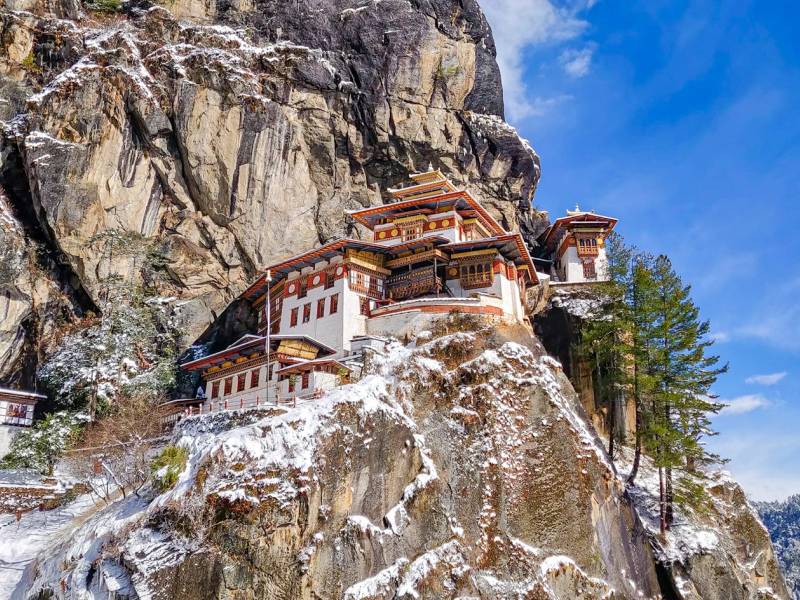
Bumthang is where Buddhism in Bhutan has its oldest roots. Jambay Lhakhang is said to date from 659, and in the 8th century Guru Rinpoche meditated in a cave above the river here, leaving the body print that gives Kurjey Lhakhang its name. Pema Lingpa, the treasure revealer born in the Tang valley in 1450, founded Tamshing Lhakhang in 1501, and the royal family counts him among its ancestors. Few parts of the country hold so many old temples within a short drive of each other.
It is also quieter than the west: temples, farm tracks and small towns rather than traffic. If you have already seen Paro and Thimphu, Bumthang shows you a more rural Bhutan.
Four valleys, one district
Bumthang is a district of four valleys: Chokhor, Tang, Chhume and Ura. The valley floors sit between about 2,500 m around Jakar and 3,100 m at Ura, and the farms grow buckwheat, wheat, potatoes and apples and keep cattle for dairy.
- Chokhor is the largest valley and holds Jakar, the main town, with most of the well-known temples close by.
- Chhume is on the road in from Trongsa and is known for yathra, the thick, patterned wool cloth that women across the valley weave for blankets, bags and jackets.
- Tang is the narrowest and most remote, a side valley of scattered farms where Pema Lingpa was born.
- Ura is the highest, a farming village at about 3,100 m, some 48 km from Jakar over the Shertang La pass.
The main sights around Jakar
You can see the best-known temples of the Chokhor valley in a day:
- Kurjey Lhakhang, three temples built against the cliff where Guru Rinpoche left his body print, and the final resting place of Bhutan’s first three kings.
- Jambay Lhakhang, said to be one of 108 temples the Tibetan king Songtsen Gampo built in a single day in 659 to pin down a demoness. The other well-known temple of the 108 in Bhutan is Kyichu Lhakhang in Paro.
- Tamshing Lhakhang, Pema Lingpa’s temple on the far bank of the river, with murals painted in the early 1500s that are among the oldest in the country.
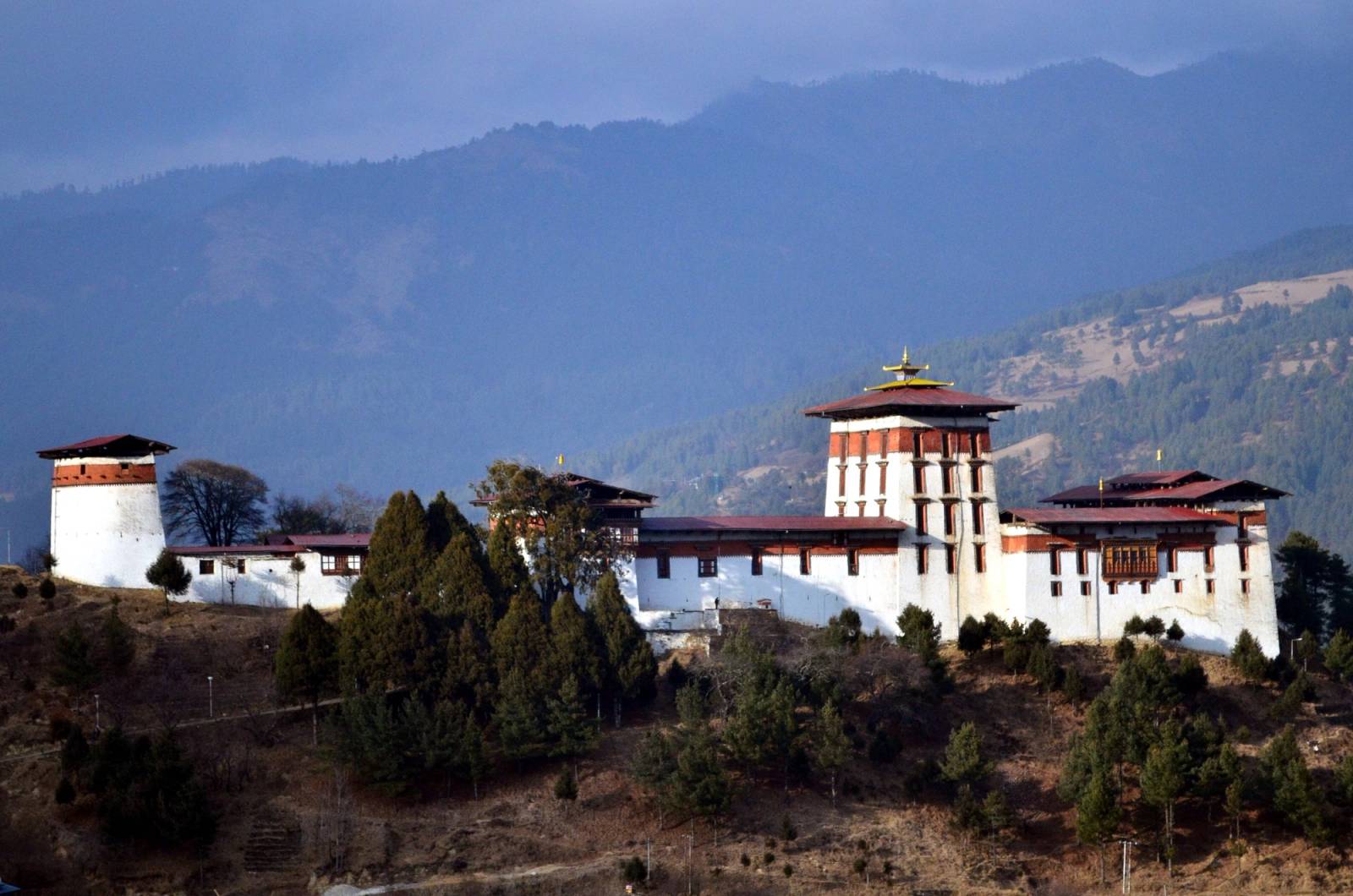
- Jakar Dzong, on the ridge above the town, which grew from a monastery founded in 1549. Its name is usually translated as “white bird”.
Tang valley and the Burning Lake
About 30 minutes’ drive from town, the road into Tang passes Mebar Tsho, the Burning Lake. It is a deep pool in the river gorge where Pema Lingpa is said to have dived in holding a lit butter lamp and come out with treasure, the lamp still alight. The rocks are slippery and people have drowned here, so stay well back from the water. Further up the valley, about 37 km from Jakar, the Ogyen Choling manor has been a museum since 2001.
When to go
Spring (March to May) and autumn (September to November) are the most comfortable seasons, and October and November are usually the driest and clearest months. Summer is green and wet, with most of the year’s rain in July and August. Winter days can be bright, but nights in Jakar average below freezing in December and January. Our guides to the best time to visit and the weather by region go into more detail.
Bumthang’s festivals are among the most local in the country:
- Ura Yakchoe, in April or May, when a sacred relic kept in the village is shown to the public.
- Kurjey Tshechu, in June or early July, with mask dances in front of Kurjey Lhakhang.
- Jambay Lhakhang Drup, in October or November, with the mewang fire blessing and the midnight tercham dance, which may not be photographed.
Dates follow the lunar calendar and move every year, so check the festival calendar or read our first-timer’s guide to tshechu festivals.
Getting there and how long to stay
Most people come by road from the west, often with a night in Phobjikha or Trongsa on the way. The last stretch, from Trongsa over the Yotong La pass, takes about 2.5 to 3 hours. Drukair (opens in a new tab) also flies from Paro to Bathpalathang airport near Jakar several times a week, which saves a long day on the road. Our guide to getting around Bhutan explains how flights and drives fit together.
Give Bumthang at least two full days, or three if you want Ura or the Tang valley as well. Our ten-day Bumthang Heartland Journey is a ready-made route we can adjust to your pace. The Bumthang Dzongkhag administration (opens in a new tab) also keeps short notes on the main temples.
Photo: Christopher J. Fynn, CC BY-SA 3.0, via Wikimedia Commons (opens in a new tab)
Things to see in Bumthang
Kurjey Lhakhang
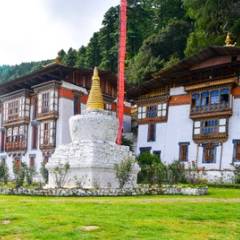
Three temples built against the cliff where Guru Rinpoche is said to have meditated in the 8th century and left the print of his body in the rock. The oldest building dates from 1652, and the complex is the final resting place of Bhutan's first three kings.
Jambay Lhakhang
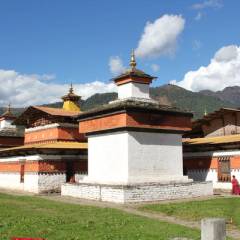
Said to be one of 108 temples the Tibetan king Songtsen Gampo built in 659 to pin down a demoness, which makes it one of the oldest in Bhutan. Each October or November its courtyard holds the Jambay Lhakhang Drup, with a fire blessing and a midnight dance.
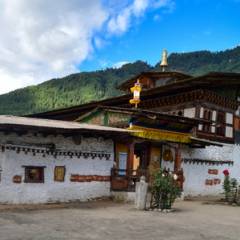
Tamshing Lhakhang
Founded in 1501 by the treasure revealer Pema Lingpa, Tamshing has murals from the early 1500s that are among the oldest in Bhutan, and it is on the country's tentative list for World Heritage. Pilgrims try to carry a heavy chain-mail coat, said to be his work, around the inner sanctum.
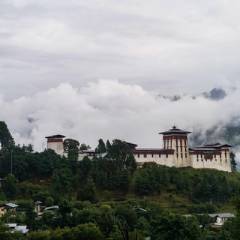
Jakar Dzong
The dzong on the ridge above Jakar grew from a monastery founded in 1549 by the Tibetan lama Ngagi Wangchuk. Its name is usually translated as "white bird", after a bird that settled on the ridge and marked the spot, and it looks out over the whole Chokhor valley.
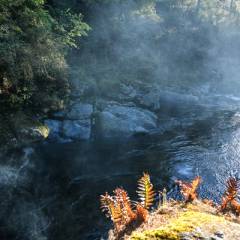
Mebar Tsho
Mebar Tsho, the Burning Lake, is a deep pool in the Tang river gorge, about 30 minutes' drive from Jakar, where Pema Lingpa is said to have dived in holding a lit butter lamp and come back with treasure, the lamp still burning. The rocks are slippery and the current is strong, so stay back from the edge.
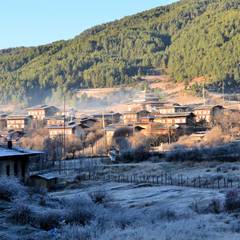
Ura valley
Bumthang's highest valley, a farming village at about 3,100 m, roughly 48 km from Jakar over the Shertang La pass. It is quieter than the Chokhor valley and best known for the Ura Yakchoe festival in April or May, when a sacred relic kept in the village is shown to the public.
Places near Bumthang
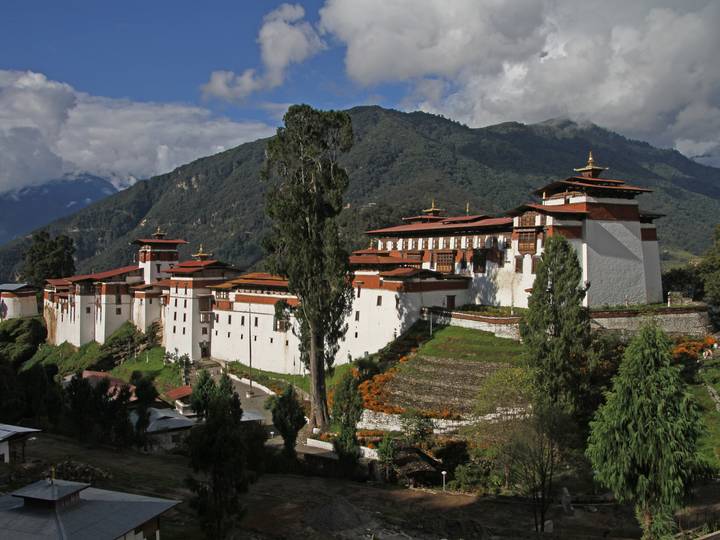
Trongsa
The town that held the middle of the country: a great dzong above the Mangde Chhu and the watchtower museum of the Wangchuck kings.
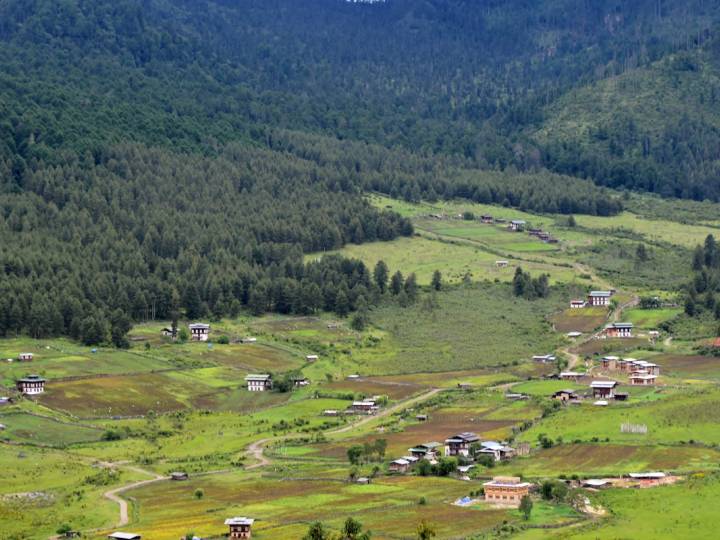
Phobjikha and Gangtey
A wide glacial valley at about 3,000 m where black-necked cranes spend the winter, below the old monastery of Gangtey.
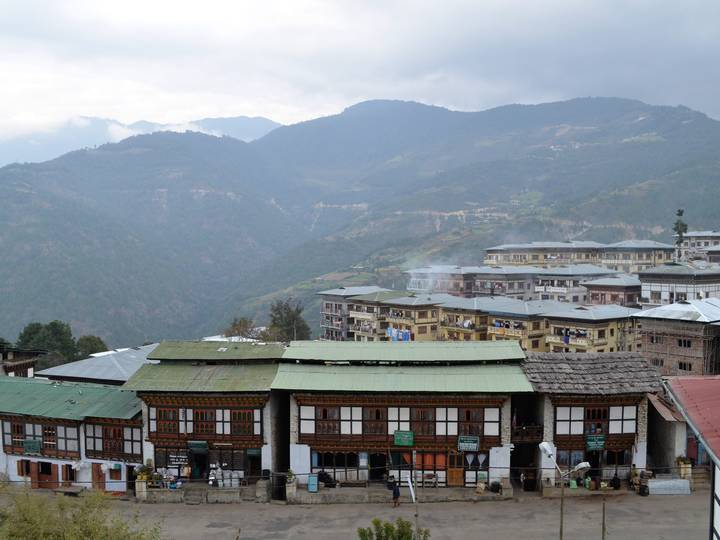
Mongar
Where eastern Bhutan begins: a district town at 1,600 m, the ruins of Zhongar Dzong and Drametse, the monastery of the drum dance.
Planning a trip that includes Bumthang?
Tell us when you would like to travel. We reply within 24 hours with a free day-by-day plan and a price.

Karma ChodenOperations manager, Bhutan Tour Itinerary
Or call +975 17 81 70 52info@bhutantouritinerary.com
Mon–Sat, 9am–6pm Bhutan time (GMT+6)