Mongar
- Region
- Eastern Bhutan
- Altitude
- 1,600 m
- Best time
- March–May and September–November; November or December for the tshechu
- Getting there
- About 6–8 hours by road from Bumthang over Thrumshing La
Where eastern Bhutan begins
Mongar is the district town where eastern Bhutan begins, about 460 km east of Thimphu. The town stands at about 1,600 m; the district runs from subtropical valleys at 400 m in the south to temperate country at 4,000 m in the north. The town has the region’s referral hospital. Plan at least one night here to break the drive between Bumthang and Trashigang.
From Zhongar to Mongar
The district was once governed from Zhongar Dzong, which the district administration dates to the 17th century. Its name, Zhongkar, means “white bowl”, and its courtyard was long enough for an archery range. A fire and then a great earthquake left it in ruins, and the district’s seat moved to Mongar.
Two temples in the district go back to the family of Pema Lingpa (1450–1521), the Bumthang treasure revealer: his granddaughter, or by some accounts his daughter, founded Drametse in 1511, and his youngest son Sangdag built Yakgang Lhakhang in the same century.
What to see in Mongar
Mongar Dzong. The present dzong was built in the twentieth century to replace Zhongar, although its central tower (utse) is older than the rest. It is unusual in having two entrances, and the utse holds four temples, including a protector chapel and the Sangay Lhakhang. Local sites are listed by the Mongar Dzongkhag Administration (opens in a new tab).
Drametse Lhakhang. The largest monastery in eastern Bhutan was founded in 1511 by Ani Chhoeten Zangmo, who named the place Drametse, “the peak where there is no enemy”. It is the home of the Drametse Ngacham, the mask dance of the drums, performed at its festival twice a year by sixteen masked dancers and ten musicians and inscribed by UNESCO (opens in a new tab) as intangible cultural heritage. The turn-off is at Thungdari on the road to Trashigang; 18 km of rough road then climbs 1,350 m, about 1–1.5 hours each way, and needs a 4WD after rain.
Yakgang Lhakhang. A short drive southwest of town, this 16th-century temple is kept by a lama whose post passes from father to son. On request he shows the relics in the house next door: wood blocks, a lute, puppets of local protectors and old cham masks made by Pema Lingpa’s son, used at the temple’s tshechu in the fifth lunar month.
Zhongar Dzong ruins. The ruins stand on a hilltop above the highway as you descend to Lingmethang from Bumthang. The paths up are overgrown, so go with a local guide. A birding trail of about 24 km follows the Trans Bhutan Trail from Latongla down to the ruins; more than 300 bird species have been recorded on it.
Seasons and the Mongar Tshechu
March–May and September–November are the clearest and most comfortable months. June–August brings rain and humid heat in the lower valleys. In winter snow can close Thrumshing La (3,780 m) on the road from Bumthang, so leave a spare day.
The Mongar Tshechu is held at the dzong in the tenth lunar month, in November or December; the Department of Tourism’s tentative dates for 2026 are 17–19 November. Yakgang Lhakhang holds its tshechu in the fifth lunar month. All dates are in our festival calendar.
For more, see the best time to visit Bhutan and Bhutan’s weather by region.
How Mongar fits into a trip
Mongar is about 6–8 hours by road from Bumthang over Thrumshing La, dropping more than 3,000 m to the Kuri Chhu on the way. Trashigang is about 3–4 hours east over the 2,400 m Kori La, and Lhuentse about 3–4 hours to the north.
The east is usually added to a central Bhutan trip after Bumthang, and we plan it privately on request. From Trashigang the road continues south to Samdrup Jongkhar on the Assam border, whose crossing the Department of Tourism opened to all tourists in November 2024; check the current entry points with us before starting or finishing a trip there. For cars, drivers and roads, see getting around Bhutan.
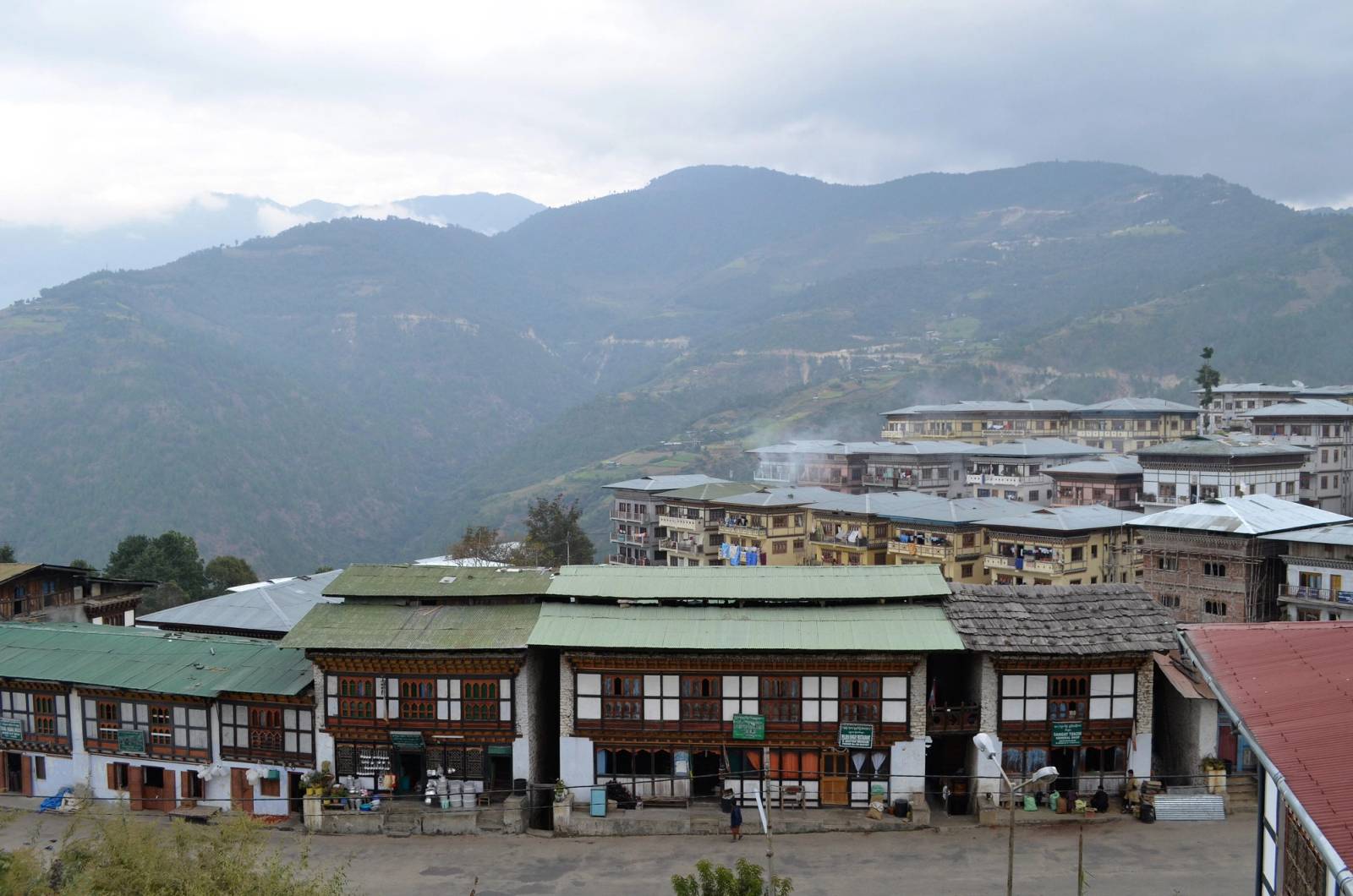
Photo: Christopher J. Fynn, CC BY-SA 3.0, via Wikimedia Commons (opens in a new tab)
Things to see in Mongar
Drametse Lhakhang
The largest monastery in eastern Bhutan was founded in 1511 by Ani Chhoeten Zangmo, granddaughter of Pema Lingpa. It is the home of the Drametse Ngacham, the mask dance of the drums, which UNESCO lists as intangible cultural heritage. It lies 18 km up a rough road from Thungdari, on the road to Trashigang.
Yakgang Lhakhang
A short drive southwest of Mongar, this temple was founded in the 16th century by Sangdag, the youngest son of Pema Lingpa. Its lama's post passes from father to son. The relics, kept in the house next door, include wood blocks, a lute and old cham masks used at the temple's tshechu.
Mongar Dzong
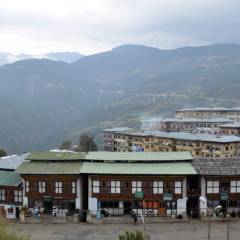
Mongar Dzong replaced the ruined Zhongar Dzong as the seat of the district in the twentieth century, though its central tower is older than the rest of the building. It is unusual in having two entrances, and the tower holds four temples. The Mongar Tshechu is held here in November or December.
Places near Mongar
Lhuentse
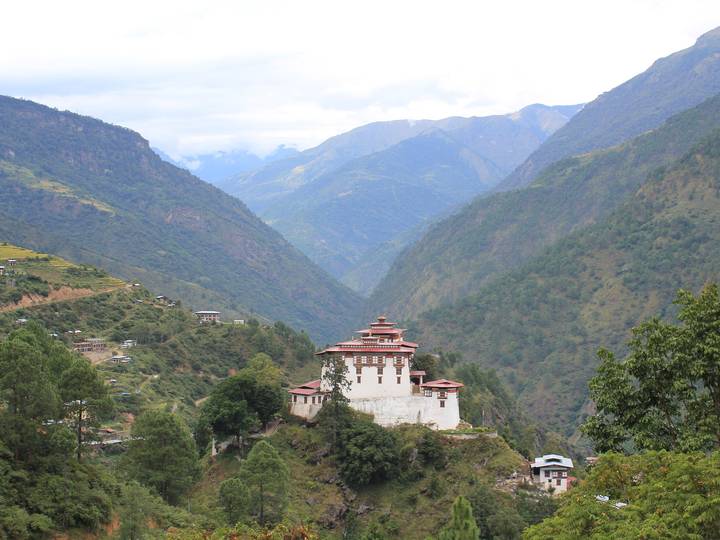
The Wangchucks' ancestral valley in the far north-east: a dzong above the Kuri Chhu, the kishuthara weavers of Khoma and a 47 m Guru Rinpoche at Takila.
Trashigang
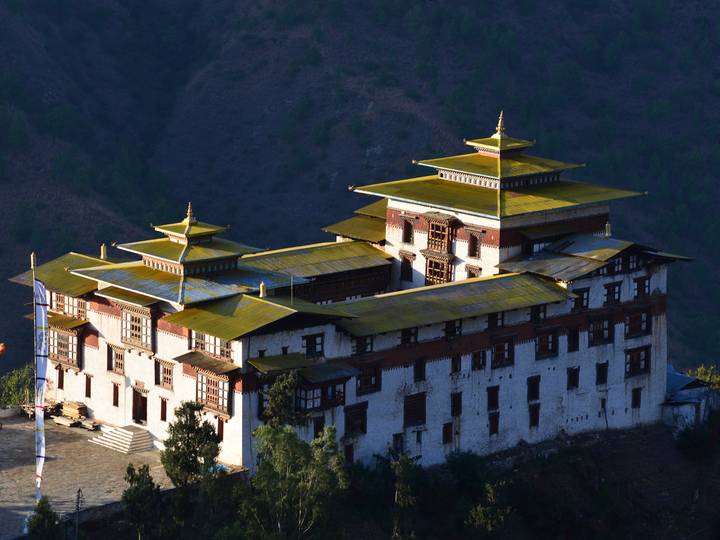
The market town of the far east: a 1659 dzong on a clifftop above two rivers, and beyond it the Brokpa highlands of Merak and Sakteng.
Bumthang
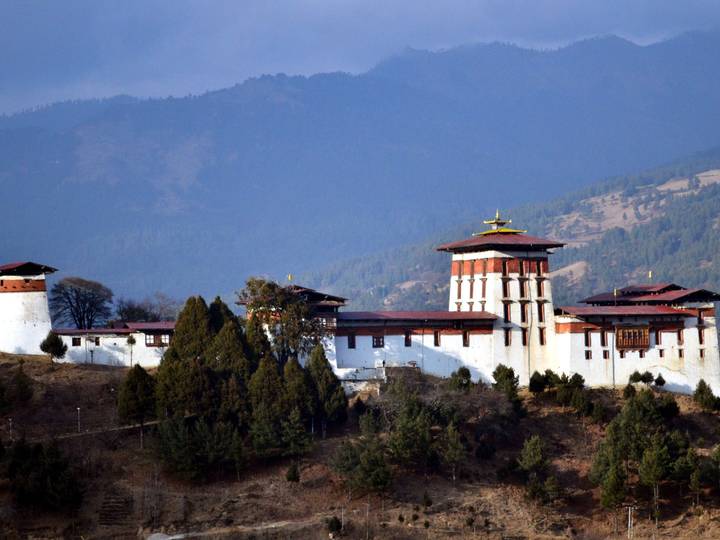
Four high valleys in central Bhutan, home to some of the country's oldest temples, Pema Lingpa's birthplace and the Burning Lake.
Planning a trip that includes Mongar?
Tell us when you would like to travel. We reply within 24 hours with a free day-by-day plan and a price.

Karma ChodenOperations manager, Bhutan Tour Itinerary
Or call +975 17 81 70 52info@bhutantouritinerary.com
Mon–Sat, 9am–6pm Bhutan time (GMT+6)