Lhuentse
- Region
- Eastern Bhutan
- Altitude
- 1,400–1,450 m
- Best time
- March–May and September–November; December for the Lhuentse Tshechu
- Getting there
- About 3 hours by road from Mongar, up the Kuri Chhu valley
Bhutan’s far north-east
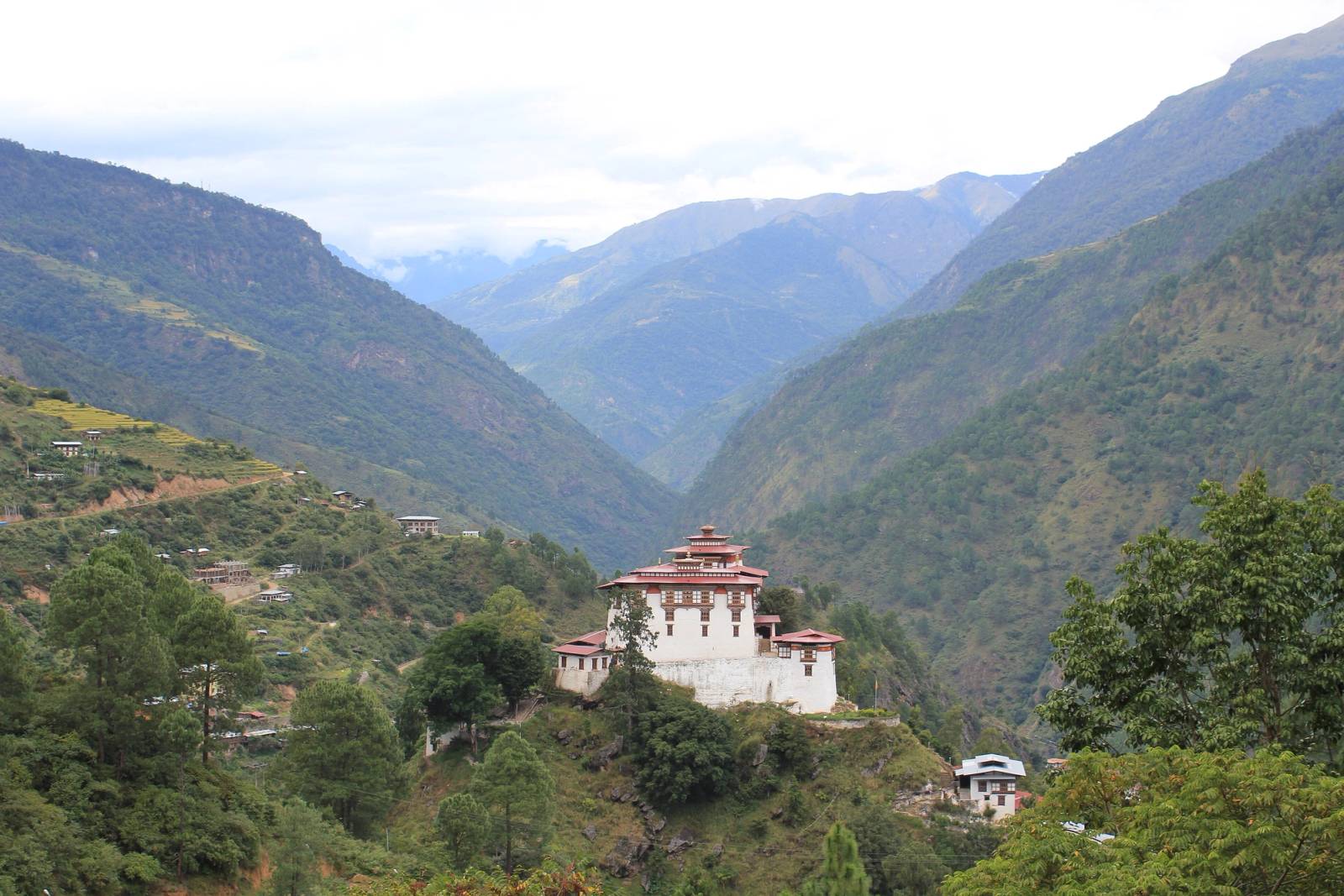
Lhuentse is a district in Bhutan’s far north-east, bordered by Trashiyangtse to the east, Mongar to the south and Bumthang to the west. Its small town and dzong stand above the Kuri Chhu at about 1,400–1,450 m.
It is the ancestral home of the Wangchuck kings, and the weavers of Khoma make kishuthara, an intricate silk-on-silk (opens in a new tab) kira. Plan on two nights: one day for the dzong, Gangzur and Khoma, another for Takila or Dungkar. Stays are in guesthouses and village homestays; the district lists 16 homestays, 11 of them in Khoma.
Where the Wangchuck kings came from
Jigme Namgyal was born in 1825 in Dungkar, a village about three hours’ drive north of the dzong. His family descended from Kuenga Wangpo, a son of the treasure-revealer Pema Lingpa. He became Penlop of Trongsa, and his son Ugyen Wangchuck became Bhutan’s first king in 1907.
His birthplace, the Jigme Namgyel Naktshang, is a large house built by his father, Pila Goenpo Wangyel, facing Dungkar Choeje Lhakhang (opens in a new tab). The lhakhang, still owned and lived in by a descendant of the Dungkar Choeje, holds relics and terma found by Pema Lingpa and Desi Tenzin Rabgay.
What to see in Lhuentse
Lhuentse Dzong (Lhuendrup Rinchentse) (opens in a new tab). Yongzin Ngagi Wangchuk first built a small dzong on this hilltop above the Kuri Chhu in the 1550s; the Trongsa Penlop Minjur Tenpa later built the present dzong. It houses the district administration and monk body, and its most sacred object is a bronze statue of Tshepamey said to have been found in a fisherman’s net. The cypresses of Lekpagang, across from the dzong, are believed to be Bhutan’s oldest, with a story going back to the 8th century.
Khoma. About 10 km from the dzong, Khoma is the home of kishuthara (opens in a new tab), the patterned silk kira worn for tshechus and other festive days. Girls start learning as young as eight, most weaving is done in winter when farm work slows, and the most elaborate pieces take up to a year.
Gangzur (opens in a new tab). About 2 km from town, Gangzur still makes earthen pots by hand from local clay, then dries and fires them. The Gangzur Pottery Group has grown to 13 members.
Takila. Guru Nangsa Zelnen (opens in a new tab), a 154-foot (about 47 m) statue of Guru Rinpoche, stands at Takila, about 15 km from the Tangmachu bridge. Work began in 2008 and it was consecrated in 2015; eight large and 108 small chortens surround it.
Singye Dzong (opens in a new tab). One of Bhutan’s most sacred pilgrimages leads to this site, said to have been visited by Guru Rinpoche in the 8th century, at 3,894 m in the Bumdeling Wildlife Sanctuary, a three-day walk from the roadhead at Kildung. It lies near the Tibetan border and access for foreign visitors has been restricted, so check the current rules with us first.
Seasons and the Lhuentse Tshechu
March–May and September–November bring mild weather and clear skies.
The Lhuentse Tshechu runs for five days in the dzong courtyard, from the 8th to the 12th day of the eleventh Bhutanese month, usually in December (17–21 December in 2026). It includes the Deygye Bakcham and Guru Tsengye dances and ends with a Guru Wang blessing and the display of a thongdrol and relics. Dates follow the lunar calendar; see our festival calendar.
For more, see the best time to visit Bhutan and Bhutan’s weather by region.
How Lhuentse fits into a trip
Lhuentse is about 3 hours by road from Mongar, up the Kuri Chhu valley. The road is being widened between Gangola and Autsho, with closures at times, and the work is due to finish by 2027.
The drive from Bumthang over Thrumshing La to Mongar takes about 7–8 hours, so the journey is best split with a night in Mongar. Going further east means driving back towards Mongar: Trashigang is about 3–4 hours beyond Mongar, and Trashiyangtse about 2–2½ hours beyond Trashigang.
The east is usually added to a central Bhutan trip after Bumthang, and we plan it privately on request. For roads, drivers and transfers, see getting around Bhutan.
Photo: Arian Zwegers from Brussels, Belgium, CC BY 2.0, via Wikimedia Commons (opens in a new tab)
Things to see in Lhuentse
Lhuentse Dzong
Lhuendrup Rinchentse Dzong stands on a hilltop above the Kuri Chhu. Yongzin Ngagi Wangchuk first built a small dzong here in the 1550s, and the Trongsa Penlop Minjur Tenpa later built the present one. It is the district's seat, and its most sacred object is a bronze Tshepamey statue.
Khoma village
Khoma, about 10 km from Lhuentse Dzong, is the home of kishuthara, the patterned silk kira worn for tshechus and other festive days. Girls start learning as young as eight, most weaving is done in winter when farm work slows, and the most elaborate pieces take up to a year.
Takila Guru statue
Guru Nangsa Zelnen, a 154-foot (about 47 m) statue of Guru Rinpoche, stands at Takila, about 15 km from the Tangmachu bridge. Work began in March 2008 and it was consecrated in 2015. Eight large and 108 small chortens stand around it.
Places near Lhuentse
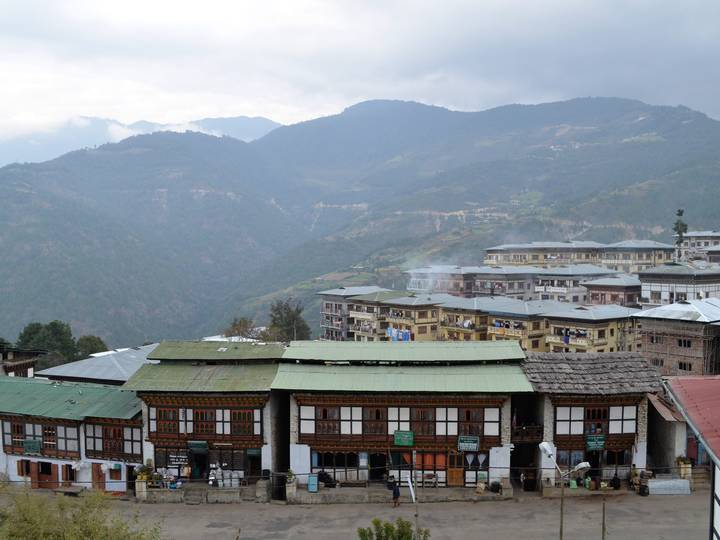
Mongar
Where eastern Bhutan begins: a district town at 1,600 m, the ruins of Zhongar Dzong and Drametse, the monastery of the drum dance.
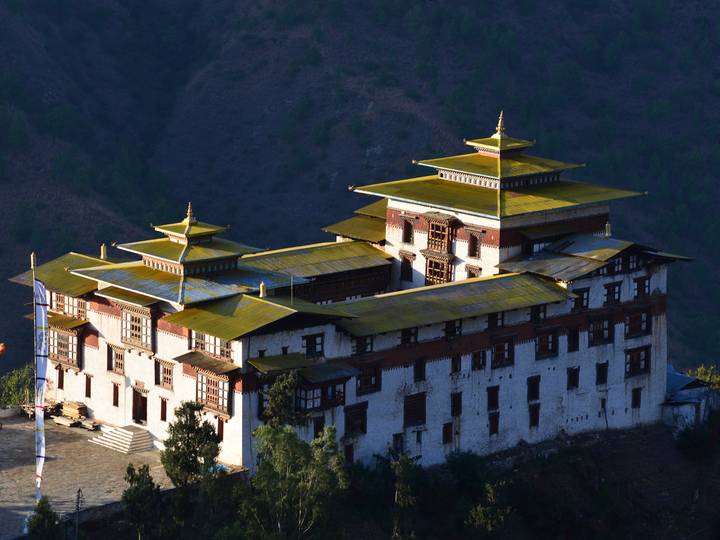
Trashigang
The market town of the far east: a 1659 dzong on a clifftop above two rivers, and beyond it the Brokpa highlands of Merak and Sakteng.
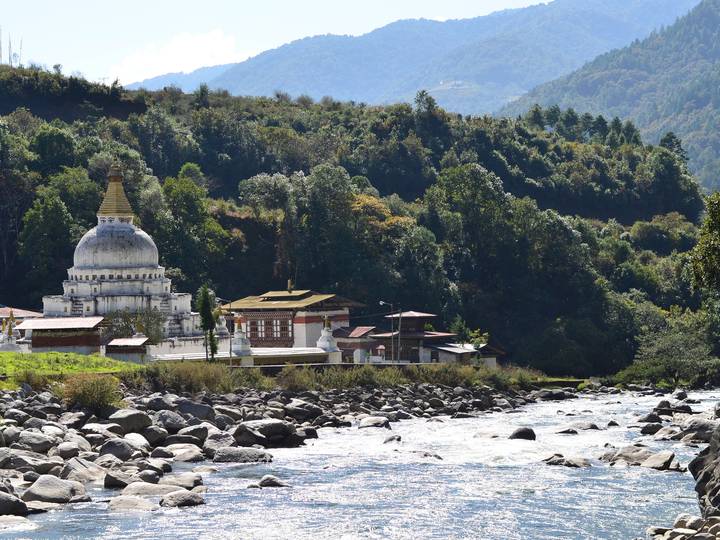
Trashiyangtse
A small town in Bhutan's far north-east: the white stupa of Chorten Kora by the Kholong Chhu, a college of traditional crafts and the winter crane fields of Bumdeling.
Planning a trip that includes Lhuentse?
Tell us when you would like to travel. We reply within 24 hours with a free day-by-day plan and a price.

Karma ChodenOperations manager, Bhutan Tour Itinerary
Or call +975 17 81 70 52info@bhutantouritinerary.com
Mon–Sat, 9am–6pm Bhutan time (GMT+6)