Trashiyangtse
- Region
- Eastern Bhutan
- Altitude
- 1,750 m
- Best time
- March–May and September–November; November–February for the black-necked cranes
- Getting there
- About 2–2.5 hours by road from Trashigang, turning north at Chazam
A valley town in the far north-east
Trashiyangtse is the headquarters of the north-eastern district of the same name, about 54 km by road north of Trashigang. The town sits at about 1,750 m in the valley of the Kholong Chhu, and the district runs north to the borders of India’s Arunachal Pradesh and Tibet.
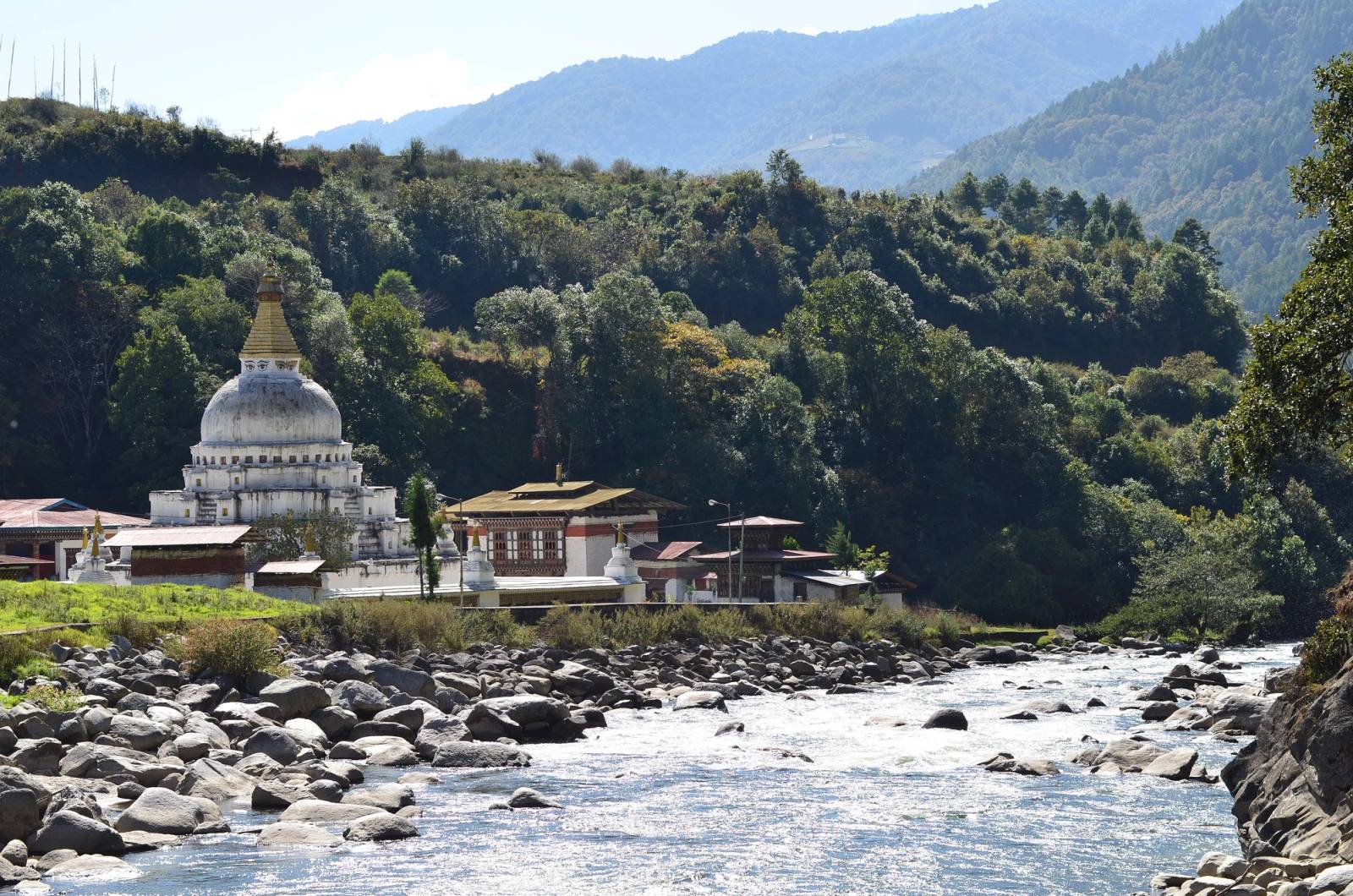
Most of what visitors come for lies along one road: the old dzong about 3 km below town, the white stupa of Chorten Kora three minutes from town, and the crane fields of Bumdeling, which run north from Chorten Kora towards Zhapang. It can be a long day trip from Trashigang, but a night here leaves time for Bumdeling.
How the valley got its name and its stupa
Trashiyangtse became a district of its own in 1992 (opens in a new tab), split from Trashigang, and covers about 1,438 sq km in eight gewogs. Its people include Yangtseps, Tshanglas, Bramis, Khengpas and Kurtoeps.
The name, “fortress of auspicious fortune”, is credited to the treasure revealer Pema Lingpa in the 15th century. Chorten Kora followed in the 18th: Lam Ngawang Loday, the third lama of Rigsum Goenpa, began it in the 1740s to subdue demons, and it took 12 years to finish. Local tradition says a young dakini (khandum) from the Dakpa community of Tawang entered the chorten during building and never came out.
Some of Bhutan’s best-known woodturners (opens in a new tab) work in the valley, turning the wooden bowls, cups and dapa sold in local markets and craft shops.
What to see in Trashiyangtse
Chorten Kora (opens in a new tab). The stupa on the riverbank is modelled on the Boudhanath Stupa in Nepal. It was consecrated by the 13th Je Khenpo, Yonten Thaye, on the 30th day of the first Bhutanese month, the day the Bhutanese kora is still held.
The old Trashiyangtse Dzong. About 3 km before town, the original dzong stands on a promontory across the valley, reached by a cantilever bridge. Tradition links it to Pema Lingpa, and it houses monks of the Central Monastic Body.
College of Zorig Chusum (opens in a new tab). Founded on 2 June 1997 as Rigney Pelkhang with 21 students, the college trains young Bhutanese in painting, sculpture, embroidery, wood carving, woodturning, tailoring and gold- and silversmithing.
Bumdeling Wildlife Sanctuary (opens in a new tab). The sanctuary covers more than 1,500 sq km of Trashiyangtse, Lhuentse and Mongar, from about 1,400 m to 6,400 m. Its valley wetland, a Ramsar site since 2012, is a winter roost for black-necked cranes, and a visitor centre and café near Dungzam has information on them.
Seasons, cranes and the Chorten Kora festival
March–May and September–November bring the most settled weather. Ludlow’s Bhutan Glory, the national butterfly, is most often seen in Bumdeling in August and September.
Black-necked cranes winter in Bumdeling (opens in a new tab) from about October to March, feeding in the paddy fields between Zhapang and Chorten Kora. Numbers have fallen from about 200 in the first survey in 1987 to 59 in the 2024–25 count. A crane farewell festival is held in Bumdeling in February.
Chorten Kora is circled on two days: Dakpa Kora on the 15th day of the first Bhutanese month, when pilgrims come from Tawang, and the Bhutanese kora on the 30th. Gom Kora, on the road from Trashigang, holds its tshechu on the 8th–11th days of the second Bhutanese month. Dates move each year; see our festival calendar.
For more, see the best time to visit Bhutan and Bhutan’s weather by region.
How Trashiyangtse fits into a trip
From Trashigang it is 53–54 km, about 2–2.5 hours: the road drops to Chazam, turns north past Gom Kora and Doksum (860 m), then follows the Kholong Chhu valley up to town.
From Mongar the drive is about 124 km and takes about 5–6 hours over Kori La, turning north at Chazam. Lhuentse is about 3 hours beyond Mongar. Drukair flies between Paro and Yonphula in Trashigang district three times a week; see flight schedules.
Eastern Bhutan is usually added to a central Bhutan trip after Bumthang, and we plan it privately on request. For how road travel works here, see getting around Bhutan.
Photo: Christopher J. Fynn, CC BY-SA 3.0, via Wikimedia Commons (opens in a new tab)
Things to see in Trashiyangtse
Chorten Kora
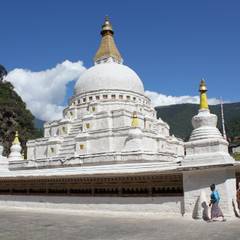
Chorten Kora stands on the bank of the Kholong Chhu, three minutes from Trashiyangtse town. Lam Ngawang Loday built it over 12 years from the 1740s, modelled on the Boudhanath Stupa in Nepal. Pilgrims from Tawang circle it on the 15th day of the first Bhutanese month, and Bhutanese on the 30th.
Bumdeling Wildlife Sanctuary
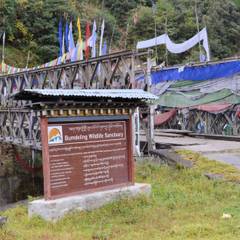
Bumdeling Wildlife Sanctuary covers more than 1,500 sq km of Trashiyangtse, Lhuentse and Mongar, rising from about 1,400 m to 6,400 m. Its valley wetland, a Ramsar site since 2012, is a winter roost for black-necked cranes, and the sanctuary is home to Ludlow's Bhutan Glory, the national butterfly.
College of Zorig Chusum
The College of Zorig Chusum opened in Trashiyangtse on 2 June 1997 as Rigney Pelkhang, with 21 students, and took its present name in 2018. It trains young Bhutanese in traditional crafts including painting, sculpture, embroidery, wood carving, woodturning and gold- and silversmithing.
Places near Trashiyangtse
Trashigang
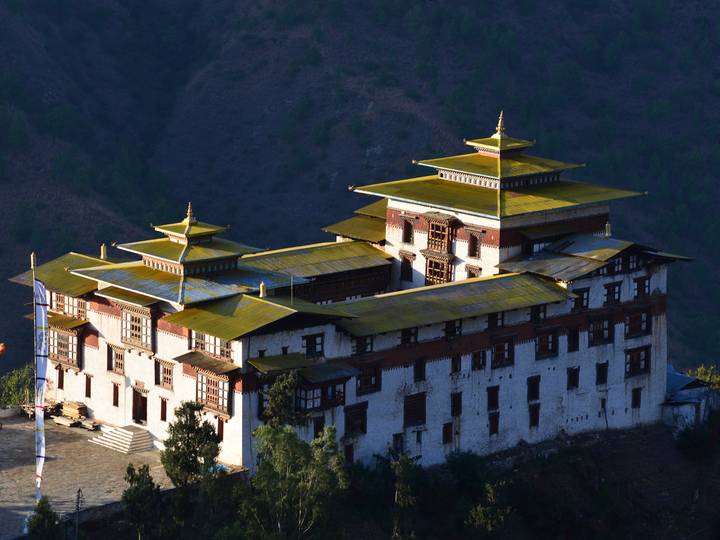
The market town of the far east: a 1659 dzong on a clifftop above two rivers, and beyond it the Brokpa highlands of Merak and Sakteng.
Mongar
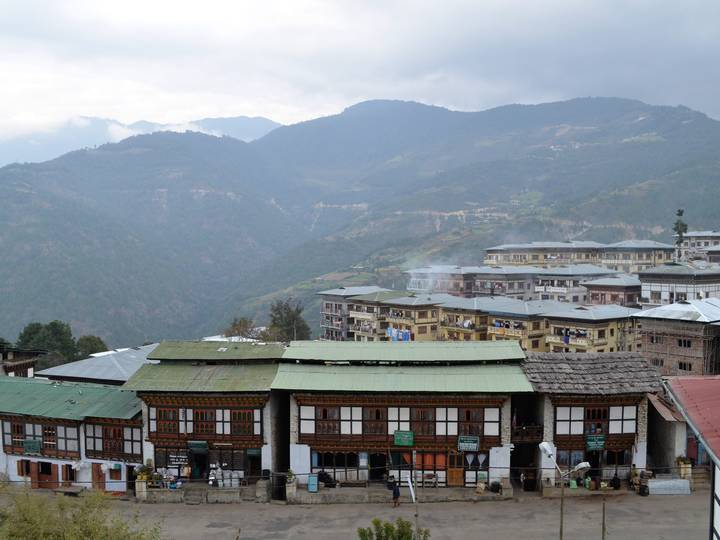
Where eastern Bhutan begins: a district town at 1,600 m, the ruins of Zhongar Dzong and Drametse, the monastery of the drum dance.
Lhuentse
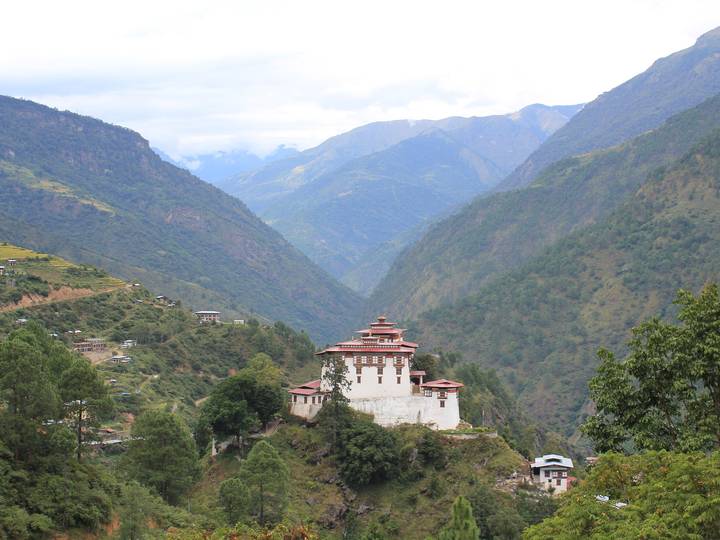
The Wangchucks' ancestral valley in the far north-east: a dzong above the Kuri Chhu, the kishuthara weavers of Khoma and a 47 m Guru Rinpoche at Takila.
Planning a trip that includes Trashiyangtse?
Tell us when you would like to travel. We reply within 24 hours with a free day-by-day plan and a price.

Karma ChodenOperations manager, Bhutan Tour Itinerary
Or call +975 17 81 70 52info@bhutantouritinerary.com
Mon–Sat, 9am–6pm Bhutan time (GMT+6)