Trashigang
- Region
- Eastern Bhutan
- Altitude
- 1,100–1,200 m
- Best time
- March–May and September–November; November or December for the tshechu
- Getting there
- About 3–4 hours by road from Mongar over Kori La; flights from Paro land at Yonphula, about an hour's drive away
The market town of the far east
Trashigang is the district town of Bhutan’s far east, at about 1,100–1,200 m on a hillside above the Drangme Chhu, just south of where the Gamri Chhu joins it. The district borders the Indian state of Arunachal Pradesh to the east and ranges from about 600 m to over 4,500 m.
The town is where the east–west highway meets the road south to Samdrup Jongkhar and Assam, which has made it a commercial centre for the region. The road from Mongar crosses the Drangme Chhu at Chazam, named after a 15th-century iron chain bridge, then climbs for about 20 minutes to town. Two nights give a day for the dzong and a day for Rangjung and Radhi.
A fortress built to hold the east
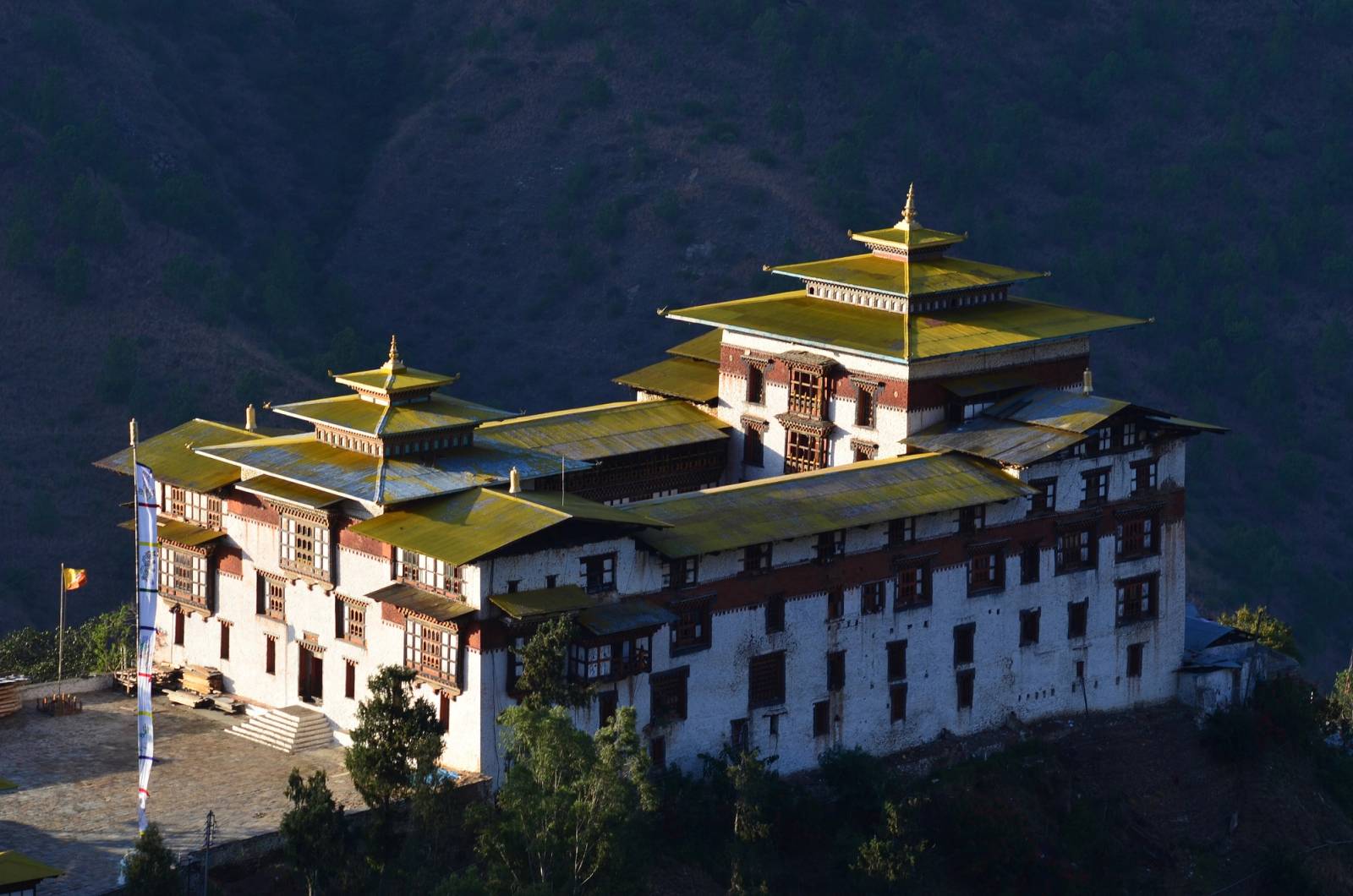
Zhabdrung Ngawang Namgyal prophesied a dzong here and sent the Trongsa Penlop, Minjur Tenpa, to put down the local chieftains. In 1659 the Penlop built Trashigang Dzong (opens in a new tab) on a hilltop with cliffs on three sides. It was enlarged in 1680–1694 under Gyalsey Tenzin Rabgye and again in 1936.
After the 1962 Sino-Indian War, Bhutan let Indian soldiers pass through the east on condition that they left their rifles in the dzong’s armoury, where they remain. The 2009 earthquake cracked its walls; in 2014 the Government of India allotted Nu 190 million to renovate it, and the work was finished in 2019.
What to see in Trashigang
Trashigang Dzong. The dzong sits just below the highway, above the meeting of the Drangme Chhu and Gamri Chhu. It is still the seat of the district administration and monks, and its goenkhang has paintings of a yeti.
Rangjung Woesel Choeling Monastery (opens in a new tab). Dungsey Garab Dorje Rinpoche founded it in 1989 at Rangjung, on the Gamri Chhu 16 km from town (about 45 minutes). It teaches the Dudjom New Treasure lineage to more than 300 monks and nuns.
Radhi (opens in a new tab). These villages 27 km east of town are known for rice and Radhi buray textiles. Khardung Anim Dratshang (opens in a new tab), a nunnery that is a branch of Rangjung Woesel Choeling, has a simple guesthouse.
Sherubtse College (opens in a new tab), Kanglung. Kanglung, 22 km along the road to Samdrup Jongkhar, is home to Sherubtse, “peak of learning”, opened by the Third King as a public school in 1968 and a degree college since 1983.
Merak and Sakteng (opens in a new tab). The villages of the Brokpa, semi-nomadic yak herders, lie about 68 km away inside Sakteng Wildlife Sanctuary, home to red pandas, snow leopards and the blue poppy.
Seasons and the Trashigang Tshechu
Spring (March–May) and autumn (September–November) are the best months. The monsoon runs from late June or July to late September, and summer weather at Yonphula airport sometimes delays or cancels flights.
The Trashigang Tshechu (opens in a new tab) is held in the dzong in the tenth month of the Bhutanese calendar, which falls in November or December. Brokpas from Merak and Sakteng come down for it, as do people from Samdrup Jongkhar, Pemagatshel and Trashiyangtse. Each year’s dates are in our festival calendar.
Merak held its second rhododendron festival (opens in a new tab) on 3–9 April 2026, at Sheytemi, about 2,900 m up.
For more, see the best time to visit Bhutan and Bhutan’s weather by region.
How Trashigang fits into a trip
The east is usually added to a central Bhutan trip after Bumthang, and we plan it privately on request. From Bumthang it is about 7–8 hours to Mongar, then about 3–4 hours over Kori La to Trashigang, so the drive east takes two days.
Trashiyangtse is 54 km north, about 1.5–2.5 hours, past the temple of Gom Kora (opens in a new tab).
Samdrup Jongkhar, the south-eastern border town with Assam, is 180 km south, about 6–8 hours, with Guwahati about 3 hours beyond. It is one of Bhutan’s official road entry points (opens in a new tab), and since India opened its immigration check post at Darranga in November 2024, international visitors with an Indian visa can cross there, so a trip can start or finish overland instead of flying from Paro.
Drukair also flies from Paro to Yonphula, about an hour’s drive from town. See getting around Bhutan and flight schedules.
Photo: Christopher J. Fynn, CC BY-SA 3.0, via Wikimedia Commons (opens in a new tab)
Things to see in Trashigang
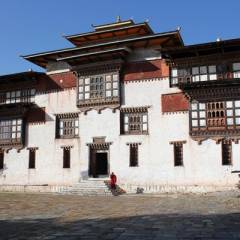
Trashigang Dzong
Trashigang Dzong stands on a hilltop with cliffs on three sides, above the meeting of the Drangme Chhu and Gamri Chhu. The Trongsa Penlop Minjur Tenpa built it in 1659, and it was enlarged in 1680–1694 and again in 1936. Rifles left by Indian soldiers after the 1962 war are still kept in its armoury.
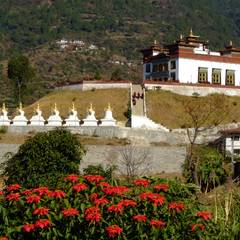
Rangjung Woesel Choeling Monastery
Rangjung Woesel Choeling Monastery stands at Rangjung on the Gamri Chhu, 16 km and about 45 minutes from Trashigang. Dungsey Garab Dorje Rinpoche founded it in 1989 to teach the Dudjom New Treasure lineage, and more than 300 monks and nuns now study there. One of its branches, a nunnery at Radhi, has a guesthouse.
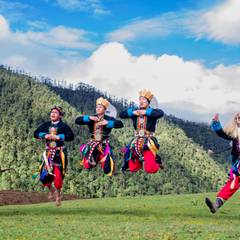
Merak and Sakteng
Merak and Sakteng are the highland villages of the Brokpa, semi-nomadic herders of yaks and cattle, about 68 km from Trashigang. Both lie in Sakteng Wildlife Sanctuary, whose 739 km² shelter red pandas, snow leopards and the blue poppy, and 41 of Bhutan's roughly 46 rhododendron species grow in these highlands.
Places near Trashigang
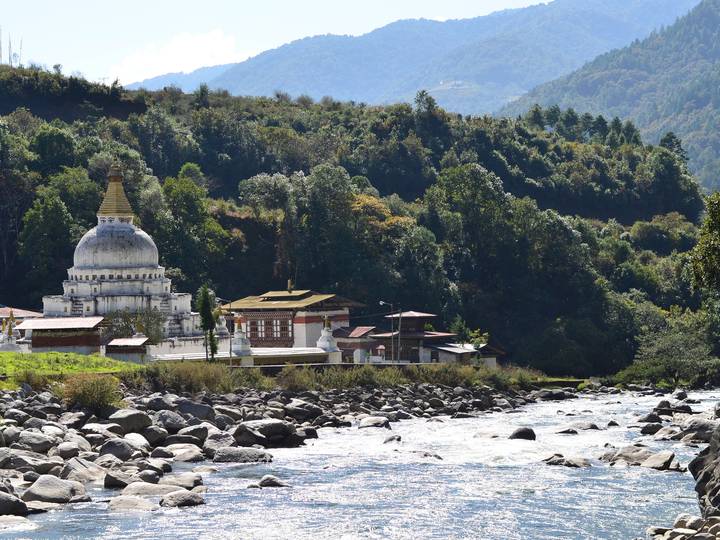
Trashiyangtse
A small town in Bhutan's far north-east: the white stupa of Chorten Kora by the Kholong Chhu, a college of traditional crafts and the winter crane fields of Bumdeling.
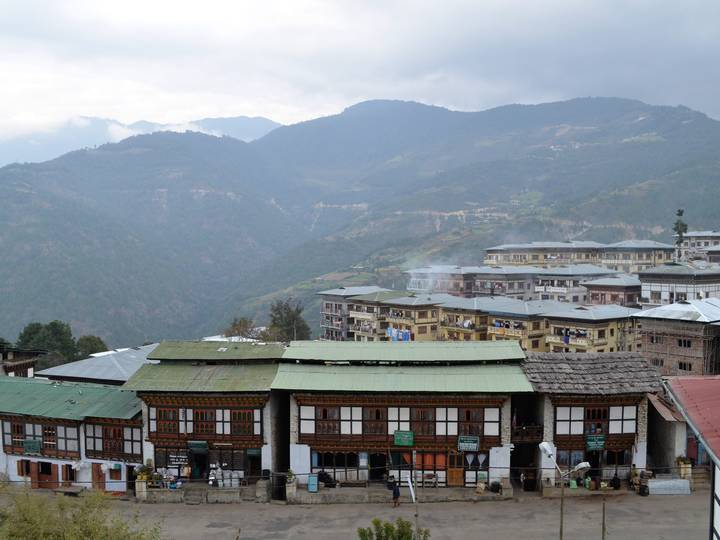
Mongar
Where eastern Bhutan begins: a district town at 1,600 m, the ruins of Zhongar Dzong and Drametse, the monastery of the drum dance.
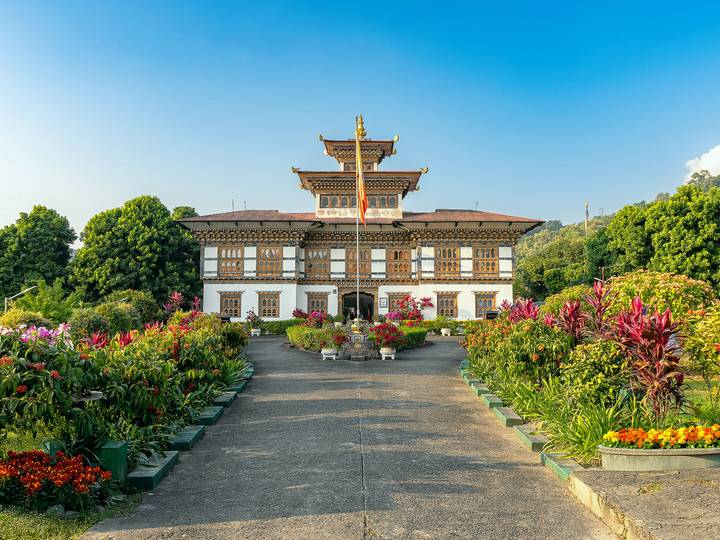
Samdrup Jongkhar
The south-eastern border town with Assam and eastern Bhutan's road entry from India, with the 1865 battle site of Dewathang in the hills above.
Planning a trip that includes Trashigang?
Tell us when you would like to travel. We reply within 24 hours with a free day-by-day plan and a price.

Karma ChodenOperations manager, Bhutan Tour Itinerary
Or call +975 17 81 70 52info@bhutantouritinerary.com
Mon–Sat, 9am–6pm Bhutan time (GMT+6)