Bumthang Heartland Journey
Journey deep into central Bhutan to Bumthang — the kingdom's spiritual heartland of ancient temples, cheese, honey and buckwheat pancakes.
- Duration10 days / 9 nights
- Private tourYour own guide and driver
From$2,150per person
Send an enquiryTour overview
Highlights
- Jambay Lhakhang and Kurjey Lhakhang
- Trongsa Dzong
- Burning Lake (Mebar Tsho)
- Village homestay
- Highest point
- 3,425 m (Yotong La)
- Best season
- Mar–May, Sep–Nov
- Accommodation
- Hotels and homestay
- Meals
- All meals
- Transport
- Private vehicle
Tentative itinerary
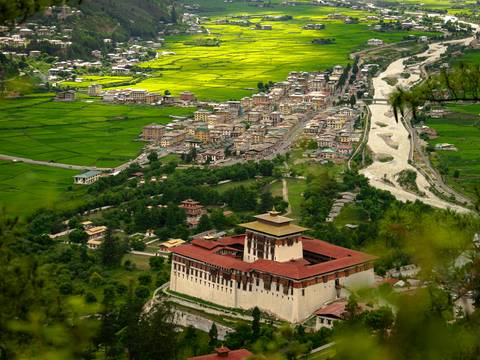
- Day 1Arrive in Paro and visit Paro Dzong across Nyamai Zam
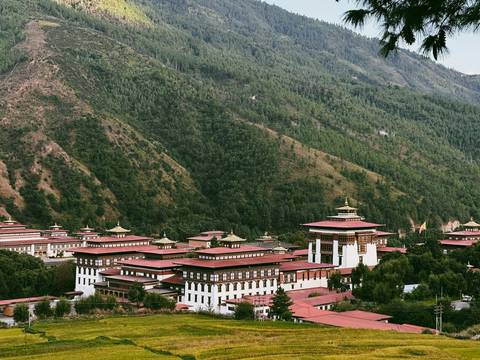
- Day 2Drive from Paro to Thimphu and visit Tashichho Dzong
- Day 3Drive from Thimphu over Dochu La to Punakha and Punakha Dzong
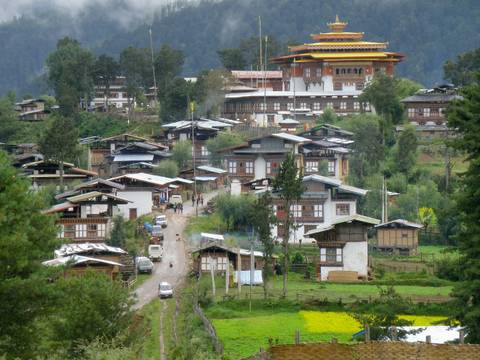
- Day 4Drive from Punakha over Lawa La to Phobjikha and Gangtey Monastery
- Day 5Drive from Phobjikha over Pele La and Yotong La to Bumthang
- Day 6Chokhor valley sightseeing: Kurjey, Jambay, Tamshing and Jakar Dzong
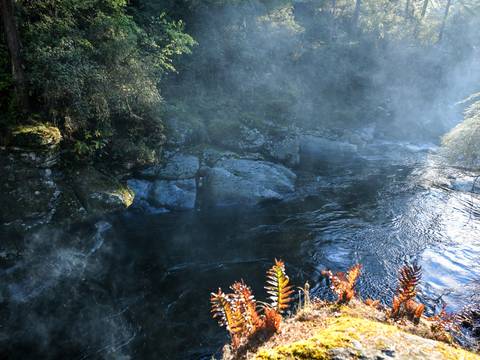
- Day 7Drive into the Tang valley and visit Mebar Tsho, the Burning Lake
- Day 8Drive from Bumthang to Punakha via Trongsa and Chendebji Chorten
- Day 9Walk to Chimi Lhakhang, then drive over Dochu La to Paro
- Day 10Departure from Paro International Airport
What's included
Included in the price
- Sustainable Development Fee
- Bhutan visa
- Hotels and homestay
- All meals
- Licensed guide
- Private vehicle
Not included
- Airfare
- Travel insurance
- Personal expenses
- Tips
Good to know
- USD 2,150 per person on a double-sharing basis
Day by day
A suggested plan. Any day can change: more nights somewhere, a festival, a hike, other hotels.
Day 1
Arrive in Paro and visit Paro Dzong across Nyamai Zam
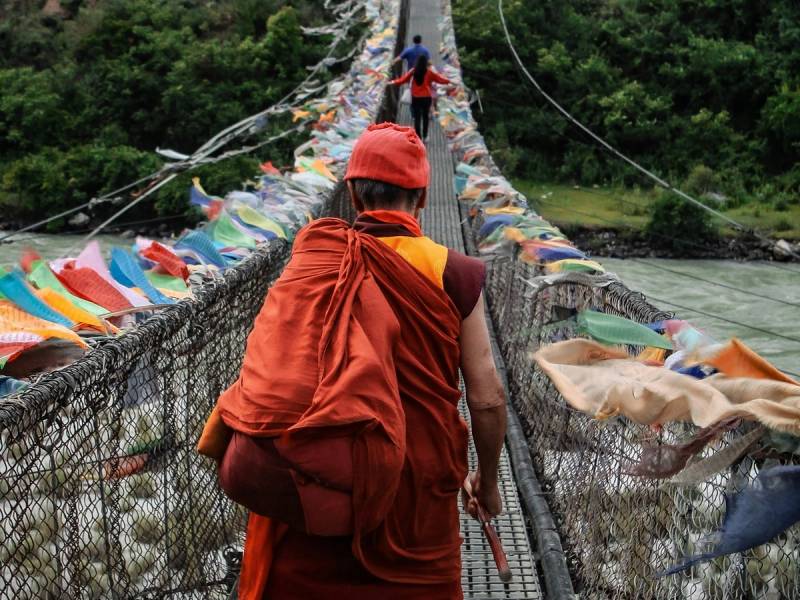
You land at Paro and spend the afternoon at Paro Dzong, the fortress-monastery consecrated in 1646. Walk in across Nyamai Zam, the covered wooden bridge over the Paro Chhu, through the courtyard of government offices to the monks' side, where the galleries are painted with protective deities.
Overnight: Hotel in Paro
Day 2
Drive from Paro to Thimphu and visit Tashichho Dzong
You drive about 1.5 hours to Thimphu, the capital. Tashichho Dzong, the great whitewashed dzong at the northern end of town, holds the throne room and the King's offices; visitors are let in at set times, and your guide plans the day around them.
Overnight: Hotel in Thimphu
Day 3
Drive from Thimphu over Dochu La to Punakha and Punakha Dzong
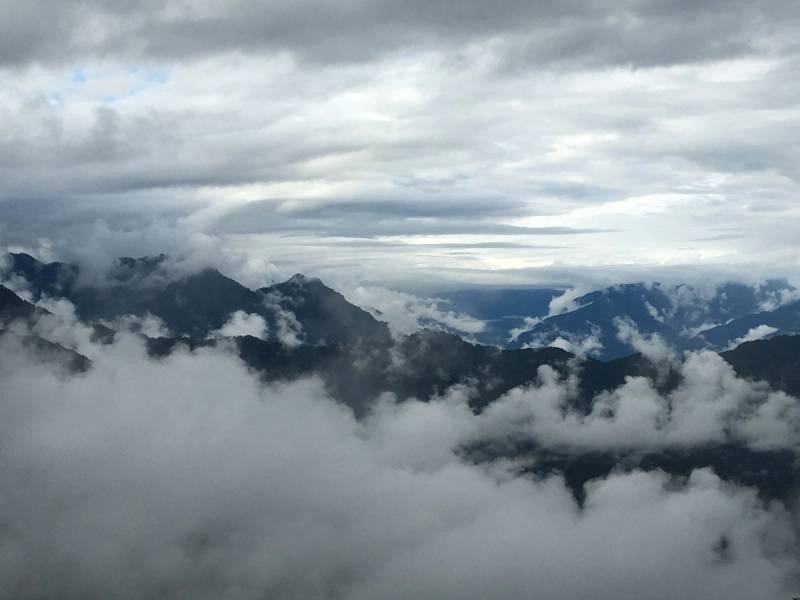
Today the road crosses Dochu La, the pass at about 3,100 m with its 108 chortens and, on a clear morning, a long line of Himalayan peaks. The road then drops to the warm Punakha valley.
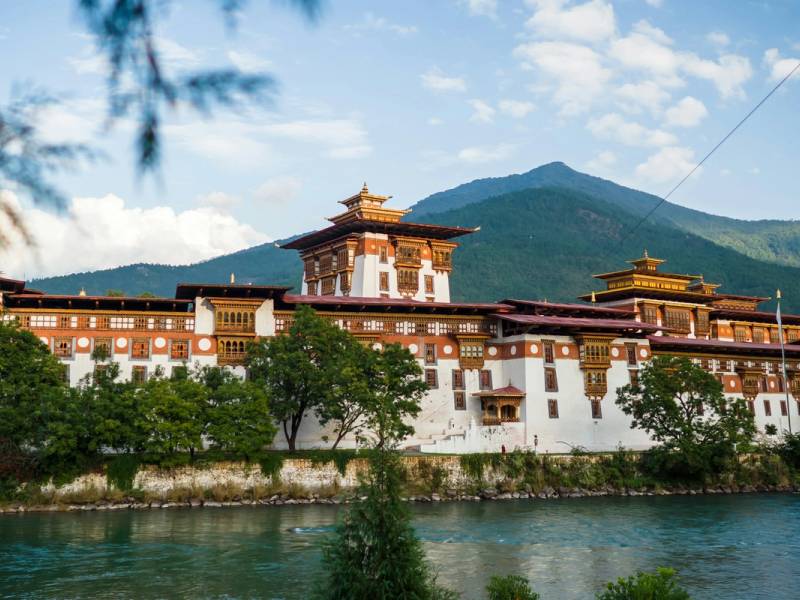
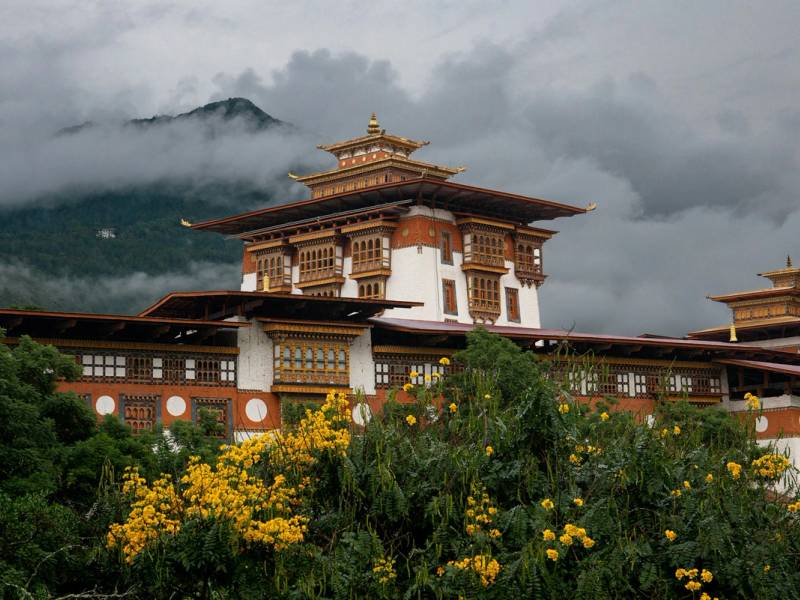
Punakha Dzong, built in 1637–38 where the Pho Chhu and Mo Chhu meet, is reached over a wooden bridge and a steep stair, with three courtyards and an assembly hall painted with the life of the Buddha.
Overnight: Hotel in Punakha
Places on this day
 Dochu LaThe pass at about 3,100 m on the road from Thimphu to Punakha, where 108 chortens honour the Bhutanese soldiers who died in 2003. On a clear winter morning the high Himalaya is on show, and most people stop here on the drive.
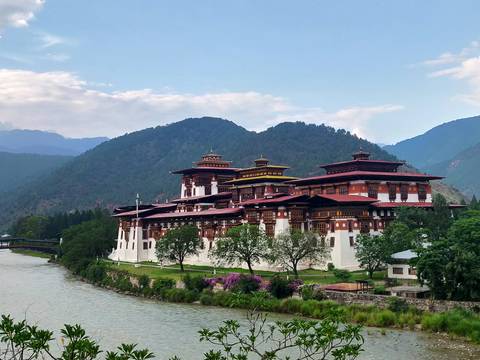 Punakha DzongBuilt in 1637–38 where the Pho Chhu and Mo Chhu rivers meet, Punakha Dzong was the seat of Bhutan's government until 1955, and the first king was crowned here in 1907. It is still the winter home of the central monk body.
Day 4
Drive from Punakha over Lawa La to Phobjikha and Gangtey Monastery
The road runs about 3 hours over Lawa La to Phobjikha, a wide glacial valley at about 3,000 m. Gangtey Monastery, founded in 1613 by Pema Lingpa's grandson, looks down on it from a forested spur. From late October to February, black-necked cranes feed in the marsh below.
Overnight: Hotel in Phobjikha
Day 5
Drive from Phobjikha over Pele La and Yotong La to Bumthang
This is a long road day. The road climbs over Pele La and runs east, past Chendebji Chorten, to Trongsa, about 4 to 5 hours from Phobjikha, then on for about 2.5 to 3 hours over Yotong La into Bumthang. You stop properly at Trongsa on the way back west.
Overnight: Lodge in Bumthang
Day 6
Chokhor valley sightseeing: Kurjey, Jambay, Tamshing and Jakar Dzong
Today is for the Chokhor valley around Jakar, where some of Bhutan's oldest temples sit a short drive apart. Start early at Kurjey Lhakhang, three temples against the cliff where Guru Rinpoche left the print of his body in the rock; the first three kings rest here. Jambay Lhakhang, just down the road, is said to date from 659.
Across the river, Tamshing Lhakhang, founded by Pema Lingpa in 1501, keeps murals from the early 1500s, and pilgrims try to carry a heavy chain-mail coat, said to be his work, around the inner sanctum. In the afternoon, Jakar Dzong looks over the whole valley from its ridge.
Overnight: Lodge in Bumthang
Places on this day
 Kurjey LhakhangThree temples built against the cliff where Guru Rinpoche is said to have meditated in the 8th century and left the print of his body in the rock. The oldest building dates from 1652, and the complex is the final resting place of Bhutan's first three kings.
 Jambay LhakhangSaid to be one of 108 temples the Tibetan king Songtsen Gampo built in 659 to pin down a demoness, which makes it one of the oldest in Bhutan. Each October or November its courtyard holds the Jambay Lhakhang Drup, with a fire blessing and a midnight dance.
 Tamshing LhakhangFounded in 1501 by the treasure revealer Pema Lingpa, Tamshing has murals from the early 1500s that are among the oldest in Bhutan, and it is on the country's tentative list for World Heritage. Pilgrims try to carry a heavy chain-mail coat, said to be his work, around the inner sanctum.
 Jakar DzongThe dzong on the ridge above Jakar grew from a monastery founded in 1549 by the Tibetan lama Ngagi Wangchuk. Its name is usually translated as "white bird", after a bird that settled on the ridge and marked the spot, and it looks out over the whole Chokhor valley.
Day 7
Drive into the Tang valley and visit Mebar Tsho, the Burning Lake
You drive about 30 minutes into the Tang valley, the narrowest of Bumthang's four valleys and Pema Lingpa's birthplace. Mebar Tsho, the Burning Lake, is a deep pool in the gorge where he is said to have dived in with a lit butter lamp and come back with treasure. The rocks are slippery, so stay well back from the water.
One of your nights in Bumthang is spent in a village homestay, in a family's farmhouse. Farms here grow buckwheat, wheat, potatoes and apples and keep cattle for dairy, and Bumthang is known for its cheese, honey and buckwheat pancakes.
Overnight: Lodge in Bumthang
Day 8
Drive from Bumthang to Punakha via Trongsa and Chendebji Chorten
Today takes you back over Yotong La to Trongsa, about 2.5 to 3 hours, the town that once held the middle of the country. Start at Ta Dzong, the round watchtower of 1652 above the dzong, now the Royal Heritage Museum, with eleven galleries on Bhutan's kings and its Buddhist history. Seeing it first makes the dzong easier to read. Then walk through Trongsa Dzong, which steps down a spur above the Mangde Chhu gorge. It grew from a temple built in 1543 into the seat of the Trongsa Penlops, and it was from here that the Wangchuck family rose to rule Bhutan. It is still the district's seat and home to monks.
The road then climbs west towards Pele La. Chendebji Chorten, a white stupa in the Nepali style with the Buddha's eyes painted on all four sides, stands beside the highway, a good place to stretch your legs. The highway then runs through Wangdue Phodrang to Punakha for the night.
Overnight: Hotel in Punakha
Places on this day
 Ta Dzong (Royal Heritage Museum)The round watchtower above Trongsa Dzong, built in 1652 by Chogyal Minjur Tempa, the first Trongsa Penlop. Restored with Austrian support, it opened in 2008 as the Royal Heritage Museum, with eleven galleries on Bhutan's kings and its Buddhist history.
 Trongsa DzongChökhor Rabtentse Dzong steps down a spur above the Mangde Chhu gorge. It grew from a temple built in 1543 into the seat of the Trongsa Penlops, from where the Wangchuck dynasty rose to power. It is still the district's seat and home to monks.
 Chendebji ChortenA white stupa in the Nepali style beside the highway west of Trongsa, with the Buddha's eyes painted on all four sides. Lama Shida from Tibet built it in the 18th century to subdue a harmful spirit, and it makes a natural stop on the drive from Pele La.
Day 9
Walk to Chimi Lhakhang, then drive over Dochu La to Paro
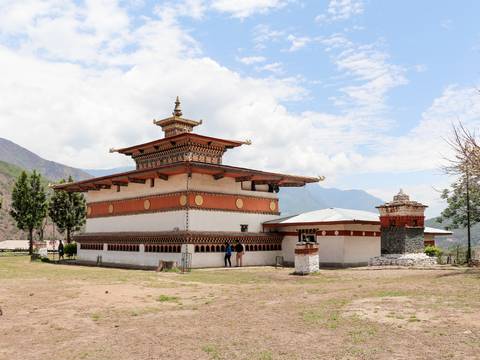
Walk about 20 minutes through the rice fields from Sopsokha to Chimi Lhakhang, the temple of Drukpa Kunley, the Divine Madman, where couples come to ask for a child.
Then climb back over Dochu La, with a second chance at the mountains, to Thimphu and on to Paro, about 1.5 hours further, for your last night.
Overnight: Hotel in Paro
Day 10
Departure from Paro International Airport
Your guide and driver take you to Paro International Airport for your flight out.
If your flight time allows, stop first at Kyichu Lhakhang, a few minutes' drive north of Paro town. It is traditionally dated to 659 and counted among the 108 temples the Tibetan king Songtsen Gampo is said to have built to pin down a demoness, the same story you heard at Jambay Lhakhang in Bumthang. Its Jowo Shakyamuni statue is revered as highly as the Jowo in Lhasa, and it makes a quiet last visit before the airport.
Places on this day
 Kyichu LhakhangOne of Bhutan's oldest temples, traditionally dated to 659 and credited to the Tibetan king Songtsen Gampo as one of 108 temples built to pin down a demoness. Its Jowo Shakyamuni statue is revered as highly as the Jowo in Lhasa. It is a few minutes' drive north of Paro town.
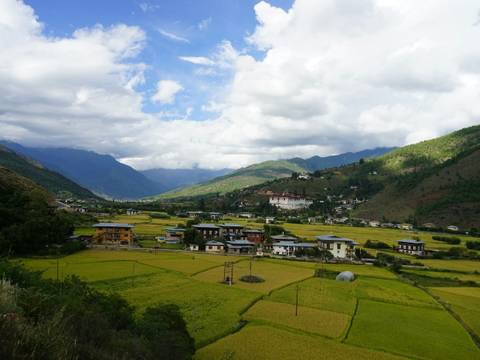 ParoHome to Bhutan's only international airport and the trail up to Taktsang, the Tiger's Nest monastery.
Common questions
What makes you different from other operators?
We are a new, Bhutanese-owned company in Babesa, Thimphu, started by a licensed trekking, cultural and birding guide with more than ten years of guiding. The founder plans every itinerary, and a small team you will know by name looks after you from your first message to your last day. Our guides, drivers and vehicles are our own, and when a trip needs more we hire only experienced people. We go by Gross National Happiness, as Bhutan does: the guest first, and fair pay for the people who look after you.
What kinds of trips do you run?
Cultural tours, festival trips, treks, luxury journeys and family holidays — all private, and all adjustable. Solo, couple or group, we plan around you.
How do I book?
Pick a tour, or ask for one of your own, and send us an enquiry or a WhatsApp message. Within 24 hours we send a free day-by-day plan and price; asking costs nothing. When you're happy with the plan, a deposit confirms it, and we apply for your visa, pay the SDF, book your flights and hotels, and send you a full travel pack.
Can you arrange hotels and transport?
Yes. Every tour includes tourism-certified hotels, a private vehicle with driver and a licensed guide. We also book your Drukair or Bhutan Airlines flights into Paro and arrange your visa and SDF.
Is Bhutan safe for travellers?
Bhutan is one of the safest countries in Asia, with very low crime. The main things to plan for are altitude on mountain passes and winding roads — your guide will pace the trip accordingly.
What should I pack?
Layers, a rain jacket, comfortable walking shoes, and modest clothing (long sleeves and long trousers or skirt) for visiting dzongs and temples.
Make this trip your own
Your dates, more nights somewhere, a festival, a hike, other hotels: tell us and we reply within 24 hours with a free day-by-day plan and price.

Karma ChodenOperations manager, Bhutan Tour Itinerary
Or call +975 17 81 70 52info@bhutantouritinerary.com
Mon–Sat, 9am–6pm Bhutan time (GMT+6)