Kurjey Lhakhang
- Time needed
- About 1 hour; a morning with Jambay and Tamshing
- Best time
- Early morning; June or early July for the Kurjey Tshechu
Highlights
- Guru Rinpoche's body print in the rock
- Resting place of Bhutan's first three kings
- Thongdrel shown at the June or July tshechu
The cave behind the name
Kurjey means “body print”: kur is body and jey is print. The story, as the Bumthang Dzongkhag administration (opens in a new tab) tells it, begins with Sindhu Raja, the king of the valley, who angered the local deity Shelging Karpo. The deity took his life force and the king fell gravely ill. His attendant went to Nepal to ask Guru Rinpoche for help. The Guru came to Bumthang, drew Shelging Karpo out of hiding and subdued him, and the king recovered. Shelging Karpo was bound by oath to protect the teachings, and he is still honoured at Kurjey as a guardian.
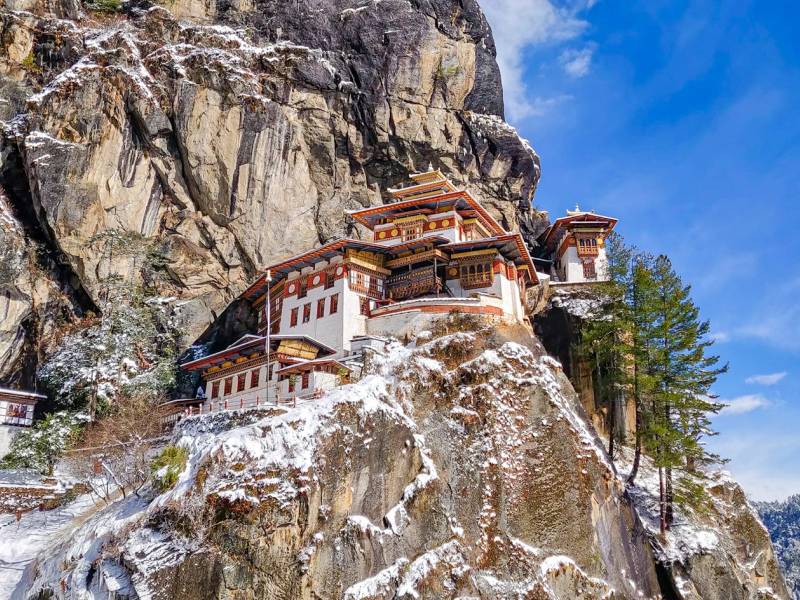
While he was here, Guru Rinpoche meditated in a cave in the cliff and left the imprint of his body on the rock. This was in the 8th century, and it makes Kurjey one of the most sacred places in Bhutan, alongside Tiger’s Nest in Paro, another cave where Guru Rinpoche meditated.
Three temples, three centuries
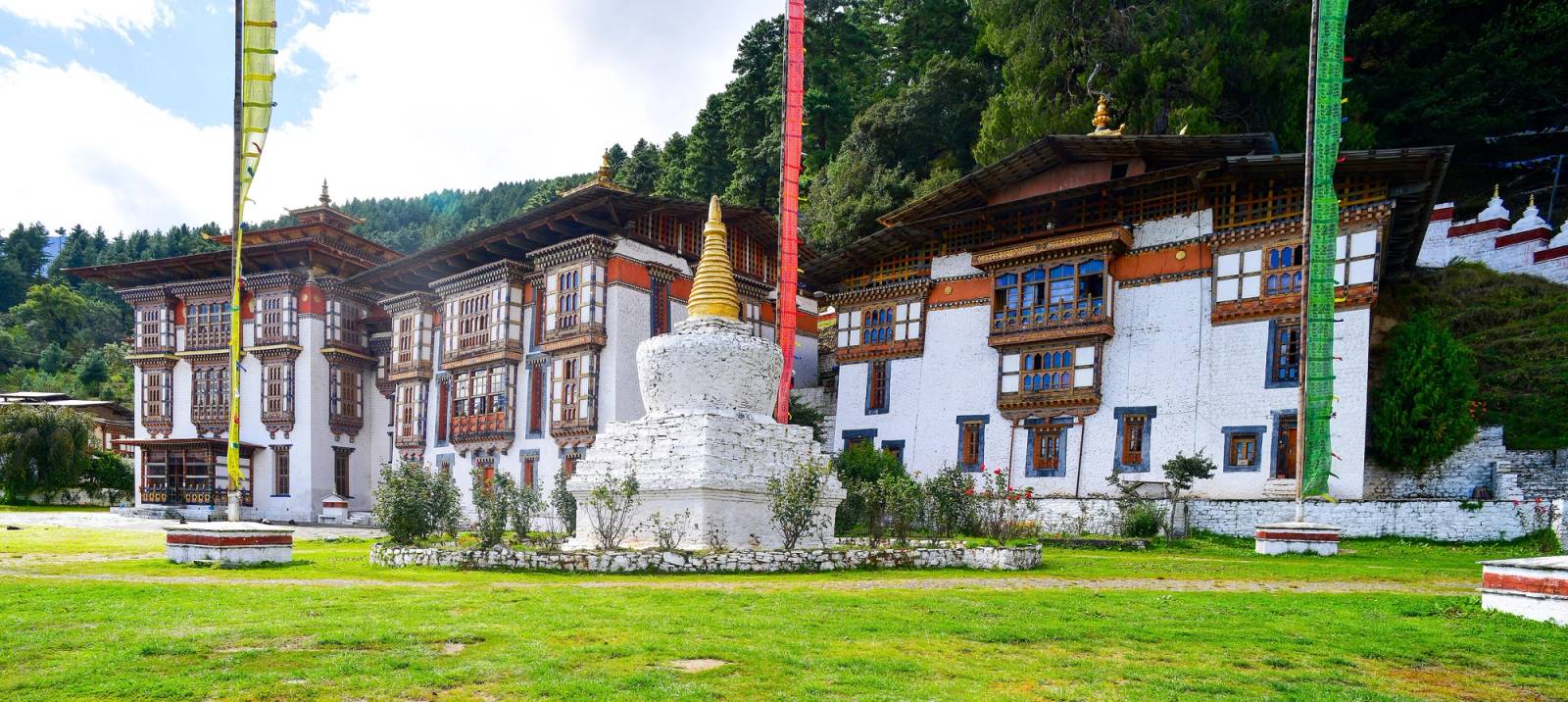
The complex is three temples in a row, facing the valley and built at different times.
- Guru Lhakhang, the oldest, stands against the cave. Tradition credits Sindhu Raja with the first shrine here; the building you see was rebuilt in 1652 by Mingyur Tenpa, then the Penlop (governor) of Trongsa. The cave with the body print is behind the main statue of Guru Rinpoche, who is flanked by his eight manifestations, with rows of small Guru statues along the walls.
- Sampa Lhundrup Lhakhang, in the middle, was built by Ugyen Wangchuck while he was Penlop of Trongsa and completed in 1900. Seven years later he became Bhutan’s first king. Its main statue of Guru Rinpoche is about 10 m tall.
- Ka Gon Phur Sum Lhakhang, the newest, was built in 1984 by Ashi Kesang Choden Wangchuck, queen of the third king, under the guidance of the lama Dilgo Khyentse Rinpoche. Its name refers to three cycles of teachings, Kagye, Gongdu and Phurba, whose deities fill its chapels.
A wall set with 108 small chortens runs around the whole complex. Kurjey is also the final resting place of the remains of Bhutan’s first three kings, which gives it a weight for Bhutanese that goes beyond its age.
What to look for
- The cypress tree beside the temples. Local belief holds that it grew from the walking stick Guru Rinpoche planted here, and it is treated as sacred.
- The lion and the garuda. Below the cave is an image of a snow lion with a garuda above it: Shelging Karpo as the lion, and Guru Rinpoche, in the form of a garuda, subduing him.
- The rock passage. Inside, pilgrims squeeze through a narrow passage in the rock in the belief that it leaves their sins behind. It is entirely optional.
- Kurjey Drupchhu, the spring linked to the story of the Guru’s visit. Bhutanese hold its water to be sacred and healing.
- The view. From the courtyard you look straight down the Chokhor valley, with its fields, farmhouses and the river below.
The Kurjey Tshechu
Kurjey holds its tshechu on the tenth day of the fifth month of the Bhutanese calendar, the day that marks Guru Rinpoche’s birth, which falls in June or early July. In the early morning a large thongdrel showing Guru Rinpoche’s eight manifestations is unrolled, and monks perform mask dances through the day, including dances that retell the subduing of Shelging Karpo. It is a smaller, more local festival than the big tshechus of Paro and Thimphu.
The date moves every year with the lunar calendar, so check our festival calendar before you plan around it. Our festival tours can be timed to it.
Visiting: dress, photographs and time
Kurjey is a working place of worship, and it asks the same of visitors as any temple in Bhutan. Cover your shoulders and knees (long sleeves and long trousers or a skirt below the knee are safest), take off your hat before you enter, and remove your shoes where you are asked to. Walk clockwise around the temples and chortens. Our cultural etiquette guide covers the rest.
Photography is not allowed inside the temples. The courtyard, the chorten wall and the view across the valley are fine to photograph. Ask your guide if you are unsure, and ask before you photograph monks or people at prayer.
Allow about an hour for all three temples, more if prayers are on or you want to sit a while in the courtyard. The walking is easy, with a few steps and some uneven stone underfoot.
Getting there
Kurjey is in the Chokhor valley, about 5 km north of Jakar’s Chamkhar town, roughly a 15-minute drive. Jambay Lhakhang is just down the road, and Tamshing Lhakhang is on the opposite bank of the river, so most people see all three in one morning. From Trongsa the drive to Jakar takes about 2.5 to 3 hours; our Bumthang guide covers the road and the flight from Paro.
Tips from our guides
- Go early. Pilgrims come in the morning to walk their rounds, and the light on the cliff is softer.
- Plan the day around the valley. Pair Kurjey with Jambay and Tamshing in the morning, and keep the afternoon for Jakar Dzong or the Burning Lake in the Tang valley.
- Wear warm socks in winter. The chapels are cold, and you will be in socks on stone and wooden floors.
- Arrive early on festival day. The thongdrel is shown only in the early morning, so leave before sunrise if you want to see it.
- Carry small notes if you would like to make an offering at the altar. It is never expected of visitors.
If you want a longer look at central Bhutan, our Bumthang Heartland Journey is a good starting point, and we can shape it around the Kurjey Tshechu.
Last reviewed 24 September 2026
Photo: Christopher J. Fynn, CC BY-SA 4.0, via Wikimedia Commons (opens in a new tab)
More to see in Bumthang
Jambay Lhakhang
Said to be one of 108 temples the Tibetan king Songtsen Gampo built in 659 to pin down a demoness, which makes it one of the oldest in Bhutan. Each October or November its courtyard holds the Jambay Lhakhang Drup, with a fire blessing and a midnight dance.
Tamshing Lhakhang
Founded in 1501 by the treasure revealer Pema Lingpa, Tamshing has murals from the early 1500s that are among the oldest in Bhutan, and it is on the country's tentative list for World Heritage. Pilgrims try to carry a heavy chain-mail coat, said to be his work, around the inner sanctum.
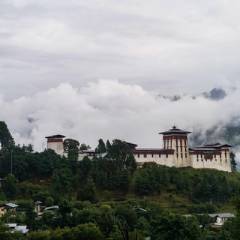
Jakar Dzong
The dzong on the ridge above Jakar grew from a monastery founded in 1549 by the Tibetan lama Ngagi Wangchuk. Its name is usually translated as "white bird", after a bird that settled on the ridge and marked the spot, and it looks out over the whole Chokhor valley.
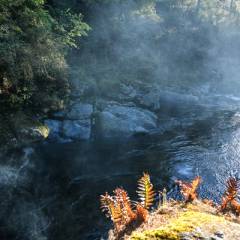
Mebar Tsho
Mebar Tsho, the Burning Lake, is a deep pool in the Tang river gorge, about 30 minutes' drive from Jakar, where Pema Lingpa is said to have dived in holding a lit butter lamp and come back with treasure, the lamp still burning. The rocks are slippery and the current is strong, so stay back from the edge.
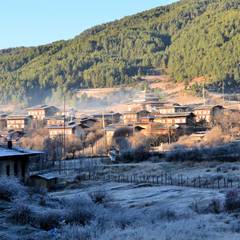
Ura valley
Bumthang's highest valley, a farming village at about 3,100 m, roughly 48 km from Jakar over the Shertang La pass. It is quieter than the Chokhor valley and best known for the Ura Yakchoe festival in April or May, when a sacred relic kept in the village is shown to the public.
Planning a trip that includes Kurjey Lhakhang?
Tell us when you would like to travel. We reply within 24 hours with a free day-by-day plan and a price.

Karma ChodenOperations manager, Bhutan Tour Itinerary
Or call +975 17 81 70 52info@bhutantouritinerary.com
Mon–Sat, 9am–6pm Bhutan time (GMT+6)