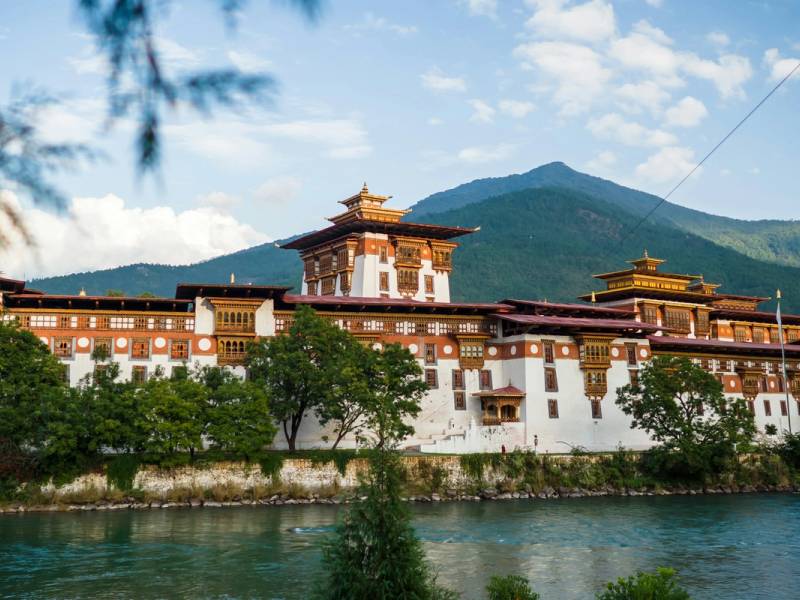
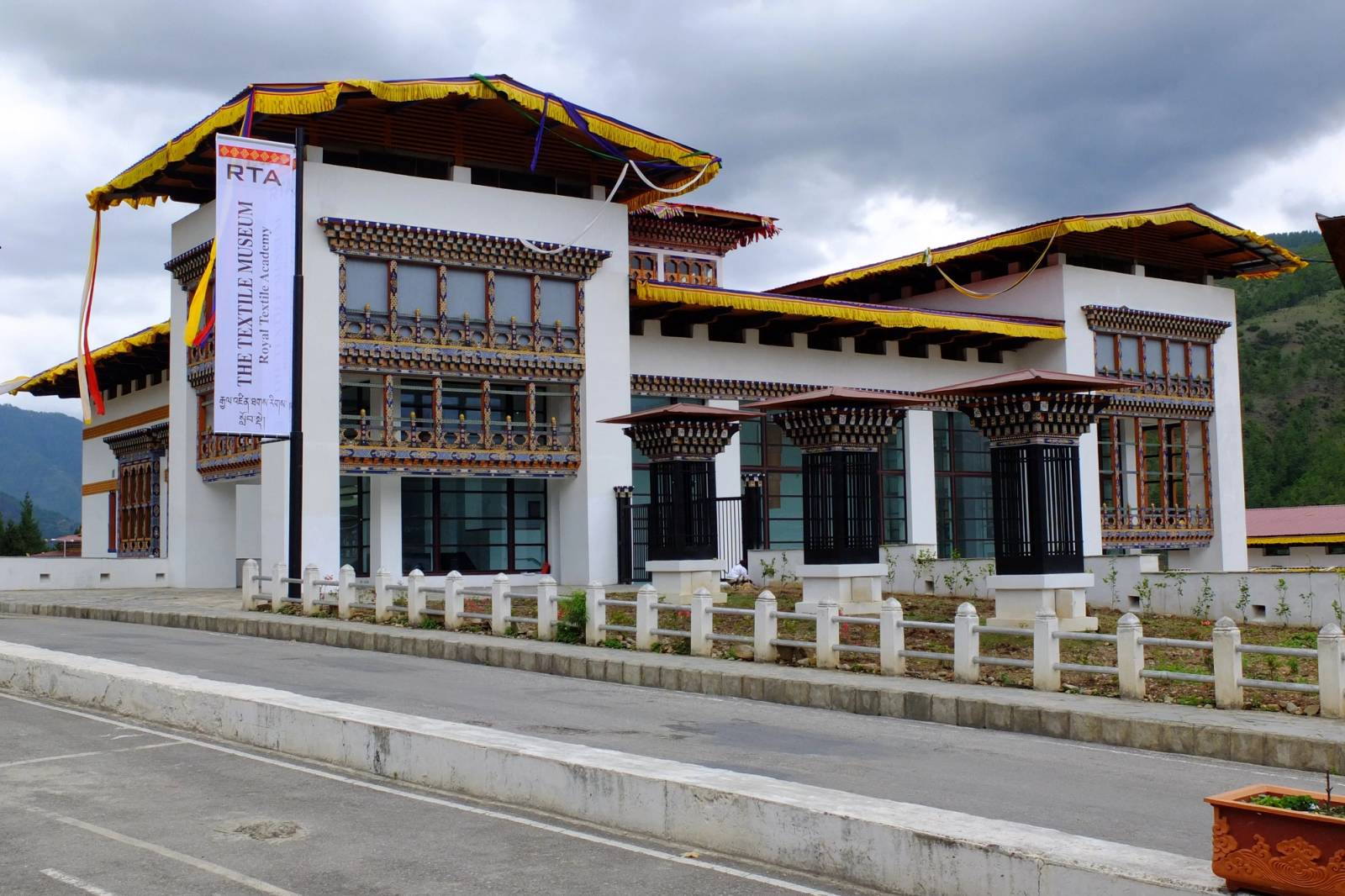
Textile Museum, Royal Textile Academy
Highlights
- Weaves from each region of Bhutan
- Changing exhibitions in a second gallery
- Watch weavers at work
The Royal Textile Academy of Bhutan in Chubachu runs the country's main textile museum, under the patronage of the Queen Mother, Gyalyum Sangay Choden Wangchuck. One gallery shows the weaves of each region and another holds changing exhibitions, and there is a weaving centre where you can watch the work.
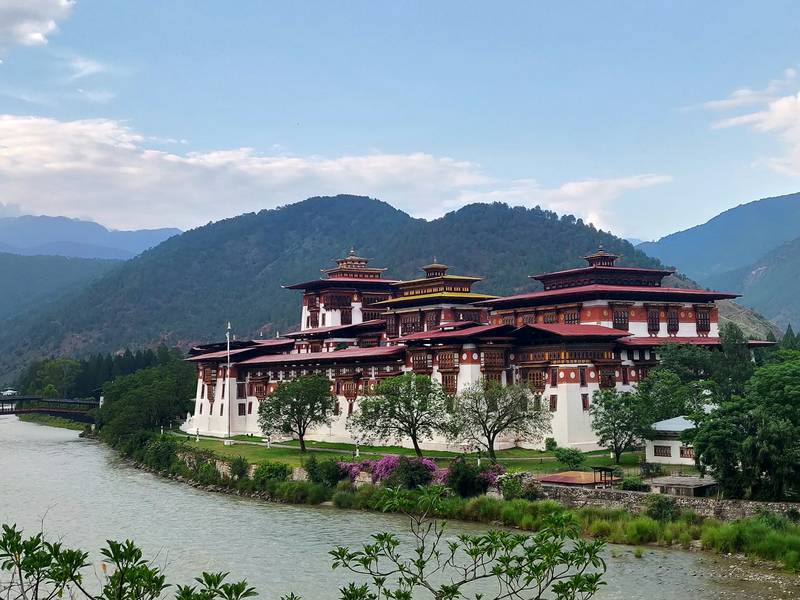
Photo: Christopher J. Fynn, CC BY-SA 3.0 via Wikimedia Commons
More to see in Thimphu
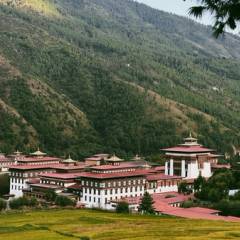
Tashichho Dzong
The great whitewashed dzong at the northern end of Thimphu holds the throne room, the King's offices and several ministries, and in summer the Central Monastic Body. First built as a dzong by Zhabdrung Ngawang Namgyal in 1641, it was rebuilt by the Third King in the 1960s.
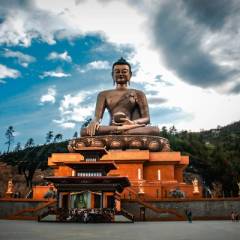
Buddha Dordenma
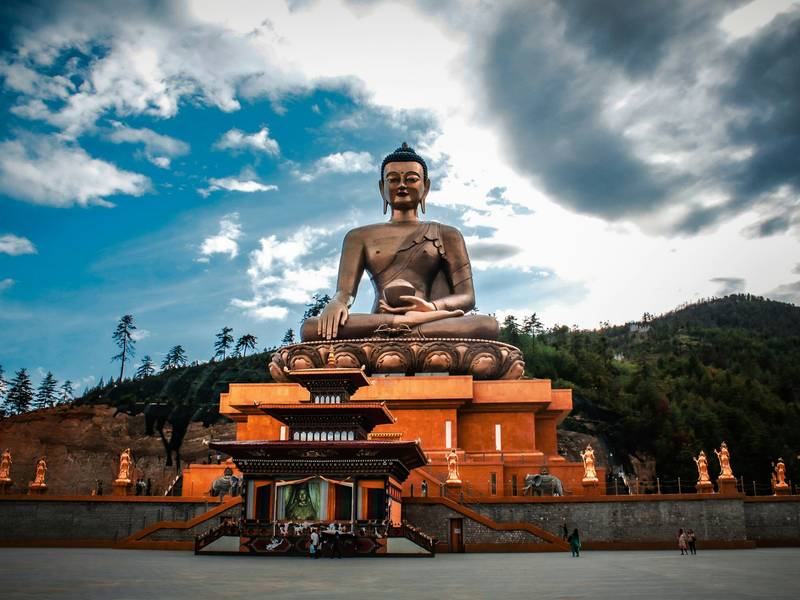
A gilded bronze Buddha more than 50 metres tall on the hill of Kuensel Phodrang, looking over the southern approach to Thimphu. Completed in 2015 for the Fourth King's 60th birth anniversary, it holds 125,000 smaller Buddhas and has wide views of the valley.
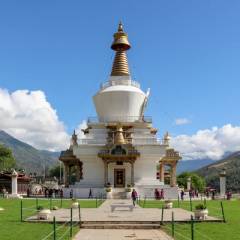
National Memorial Chorten
A white chorten with a golden spire in the middle of town, built in 1974 in memory of the Third King, Jigme Dorji Wangchuck. All day, older residents walk clockwise around it and turn its big prayer wheels. It is the easiest place in Thimphu to watch everyday faith.
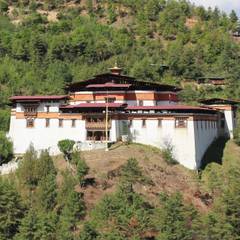
Simtokha Dzong
Built in 1629 by Zhabdrung Ngawang Namgyal, Simtokha was the first dzong he built and is one of the oldest in Bhutan still standing whole. It sits on a ridge about 5 km south of the city centre and is known for the carved slate panels of saints and masters on its outer walls.
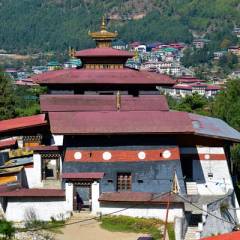
Changangkha Lhakhang
One of the oldest temples in Thimphu, on a ridge above the town, linked to Phajo Drugom Zhigpo and his family, who brought the Drukpa Kagyu school to western Bhutan in the 13th century. Its main image is Chenrezig, the deity of compassion, and parents bring newborn babies here for blessings and names.
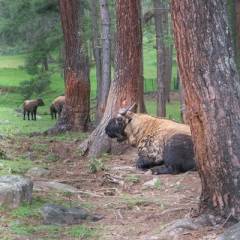
Motithang Takin Preserve
A fenced area of forest in Motithang where you can see the takin, Bhutan's national animal, up close. It began as a small zoo; when the Fourth King had the animals released, the takins wandered the streets of Thimphu, so they were given this preserve instead.
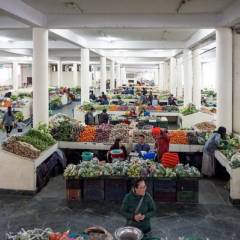
Kaja Throm (Centenary Farmers' Market)
Thimphu's main food market by the Wang Chhu, opened in 2008 as the Centenary Farmers' Market and long known as the weekend market. After a renovation it was renamed Kaja Throm in 2024. Farmers and traders sell vegetables, fruit, grains and dairy produce from across the country.
Planning a trip that includes Textile Museum, Royal Textile Academy?
Tell us when you would like to travel. We reply within 24 hours with a free day-by-day plan and a price.

Karma ChodenOperations manager, Bhutan Tour Itinerary
Or call +975 17 81 70 52info@bhutantouritinerary.com
Mon–Sat, 9am–6pm Bhutan time (GMT+6)