Haa Valley
- Region
- Western Bhutan
- Altitude
- 2,700 m
- Best time
- March–May and September–November for clear views; July for the Haa Summer Festival
- Getting there
- About 2–2.5 hours by road from Paro over Chele La
Why make the drive to Haa
Haa is the valley on the far side of the ridge west of Paro. It was opened to foreign visitors only in 2002, and it still feels like a farming and herding district first: barley and buckwheat fields, a few apple orchards, and families who keep yaks and cattle on the high pastures. There is one small town, a handful of old temples and very little traffic.
Over Chele La and into the valley
The usual way in is from Paro. The road climbs about 35 km to Chele La, one of the highest road passes in Bhutan, then drops about 26 km into Haa. On a clear morning you can see Jomolhari from the prayer flags at the top, so it is worth leaving early. Allow about 2 to 2.5 hours, more with a stop at the pass. In winter, snow and ice can make the pass slow and risky.
A second road runs from Haa down to Chuzom, the river junction on the Paro–Thimphu highway. That makes a loop possible: in over the pass from Paro, out towards Thimphu, which is about 3 to 4 hours away by this route.
The white and black temples
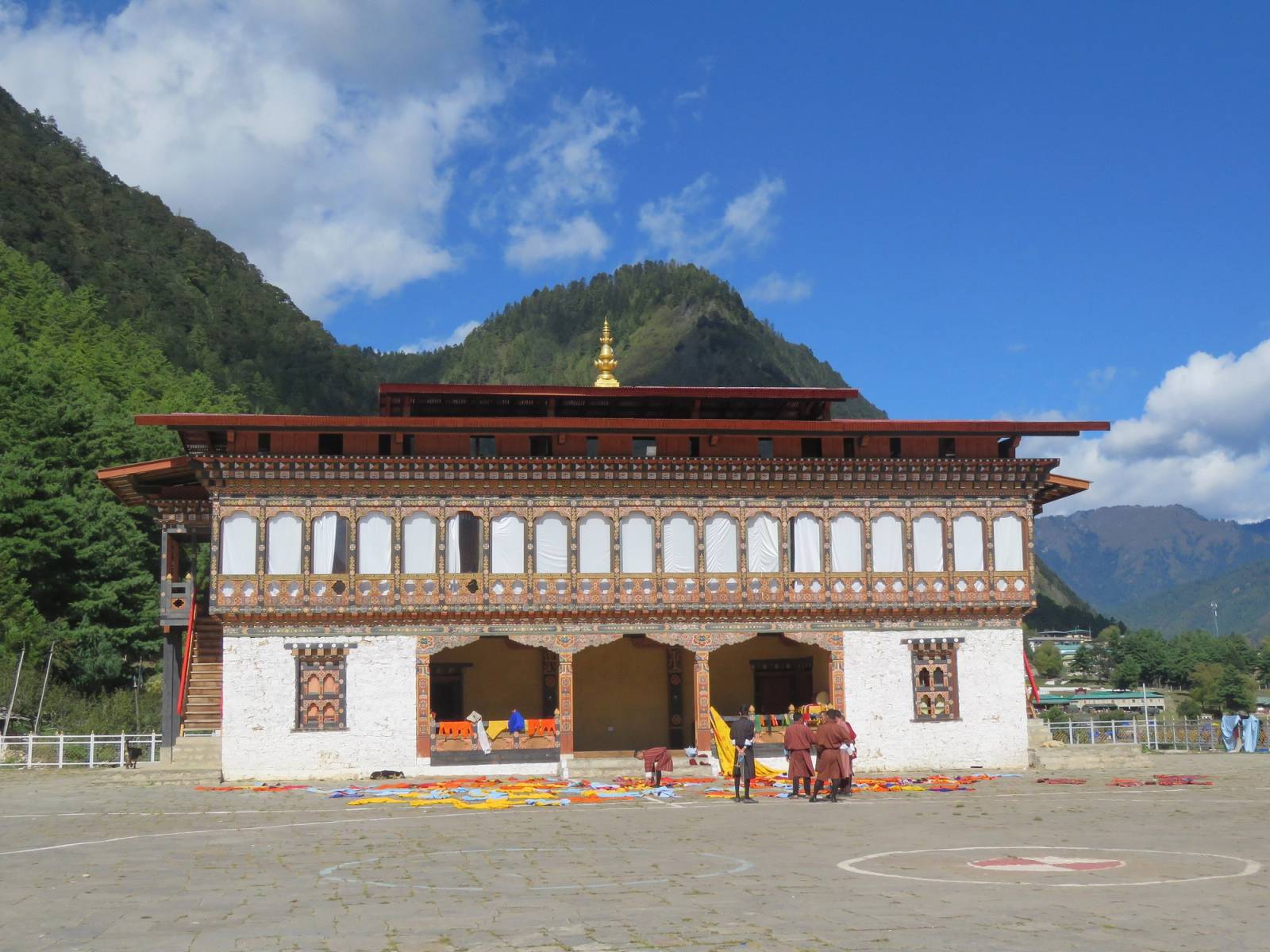
Haa’s two oldest temples are said to date from the 7th century, the same period as Kyichu Lhakhang in Paro. The story goes that the Tibetan king Songtsen Gampo released a white pigeon and a black pigeon, and the temples were built where they landed: Lhakhang Karpo, the white temple, and Lhakhang Nagpo, the black temple, a short way from it.
Lhakhang Karpo is the seat of Ap Chundu, Haa’s guardian deity, and home to the valley’s monk body. It was rebuilt over several years and finished in 2017, so much of what you see is new. Lhakhang Nagpo is linked to the protector Mahakala and has a small pool inside. Above them rise the three hills of Miri Puensum; the middle one is sacred to Chenrezig, the Buddha of compassion. Dress as you would for any temple visit (our cultural etiquette guide covers it) and leave the camera in the bag inside the shrine rooms.
The dzong and the walk to Juneydrak
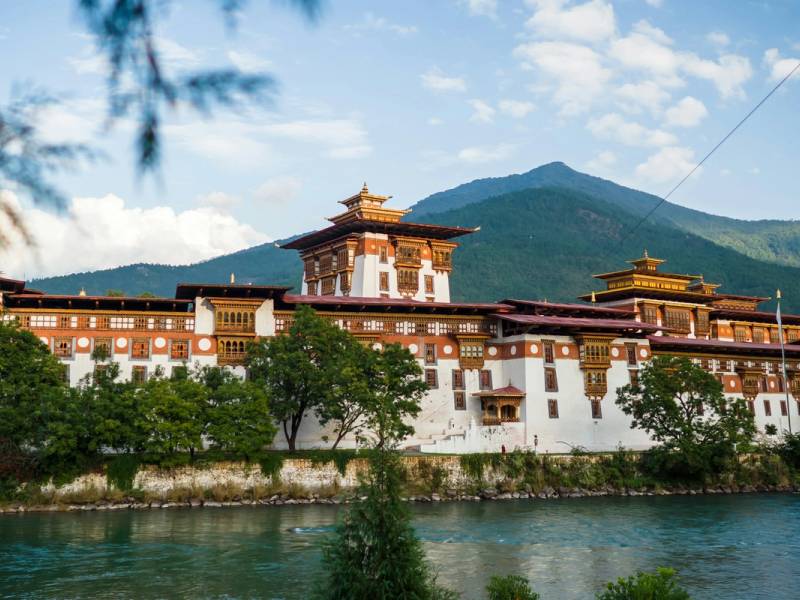
Haa’s dzong, Wangchuk Lo Dzong, was built in 1915 by Kazi Ugyen Dorji after the older dzong burned in 1913. Since 1962 it has been the base of the Indian Military Training Team, which trains the Royal Bhutan Army. The central tower was handed back for religious use in 1989, but the rest sits inside a military area, so ask your guide what is open before you go.
For a short walk, drive up to Katsho Goenpa, a small monastery founded about 200 years ago by Lam Choney Dorji, where young monks study today. From there it is about 30 to 40 minutes on foot to Juneydrak, a hermitage on a cliff that keeps a footprint said to be that of the yogini Machig Labdrön. People still come here to meditate and pray, so keep voices low.
Hoentay, homestays and festivals
Haa is known for hoentay, buckwheat dumplings filled with turnip or spinach leaves, cheese, butter and chilli. They are eaten above all at Lomba, the end-of-harvest new year that Haa and Paro families celebrate in early winter. The easiest way to try them is to stay a night in a village farmhouse; our guide to homestays and farmhouses explains how that works, and what to eat in Bhutan covers the rest of the table.
The Haa Summer Festival, usually held in July, is built around local culture and the herders’ way of life: food, music, dance and crafts. The Haa Dzongkhag Administration (opens in a new tab) posts local festival dates.
Spring, autumn and the July festival
Haa sits at about 2,700 m, so it is cooler than Paro all year. Spring (March to May) and autumn (September to November) give the clearest views from Chele La and the most comfortable walking. July brings the summer festival but also monsoon cloud. Winter days can be bright and cold, with snow on the pass. See the best time to visit Bhutan, weather by region and the festival calendar.
A day trip or a night from Paro
Haa is an easy addition to any western Bhutan trip. As a day trip, leave Paro early, stop at Chele La, visit the two temples and be back for dinner; it also makes a gentle day after the Tiger’s Nest hike. With a night, you have time for the Juneydrak walk, a homestay meal and the drive out towards Thimphu the next day. Haa is also where the restored Trans Bhutan Trail (opens in a new tab) begins its 403 km route east to Trashigang. For more places like this, read quiet valleys most visitors miss.
Photo: Vinayaraj, CC BY-SA 4.0, via Wikimedia Commons (opens in a new tab)
Things to see in Haa Valley
Lhakhang Karpo and Lhakhang Nagpo
Haa's white and black temples, said to date from the 7th century, when a white and a black pigeon showed King Songtsen Gampo where to build. Lhakhang Karpo, rebuilt by 2017, is the seat of the guardian deity Ap Chundu; Lhakhang Nagpo keeps a small pool linked to Mahakala.
Wangchuk Lo Dzong (Haa Dzong)
Haa's dzong was built in 1915 by Kazi Ugyen Dorji after the older one burned in 1913. It has been the base of the Indian Military Training Team since 1962; the central tower is back in religious use, but the rest is a military area, so ask your guide what is open.
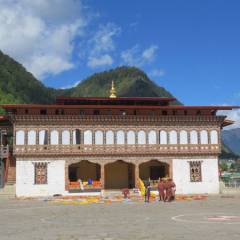
Juneydrak hermitage
A small hermitage on a cliff above Katsho, about 30 to 40 minutes on foot from Katsho Goenpa. It keeps a footprint said to be that of the yogini Machig Labdrön and is still used for meditation and prayer, so go quietly.
Tours near Haa Valley
Haa Valley isn't on a set tour yet. These tours pass close by, and any of them can include it.
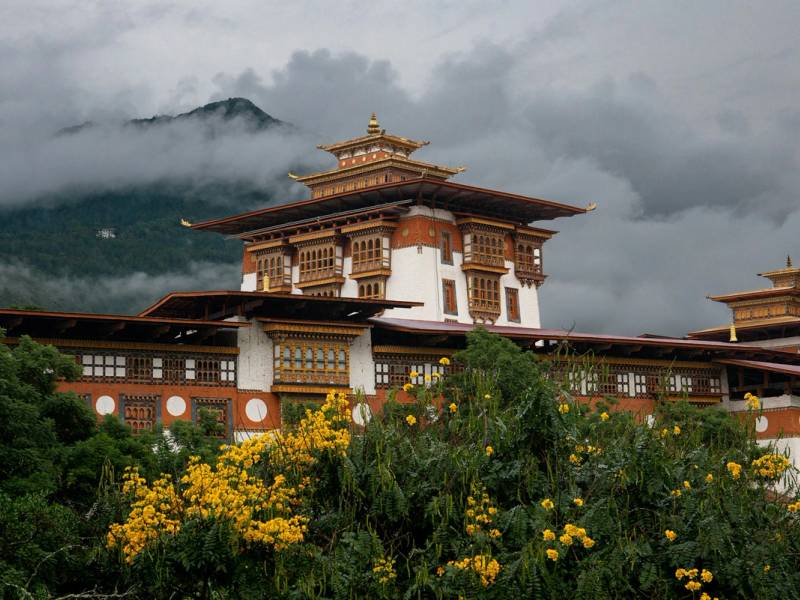
Bhutan Luxury Escape
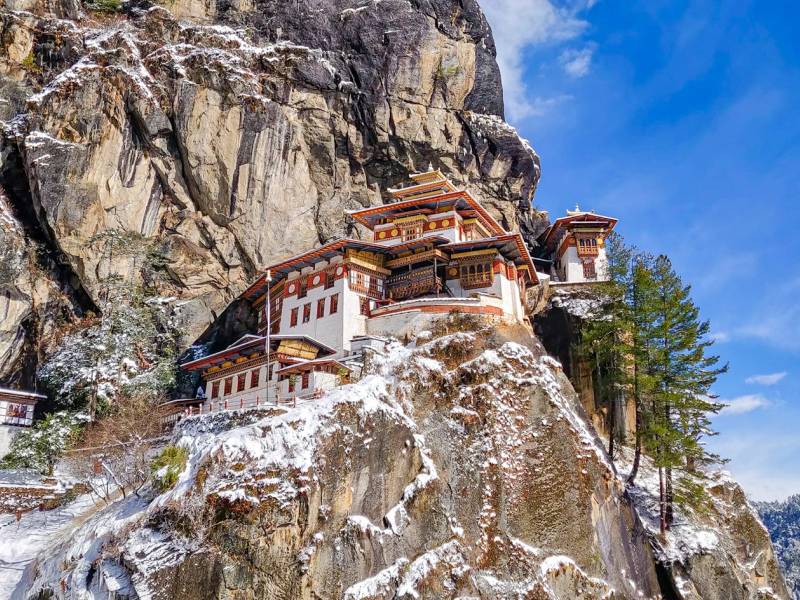
Bumthang Heartland Journey
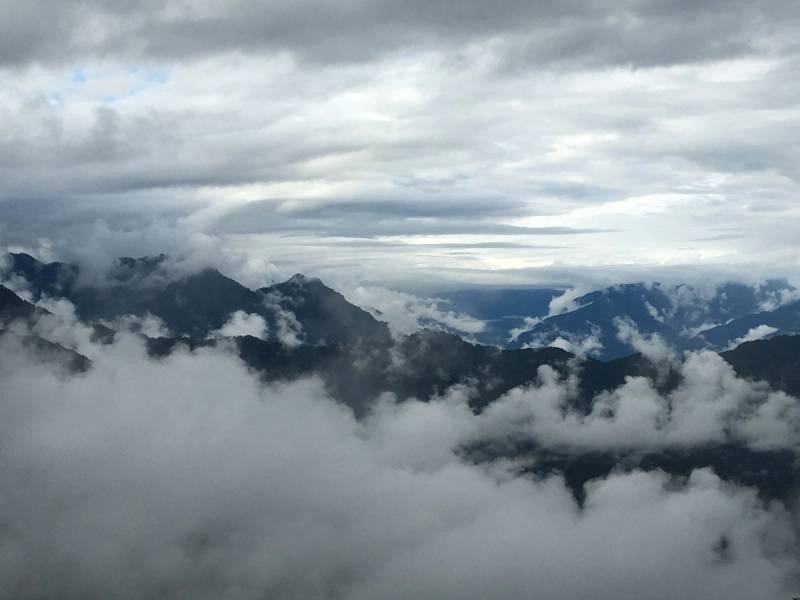
Druk Path Trek
Family Bhutan Adventure
Glimpse of Bhutan
Planning a trip that includes Haa Valley?
Tell us when you would like to travel. We reply within 24 hours with a free day-by-day plan and a price.

Karma ChodenOperations manager, Bhutan Tour Itinerary
Or call +975 17 81 70 52info@bhutantouritinerary.com
Mon–Sat, 9am–6pm Bhutan time (GMT+6)