Bhutan travel insurance
Bhutan dropped the visa insurance rule in April 2024. We still tell every guest to buy a policy, and this is what it has to cover.
On this page
- Is travel insurance required for a Bhutan visa?
- Does the Sustainable Development Fee include any cover?
- What a Bhutan travel insurance policy should cover
- Where you would be treated in Bhutan
- Altitude cover, even if you never trek
- Helicopter evacuation and repatriation
- Paro flight delays and cancellation cover
- If something goes wrong
- Ask us
Travel insurance left the Bhutan visa application in April 2024, which is why so much advice online is out of date. You still want a policy here, and this is what it has to cover.
Is travel insurance required for a Bhutan visa?
No. Bhutan’s Department of Tourism (opens in a new tab) withdrew the mandatory travel-insurance requirement with immediate effect on 23 April 2024, a rule that had come in during COVID-19. The Department still encourages visitors to buy cover, and so do we.
The confusion comes from the Department of Immigration (opens in a new tab)’s own e-permit page, which at the time of writing still lists valid travel insurance among the required items. The page has not been revised; the requirement is not enforced.
What the application does ask for is a passport copy and a recent photo, and we file it for every guest. Our visa and permits guide has the checklist.
Does the Sustainable Development Fee include any cover?
It does not. The SDF is US$100 per person per night for adults, set for 1 September 2023 to 31 August 2027, with ages 6 to 11 at half. It funds free healthcare and education for Bhutanese citizens and gives you nothing: no medical cover, no evacuation cover.
Pages that describe insurance as bundled into the old US$200-250 daily package are quoting a rate abolished in 2022 that never included cover either. Our SDF guide has the current numbers.
You will also read that government hospitals treat tourists free. Emergency stabilisation may well be given, but no official Bhutanese source says so as confidently as the internet does.
What a Bhutan travel insurance policy should cover
| Cover | Why it matters in Bhutan |
|---|---|
| Medical and hospital treatment | One hospital in the country does advanced surgery |
| Emergency helicopter evacuation | One air ambulance service, weather-limited |
| Repatriation and treatment abroad | Complex cases fly to India or Thailand |
| Altitude to the height you reach | Cultural routes cross 3,900 m, treks pass 5,200 m |
| Trip delay and missed connections | Paro flies in daylight and good visibility only |
| Baggage delay and loss | 20 kg domestic allowance, heavy trek kit |
| Named adventure activities | Trekking, rafting, biking, horse riding |
The UK FCDO’s Bhutan advice names the same first three: treatment abroad, emergency helicopter evacuation and repatriation. Look for those words in the policy schedule, not on the marketing page.
Check that the policy names trekking to your maximum altitude, plus rafting, mountain biking or horse riding if they are in your itinerary. If you are leaning on a credit card’s included cover, read its activity list and its altitude limit first. Mountaineering is banned in Bhutan, so wording about summit attempts is beside the point.
Where you would be treated in Bhutan
Jigme Dorji Wangchuck National Referral Hospital (opens in a new tab) in Thimphu is the only facility in the country able to provide advanced surgery and emergency treatment: around 350 beds, an adult ICU, emergency medicine, oncology, orthopedics and MRI. Below it sit two regional referral hospitals of 150 beds each, Mongar in the east with four operating theatres and an ICU, Gelephu in the south with general, orthopedic, ENT and eye surgery. District hospitals do basic care only.
Treatment for more complex problems is not available in Bhutan at all, as the FCDO puts it. A serious case is stabilised here and flown on to India or Thailand. On trek there is nothing above first aid: the network stops at Basic Health Units staffed by health assistants and nurses, and those sit in villages, not on the trail.
Car and motorbike accidents are among the biggest causes of injury and death here, and monsoon landslides can close roads for days, so the likeliest claim on a cultural tour is an ordinary one on a long mountain drive. English is widely spoken, doctors included, which makes an insurer’s assistance line workable from a Bhutanese ward.
Altitude cover, even if you never trek
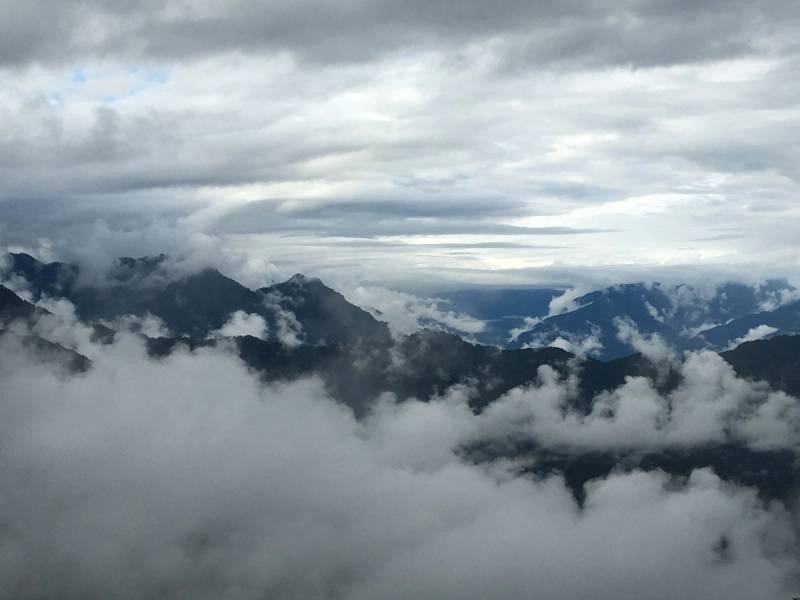
Many policies switch off above 3,000 m, and standard sightseeing crosses that line. Paro Taktsang, the Tiger’s Nest, sits at about 3,120 m, Dochu La at about 3,100 m, and Chele La, the highest motorable pass in the country, at 3,988 m. Read the altitude clause even if your trip is temples and valleys.
On treks the numbers climb fast. Jangothang camp on the Jomolhari route is about 4,080 m, under the 7,326 m peak, and the highest pass, Yeli La, tops out near 4,930 m. The Snowman Trek runs 347 km over eleven passes with a high point of 5,230 m and keeps you above 3,500 m for the better part of three weeks.
In the 2022 Snowman Race, 12 of 29 competitors developed altitude sickness and did not finish, and most high-altitude illness in Bhutan happens on the Laya-Lingshi stretch, where the climb gains height day after day without a drop. More in our altitude sickness guide and trekking in Bhutan.
Helicopter evacuation and repatriation
Bhutan has one helicopter emergency medical service: BEAR, Bhutan Emergency Aeromedical Retrieval, operational since 31 May 2017. It flies on Royal Bhutan Helicopter Services’ Airbus H130s out of Paro, gives ICU-level care in the field and lands patients at Thimphu or a regional referral hospital. In its first year it airlifted 173 patients, 11 of them with altitude-related illness.
Flying is weather- and daylight-limited. BEAR missions have been halted by storms and crews have waited for daybreak. A policy that reimburses evacuation is worth having; assuming a helicopter reaches you within the hour is not. Guides are mandatory here, so a rescue runs through your guide and our office, never through you alone.
Published tourist charter rates for Bhutanese helicopters run around US$5,250 per flying hour for up to five passengers, and an evacuation is rarely one hour of flying, then an air ambulance on to Bangkok or Delhi. A low evacuation limit is thin cover.
Paro flight delays and cancellation cover
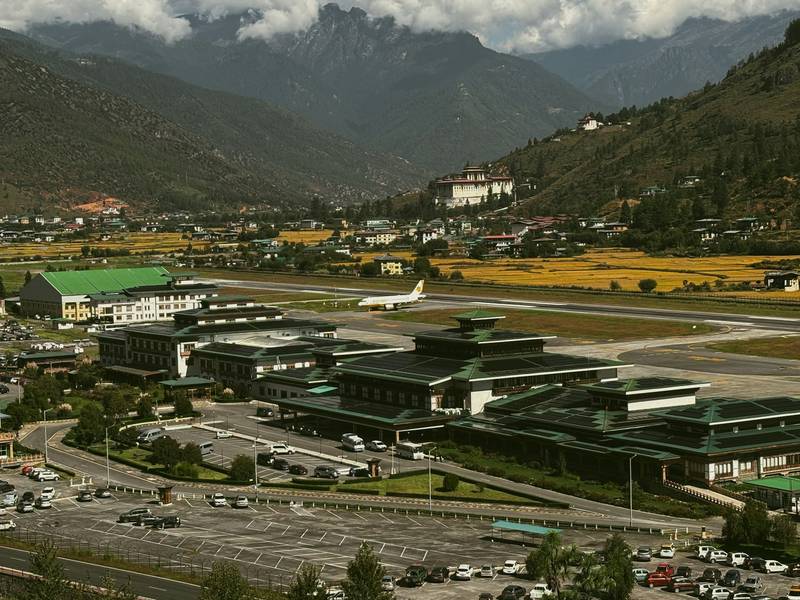
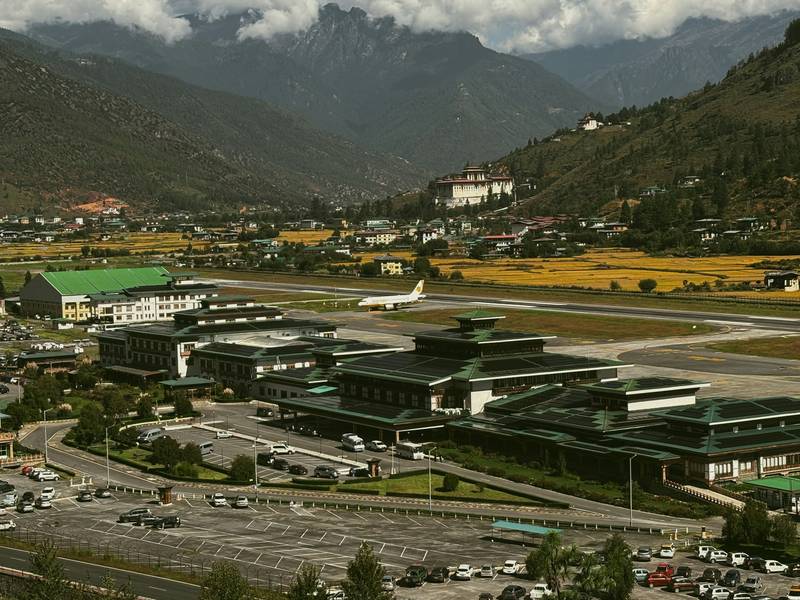
Paro is Bhutan’s only international airport, at 2,235 m with a single 2,265 m runway, ringed by peaks reaching 5,500 m. Flights operate under visual meteorological conditions only, in daylight, with further afternoon restrictions in windy seasons. Landings are flown manually, without radar guidance; press reports in 2023 and 2024 put the number of pilots certified for Paro at roughly 24 to 50 worldwide.
A delay at Paro is weather, not a weak airline. Neither Drukair nor Bhutan Airlines owes EU-style fixed compensation for it, and Bhutan has no equivalent statutory regime. Trip-delay and missed-connection cover is what pays.
Never book an international connection for the same day as your Paro flight. Leave a night in Bangkok, Delhi, Kathmandu or Singapore. No airline is liable for the weather, and your insurer will ask whether the connection was reasonable.
Baggage delay cover earns its keep for the same reason: a bag that misses the Paro flight waits for the next daylight rotation. Drukair allows 30 kg in economy internationally and 20 kg on the domestic hops to Gelephu, Jakar and Yonphula, so trek kit often flies as excess. Carry boots and medicine in the cabin; our packing list has the rest.
If something goes wrong
Save these before you fly: 113 general emergency, 112 ambulance and medical, 110 fire and rescue, 111 traffic. In Thimphu, 1010 reaches all of them.
- Tell your guide first. They call our office and we handle the hospital, transport and any evacuation.
- Call your insurer’s 24-hour line early. The FCDO advises contacting your insurer quickly once you are referred for treatment.
- Ask whether they guarantee payment to the hospital or whether you pay and reclaim.
- Keep the originals: itemised bill, receipts, discharge summary, a police report for an accident or theft, written airline confirmation of a delay or missing bag. Photograph it all before you fly home.
Buy the policy before you leave home. We are a tour operator, not an insurance agent, so we name no brand: the right product depends on where you live, and terms change at every renewal.
Ask us
Send us your itinerary and we will tell you the highest point you reach, which nights are on the trail and how far each one is from a hospital. Those are the questions an insurer asks, on our cultural tours as much as the high routes in our trekking tours. Write to us before you pay your balance.